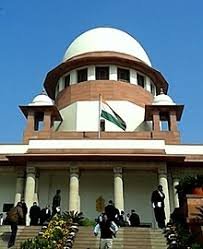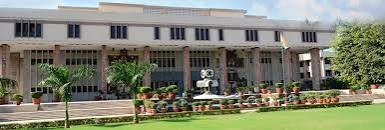
The Delhi High Court dismissed the writ petition filed by a practicing advocate seeking directions for a time-bound investigation into an e-FIR, ruling that the petition was not only non-maintainable due to the existence of an alternate remedy but also “completely frivolous”. Because the petitioner had already invoked the jurisdiction of the concerned magisterial court under Section 175(3) of the BNSS, the High Court declined to intervene in a matter already seized by the lower court.
Factual Background
- The Incident: On 7th July 2026, the petitioner filed an e-FIR regarding the theft of his belongings (specifically a cycle) in Jangpura Extension, Delhi, occurring on 6th July 2026.
- Parallel Proceedings: Before approaching the High Court, the petitioner filed an application under Section 175(3) of the Bhartiya Nagarik Suraksha Sanhita (BNSS) before the area magistrate seeking monitoring of the investigation, preservation of CCTV footage, and regular status reports. This application remains pending before the magistrate, with a hearing scheduled for 17th July 2026.
Key Findings
- Maintainability and Prudence: The Court held that it is a rule of prudence not to invoke writ jurisdiction when an efficacious alternate remedy is available.
- Judicial Propriety: Since the petitioner had already initiated the statutory process for monitoring the investigation before the magistrate, the High Court determined it would be inappropriate to overstep or interfere in the magisterial court’s jurisdiction.
- Court’s Stance: The Court emphasized that it is the magisterial court’s role to pass orders regarding the monitoring of investigations under the invoked provisions.
Final Order
- Dismissal: The petition and the accompanying application were dismissed.
- Costs: Deeming the petition “completely frivolous,” the Court imposed costs of ₹10,000 on the petitioner, to be deposited with the Delhi High Court Legal Services Committee (DHCLSC) within one week.
Is there anything else you would like to know regarding this judgment or the legal principles mentioned?
2026 DHC 5622
Gaurav Jain v. State (D.O.J. 14.07.2026)