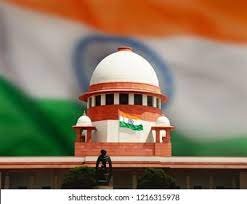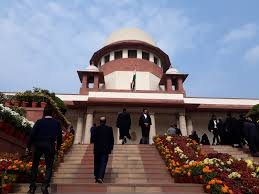
In Meenakshi Natarajan v. Election Commission of India, decided on June 12, 2026, the Supreme Court of India addressed a critical constitutional question regarding the extent of judicial intervention in ongoing electoral processes. The petitioner, a Congress leader, challenged a June 9, 2026 order by the Returning Officer (RO) rejecting her nomination for the Rajya Sabha biennial election from Madhya Pradesh.The rejection was based on her failure to disclose a pending private criminal complaint from Telangana in her Form 26 affidavit.The petitioner argued that under Section 33A of the Representation of the People Act, 1951, disclosure is mandatory only when a court has formally framed charges, making the RO’s rejection a “patent and glaring error” that justified immediate remedy under Article 32.
The Supreme Court dismissed the writ petition. A Division Bench comprising Justices Prashant Kumar Mishra and Atul S. Chandurkar ruled that the non-obstante clause and the strict mandate of Article 329(b) of the Constitution place an absolute bar on judicial interference at this stage of an election. Reaffirming the foundational principle established in N.P. Ponnuswami v. Returning Officer (1952), the Court held that any dispute arising during an ongoing election—including the improper rejection of nomination papers—can only be adjudicated through an election petition after the completion of the electoral process.The Bench refused to carve out a discretionary exception for “glaring errors,” noting that doing so would fracture the exclusive jurisdictional scheme intended by the framers of the Constitution.
1. Factual Matrix and Origin of the Dispute
- The Nomination and Rejection: The petitioner, Smt. Meenakshi Natarajan, filed her nomination as an Indian National Congress candidate for a Rajya Sabha seat from Madhya Pradesh.On June 9, 2026, the Returning Officer rejected her candidature on the ground that she had suppressed material information in her Form 26 affidavit by failing to mention a pending criminal case against her.
- The Omitted Case: The non-disclosure related to a private criminal complaint in Telangana stemming from allegations against another individual.The petitioner was arrayed because she was the All India Congress Committee (AICC) in-charge for Telangana.While she had received a notice or summons from the magisterial court, the case was still at a pre-cognizance stage, and no charges had been framed.
- Administrative Appeal: Following the rejection, the petitioner filed a written representation before the Election Commission of India on June 10, 2026, and argued her case in person, but no orders were passed.She subsequently approached the Supreme Court under Article 32.
2. Core Legal Controversies
- Statutory Disclosure Limits: Whether Section 33A of the Representation of the People Act, 1951, overrides the broad disclosure checklist in Form 26, effectively restricting a candidate’s mandatory reporting obligations solely to cases where a court has explicitly framed charges.
- Constitutional Bar vs. Facilitation: Whether the absolute bar under Article 329(b) can be bypassed via Article 32 or Article 226 when a petitioner claims that judicial intervention will protect a level playing field and facilitate, rather than thwart, a fair election.
3. Arguments Presented by the Parties
A. Submissions on Behalf of the Petitioner
- Senior Advocate Dr. Abhishek Manu Singhvi argued that the RO’s rejection was arbitrary and suffered from a patent error.He emphasized that Section 33A of the 1951 Act explicitly mandates disclosure only if a candidate is accused of an offence punishable with two or more years of imprisonment and where charges have been framed by a competent court.Since the case was at a pre-cognizance stage, no case legally existed.
- Relying on Mohinder Singh Gill (1978) and Ashok Kumar (2000), it was argued that constitutional courts can intervene if the action furthers the progress of the election.Because the rejection left candidates to be elected uncontested, judicial correction was necessary to preserve the basic structure of free and fair elections.
B. Submissions on Behalf of the Respondents
- Senior Advocates Mukul Rohatgi (for private respondents), Dama Seshadri Naidu (for the ECI), and Solicitor General Tushar Mehta (for the Intervenor) vehemently opposed the petition’s maintainability.
- They argued that the right to contest an election is a purely statutory privilege and not a fundamental right, which makes an Article 32 writ petition inherently unavailable.
- They asserted that since the landmark P. Ponnuswami (1952) ruling, the law has been clear: any grievance regarding the rejection of a nomination can only be reviewed through an election petition after the conclusion of the polls.Furthermore, they maintained that Rule 4A and Form 26 require a candidate to cleanly disclose all pending criminal cases, regardless of their procedural stage.
4. Legal Analysis and Doctrinal Guidance of the Court
The Supreme Court rejected the petitioner’s bid for intermediate judicial rescue, grounding its analysis entirely on the constitutional limits of its own power during elections:
A. The Supremacy of Article 329’s Non-Obstante Clause
The Court drew a vital textual contrast between the language of Articles 327 and 328, which open with the words “subject to the provisions of this Constitution,” and Article 329, which starts with the commanding phrase “notwithstanding anything in this Constitution.” This foundational distinction isolates electoral matters from immediate writ intervention while poll processes are active. Whenever an attempt is made to interject in an active election, the judiciary must step back to honor the timeline of the democratic process.
B. Rejecting the “Glaring Error” Exception
The Bench squarely turned down the petitioner’s argument that constitutional courts are duty-bound to correct “glaring” or “manifest” mistakes by an RO to maintain a level playing field.The Court observed that creating a dual track—where “clear” mistakes get an immediate hearing under Article 32 while other rejections are forced to wait for an election petition—would amount to reading an artificial, non-existent exception into Article 329.The Court underscored that there is no operational precedent where the top court has paused a parliamentary election midway to overturn an RO’s order and revive a rejected nomination.
5. Final Order and Operational Directions
- Writ Petition Dismissed: The Supreme Court dismissed the petition on the grounds of maintainability, ruling that the Court lacked jurisdiction to interfere with the ongoing electoral process under Article 32.
- Merits Kept Open for Election Petition: The Bench explicitly clarified that it did not venture into or express any opinion on the legal merits of the nomination’s validity, Section 33A, or Form 26 compliance.
- Preservation of Future Remedies: The petitioner’s right to mount a full statutory challenge against the rejection order through an election petition before the appropriate High Court remains fully preserved, unguided by any observations made in this dismissal.