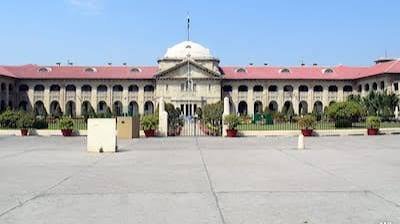
This capital case arose from a judgment by the Sessions Court in Sessions Trial No. 67 of 2011, which had convicted the appellant, Ashok Sharma, under Section 302 read with Section 34 and Section 201 of the IPC, sentencing him to death along with a fine. The prosecution’s case alleged that the appellant and co-accused Geeta Devi murdered Sunita and her three-year-old daughter Jhalak by strangulating them with a saree and burning parts of their bodies in order to cover up an illicit relationship. The Allahabad High Court allowed the appeal, setting aside the conviction and death sentence, and ordered the immediate release of the appellant after finding that the core eyewitness testimonies were completely unreliable, unnatural, and contradicted by the medical evidence.
- Factual Background:
- On December 21, 2010, at around 4:00 AM, the first informant Satish Kumar Sharma (P.W. 1) received a phone call from his son-in-law stating that his daughter Sunita and granddaughter Jhalak had been killed and burnt in Chopan, Sonbhadra.
- Upon reaching the scene, the first informant found both victims dead with a saree tied around their necks and parts of their bodies burned.
- He suspected Geeta Devi (Sunita’s mother-in-law) and Ashok Sharma due to rumors of an illicit relationship between them, which Sunita had allegedly opposed.
- Appellants’ Submissions:
- Defense counsel argued that the appellant Ashok Sharma was nominated entirely on the basis of suspicion, hearsay, and local gossip regarding alleged illicit relations.
- It was contended that the alleged eyewitnesses (P.W. 2 and P.W. 4) were entirely unreliable, exhibited deeply unnatural conduct, and contradicted each other as well as independent neighbor P.W. 3.
- Furthermore, the medical evidence directly contradicted the ocular version, and no reliable evidence established the appellant’s presence or direct participation.
- State’s Submissions:
- The Additional Government Advocate supported the trial court verdict, arguing that the FIR was lodged promptly, the crime scene recoveries corroborated the narrative, and the testimonies of the two eyewitnesses firmly established the guilt of the accused in a heinous crime constituting the “rarest of rare” cases.
- Legal Analysis & Findings:
- Unnatural Conduct of Eyewitnesses: The Court observed that P.W. 2 and P.W. 4 claimed to have witnessed the murders from a crack in the door yet remained completely silent, failed to raise an alarm to alert neighbors in a densely populated area, and did not inform the police or the first informant upon their arrival. Such silent passivity rendered their behavior completely unnatural.
- Contradictions and Improvements:W. 2 failed to mention her husband (P.W. 4) as an eyewitness in her examination-in-chief, introducing him only during cross-examination. Moreover, P.W. 4 gave contradictory statements regarding the arrest of co-accused Geeta Devi and eventually admitted under cross-examination that his account was based on what P.W. 3 told him. The Investigating Officer (P.W. 5) also confirmed that P.W. 4 was not an eyewitness.
- Medical vs. Ocular Discrepancies: The post-mortem report and the testimony of the doctor (P.W. 7) established death due to ante-mortem throttling, noting that burn injuries were post-mortem and no carbon particles were found in the trachea. This contradicted the prosecution’s claim that the victims were burned alive alongside the strangulation, further weakening the ocular narrative.
- Lack of Incriminating Evidence: Minus the discredited testimonies of P.W. 2 and P.W. 4, there was zero independent evidence placing the appellant at the scene of the crime or linking him to the offense.
- Final Order:
- The Capital Appeal No. 16 of 2021 was allowed.
- The conviction and death sentence under Section 302/34 IPC and Section 201 IPC were set aside, and the appellant Ashok Sharma was acquitted of all charges.
- The Court directed that the appellant be released forthwith from prison unless wanted in any other case.
J.O. (Web) 2026 ALL 119
Ashok Sharma v. State of U.P. (D.O.J. 08.07.2026)
J.O. (Web) 2026 ALL 119 click here to view full text of judgment