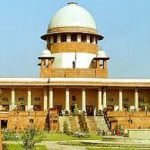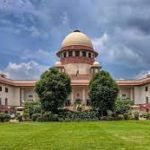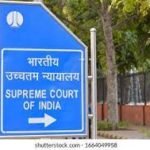
The Supreme Court of India held that the State/Employer cannot unilaterally deduct or adjust alleged unadjudicated claims or overpayments pertaining to one contract from payments due to a contractor under separate, distinct, and ongoing contracts without explicit contractual authorization and without adhering to the principles of natural justice. The Court emphasized that an unadjudicated claim for overpayment detected during a technical audit remains a disputed claim rather than an admitted, ascertained debt presently due. Therefore, recovering such disputed amounts from separate running contracts—while completely ignoring contractually mandated procedures like giving an opportunity to show cause and obtaining CEO approval—violates public law and natural justice. The Supreme Court quashed the High Court order and directed the immediate refund of ₹84,17,003/- with 6% annual interest.
1. Facts of the Case
- Execution of Projects: M/s Awadhesh Singh Gautam (“Appellant”) was awarded three road construction contracts under the Pradhan Mantri Gram Sadak Yojana (PMGSY) by Chhattisgarh Rural Road Development Agency (CGRRDA) in 2023 and 2024 (“subsequent works”).
- Pending Payments: Upon executing around 40% of the work under these subsequent contracts, the Appellant submitted running bills aggregating ₹1,08,95,500/-, which remained unpaid despite reminders.
- Dispute on Earlier Works: On an earlier 2023 contract worth approximately ₹43 lakhs, a five-member committee constituted by the Collector found an alleged excess payment of ₹2,01,06,117/-.
- Arbitrary Recovery Order: On 27.09.2025, the Executive Engineer passed a recovery order blocking and deducting ₹84,17,003/- directly from the running bills of the three subsequent contracts, even though over ₹07 Crore was still pending unpaid under the earlier contract itself.
- Lack of Hearing & Authorizations: No show-cause notice or opportunity of hearing was granted to the contractor prior to passing the recovery order, nor was approval obtained from the CEO of CGRRDA as mandated by Clause 4.1 of the Special Conditions of Contract (SCC).
- High Court Dismissal: The High Court of Chhattisgarh dismissed the contractor’s writ petitions, holding that contractual/factual disputes cannot be adjudicated under Article 226 of the Constitution.
2. Key Issues Before the Supreme Court
- Whether the recovery order dated 27.09.2025 deducting funds across independent contracts was traceable to any of the contractual clauses relied upon by the respondents?
- Whether the State could effect cross-contract deductions without following statutory/contractual conditions precedent and principles of natural justice?
3. Legal Principles & Supreme Court Analysis
- Inapplicability of General Contract Clauses to Justify Cross-Deduction:
- Clause 44.1 GCC (Liquidated Damages): Governs liquidated damages for completion delay only, not overpayments found via technical audit.
- Clause 53.1(ii) GCC (Defects Liability Termination): Applies only if a contract is terminated for fundamental breach during defect liability maintenance. Neither contract was terminated here.
- Integrity Pact / Clause 38: Requires a prior formal finding of violation or breach after due opportunity to show cause, which was never done.
- Violation of Clause 4.1 SCC (Technical Examination):
- Clause 4.1 SCC specifically governs overpayments discovered via technical audits. It restricts recovery to security deposits or dues pertaining to that specific audited work (i.e., the earlier contract).
- Clause 4.1 explicitly mandates: (a) giving the contractor an opportunity to explain their case, (b) mandatory prior orders/approval of the CEO, CGRRDA, and (c) initiating action within 12 months.
- The State failed on every single condition count—granting no hearing, bypassing CEO approval, and arbitrarily tapping into distinct running contracts.
- Disputed Claim vs. Present Debt:
- Until an alleged overpayment is formally adjudicated and established in accordance with due process of law, it remains a disputed claim for damages and not an admitted debt presently due.
- A party to a contract cannot unilaterally appropriate money owed under separate, subsisting contracts to set off an unadjudicated claim arising elsewhere.
- Error of High Court Under Article 226:
- The High Court erred in refusing to exercise jurisdiction. The core issue was not a complex dispute of facts regarding road quality, but rather an unconstitutional and ultra vires public law action by State authorities violating natural justice and contractually binding conditions.
4. Final Order and Directions
- The Supreme Court allowed the appeals and quashed the recovery order dated 27.09.2025.
- The respondents were directed to refund ₹84,17,003/- to the Appellant along with 6% interest per annum from 27.09.2025 until the date of actual payment.
- Clarified that the State remains at liberty to initiate independent recovery proceedings for the earlier works strictly in accordance with law, and that this judgment will not impact pending criminal proceedings.