The case originates from a trademark dispute involving “SRI ANGANNA BIRYANI HOTEL” and “ABM SRI ANGANNA HOTEL”. The petitioners (original plaintiffs), K. Mangayarkarasi & Anr., filed a civil suit (C.O.S. No. 147 of 2023) seeking permanent injunctions against the respondents (original defendants) from using their trademark or any similar name, and damages of ₹20 Lakhs for loss incurred due to trademark use.
The respondents, N.J. Sundaresan & Anr., filed an application under Section 8 of the Arbitration and Conciliation Act, 1996 (as amended by 2019), requesting that the parties be referred to arbitration. This application was based on arbitration clauses contained in two “Deed of Assignment of Trade Marks” dated 30.09.2017 and 14.10.2019. The petitioners contended that these assignment deeds were fraudulently obtained and fabricated, and that the 1st Petitioner’s signature was forged.
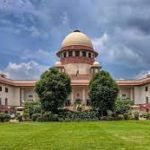
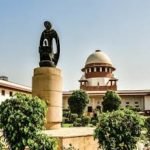
Both the Commercial Court (District Judge Cadre), Coimbatore, and the High Court of Judicature at Madras allowed the application for arbitration, rejecting the petitioners’ Civil Revision Petition. The petitioners then approached the Supreme Court.
Law Involved
The central legal provision is Section 8 of the Arbitration and Conciliation Act, 1996, which mandates a court to refer parties to arbitration if an action is brought in a matter subject to an arbitration agreement, unless it finds that no valid arbitration agreement exists.
The judgment also discusses the arbitrability of disputes, particularly when allegations of fraud are raised. It references key Supreme Court precedents like Booz Allen and Hamilton Inc. v. SBI Home Finance Limited & Ors. (2011), Vidya Drolia v. Durga Trading Corporation (2021), and Krish Spinning (2024). These cases establish principles for determining whether disputes, including those concerning rights in rem (like trademark registration) and those involving fraud, are arbitrable.
Reasoning
The Supreme Court upheld the lower courts’ decision to refer the matter to arbitration, based on several key points:
Validity of Arbitration Agreement: The Court noted that the dispute arose from the “Deed of Assignment of Trade Marks” which explicitly contained an arbitration clause (Clause 15, “Dispute Resolution”).
Nature of Fraud Allegations: The Court distinguished between serious fraud allegations that permeate the entire contract, rendering it void, and mere allegations of fraud. It found that the allegations of fraud concerning the assignment deeds did not sufficiently “permeate the entire contract option of the arbitration agreement” nor involve the public domain to warrant being barred from arbitration. The Supreme Court reiterated that allegations of fraud or statutory violation do not necessarily detract from the arbitrator’s jurisdiction to resolve a dispute arising from a civil or contractual relationship.
Arbitrability of Trademark Disputes: While trademark disputes involve rights in rem, the Court clarified that disputes relating to rights and obligations inter se the parties to a licence agreement (or assignment in this case) are generally arbitrable. The present dispute was deemed to concern private rights arising from the contract between the parties.
Inclusion of Third Respondent: The petitioners argued that the third respondent was not a signatory to the original assignment deeds. However, the Court determined that the third respondent became a party as a successor or legal representative of the first respondent through gift deeds, and therefore, was also subject to the arbitration proceedings.
Lack of Error in Lower Courts: The Supreme Court concluded that the findings of the Commercial Court and the High Court were not based on any error of law.
Holding
The Supreme Court found no grounds to interfere with the High Court’s judgment.
The Special Leave Petition filed by K. Mangayarkarasi & Anr. was accordingly dismissed.
This means the parties are referred to arbitration to resolve their dispute as per the arbitration clauses in the assignment deeds.
K. Mangayarkarasi And Another V. N.J. Sundaresan And Another
Supreme Court: 2025 INSC 687: (DoJ 09-05-2025)