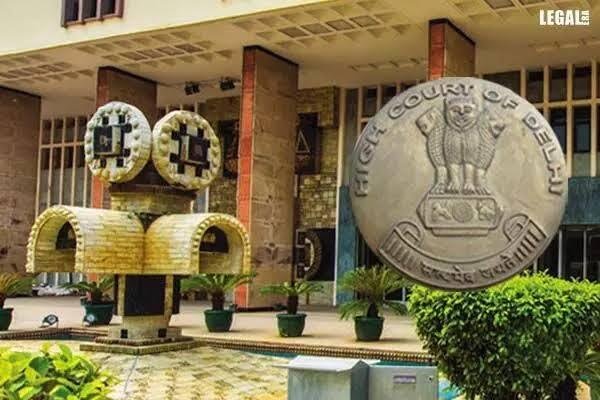
This judgment by the High Court of Delhi addresses a criminal miscellaneous petition filed under Section 482 of the CrPC for quashing FIR No. 262/2026 registered at Police Station Kalindi Kunj under Section 290/106(1) of the BNS, on the basis of a compromise reached with the legal heirs of the deceased. The High Court dismissed the petition, holding that criminal liability for causing death by negligence cannot be wiped away through financial settlements with family members, equating such an arrangement to “blood money,” and ruled that questions of fact regarding the provision of safety equipment must be determined through a regular trial rather than a mini-trial under inherent powers.
- Prosecution Allegations: * In April 2026, while working on the Kalindi Kunj Barrage under the contractor firm (petitioner no. 1) and its engineer (petitioner no. 2), a worker fell into the Yamuna river and drowned to death due to a lack of safety equipment.
- The FIR was lodged upon a detailed complaint by the deceased’s brother, stating that work had initially stopped due to missing safety kits, resumed only on assurances that they would be provided, but no safety equipment was ever supplied by the petitioners.
- Petitioners’ and State’s Arguments: * The petitioners sought to quash the FIR on the grounds that they had settled the disputes with the family members (legal heirs) of the deceased.
- Additionally, the petitioners argued they were not guilty of negligence because all necessary safety equipment had been provided.
- The State strongly opposed the petition, supported by the appearance of the legal heirs/respondents.
- Court’s Observations and Decision: * The High Court firmly rejected the attempt to quash the criminal case based on a private compromise, noting that allowing it would amount to sanctifying “blood money,” which is unacceptable in a civilized society.
- The Court emphasized that since the deceased suffered pain and loss of life due to the alleged negligence, no third party can compromise the offense, and statutory compensation paid under labour laws cannot serve to settle criminal culpability.
- Addressing the petitioners’ defense regarding the supply of safety gear, the Court noted that evaluating such claims would require a mini-trial, which is impermissible under inherent powers, as prima facie material indicated that the lack of safety kits caused the death.
- Consequently, the petition was dismissed, leaving all factual determinations open for independent evaluation by the trial court during trial.
2026 DHC 6693
M/s Swastik Traders Through Proprietor Shivender Pal Singh & Anr. v. State Govt. of NCT of Delhi and Ors. (D.O.J. 14.08.2026)