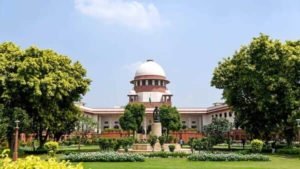
In the matters of State of Punjab v. Sukhwinder Singh @ Gora and State of Punjab v. Gurjit Singh @ Geetu (2026), the Supreme Court of India set aside two High Court orders granting bail to respondents accused of possessing commercial quantities of heroin, ruling that the mandatory requirements of the NDPS Act cannot be bypassed by citing the right to a speedy trial.
Case Background
Both respondents were apprehended on January 10, 2024, during a vehicle search in District Tarn Taran. A total of 1.465 kilograms of heroin (a “commercial quantity” under the NDPS Act) was recovered from the vehicle; 957 grams were found on Sukhwinder Singh and 508 grams on Gurjit Singh. Charges were framed in July 2024 under Sections 21(c) and 29 of the NDPS Act.
High Court’s Reasoning for Bail
The High Court of Punjab and Haryana granted regular bail to both respondents in February 2026 based on the following considerations:
- Prolonged Incarceration: The respondents had been in custody for over two years.
- Slow Trial Progress: Only 2 out of 24 prosecution witnesses had been examined.
- Constitutional Rights: The High Court held that further incarceration would violate the respondents’ right to a speedy trial under Article 21 of the Constitution.
- Dilution of NDPS Rigors: The High Court explicitly stated that the “rigors of Section 37 of the NDPS Act can be diluted bearing in mind the right to a speedy trial”.
Supreme Court’s Legal Findings
The Supreme Court reversed these decisions, identifying several “irreconcilable” flaws in the High Court’s approach:
- Mandatory Nature of Section 37: The Court reaffirmed that for commercial quantities of contraband, Section 37(1)(b)(ii) of the NDPS Act requires the court to record satisfaction on two conditions: (1) there are reasonable grounds to believe the accused is not guilty, and (2) they are not likely to commit an offence while on bail. Recording this satisfaction is a jurisdictional pre-condition, not a mere formality.
- Harmonious Construction: The Court ruled that while Article 21 is a precious right, in matters involving a special statute like the NDPS Act, that right must be exercised within the framework of Section 37. The High Court erred by placing these provisions in opposition rather than reading them harmoniously.
- Suppression of Material Facts:
- Sukhwinder Singh: The High Court recorded he was “not involved in any other case,” despite the fact that his own bail petition admitted to another pending FIR.
- Gurjit Singh: It was revealed that Gurjit was a repeat offender who was already on bail in another case at the time of the incident.
- Successive Bail Petitions: Both respondents failed to clearly disclose the dismissal of their previous bail applications. The Court emphasized that a party seeking discretionary relief must approach the court with “clean hands” and full candor.
Conclusion and Relief
The Supreme Court allowed both appeals and set aside the bail orders. Both respondents were directed to surrender before the Trial Court within one week. The Court reserved liberty for the respondents to apply for bail afresh before a competent court upon their surrender.
2026 INSC 411
State of Punjab V. Sukhwinder Singh @ Gora (D.O.J. 24.04.2026)