
Indian Judgements

Indian Judgements

High Court Sets Aside Extension of Time for Depositing Balance Consideration and Rescinds Specific Performance Decree

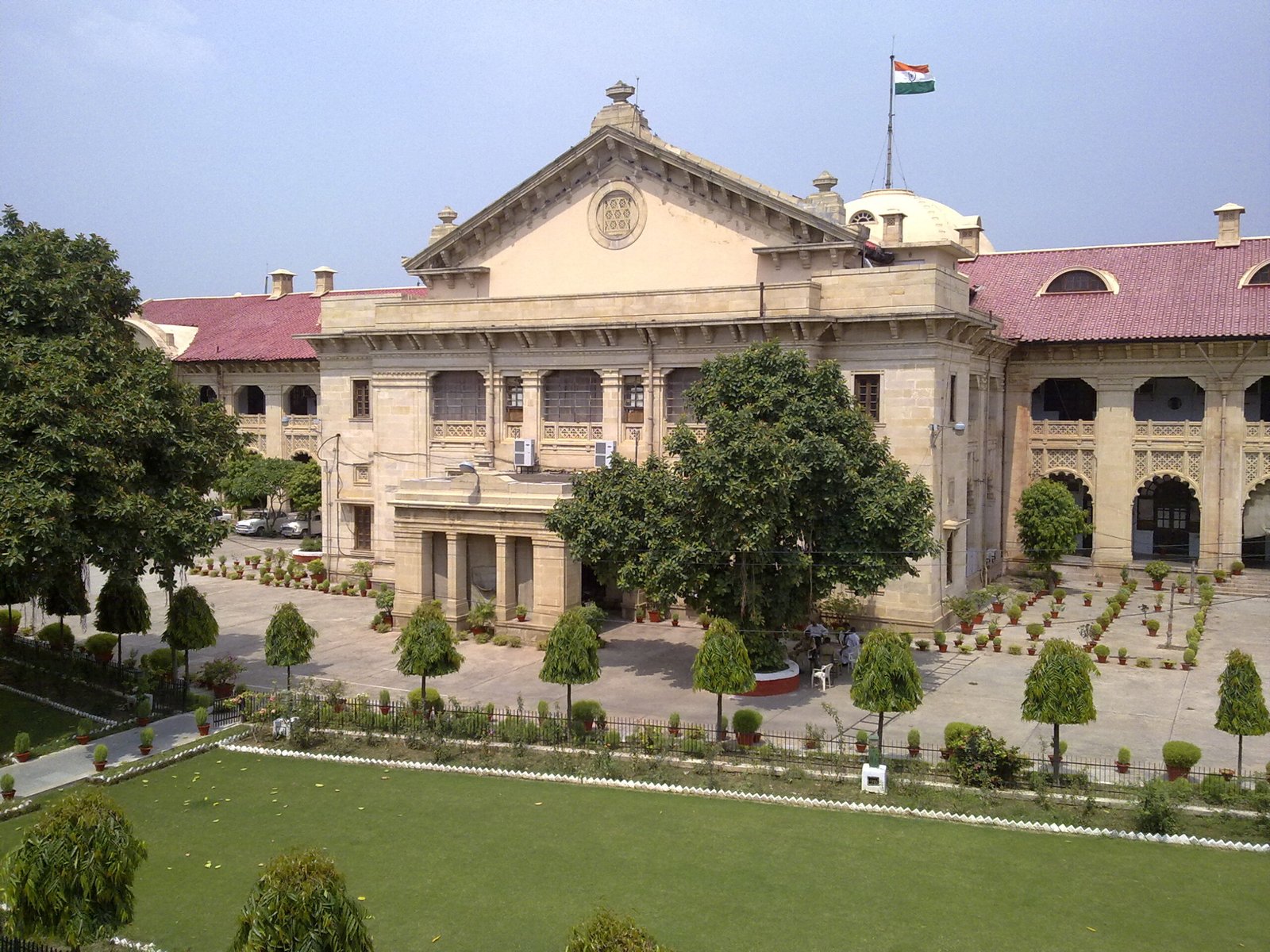
In this petition under Article 227 of the Constitution, Hon’ble Rohit Ranjan Agarwal, J., addressed the complex interplay between Section 28 of the Specific Relief Act, 1963, and the execution of a decree for specific performance when the decree-holder commits gross delay and willful negligence in depositing the balance sale consideration. The trial court had initially dismissed the plaintiff’s suit for specific performance in 1998, but the first appellate court decreed it on November 22, 2003, directing the plaintiff to deposit the balance consideration within one month. Although the defendant filed a second appeal (which was eventually dismissed on September 23, 2019 without any interim stay), the plaintiff waited nearly nine years to initiate execution in 2012, left an extension application pending, and waited another six years post-dismissal of the second appeal to file fresh applications for extension of time in November 2025. Setting aside the concurrent orders of the courts below that had condoned the delay and extended time against a meager cost of Rs. 1,000/-, the High Court ruled that the plaintiff’s prolonged inaction and lack of bona fides amounted to willful negligence, making it inequitable to keep the contract alive, and consequently allowed the defendant’s petition while ordering the refund of the advance amount with 6% interest.

  • Factual Background:
    • The defendant-petitioner (Duliram Maurya) and plaintiff-respondent (Nandram) entered into an agreement to sell on July 3, 1991, for Rs. 25,000/-, out of which Rs. 13,000/- was paid as advance.
    • Original Suit No. 109 of 1993 filed by the plaintiff was dismissed by the trial court in 1998, holding the transaction to be a loan transaction under the garb of an agreement.
    • The first appellate court decreed the suit on November 22, 2003, granting one month for depositing the balance Rs. 12,000/-.
    • The defendant’s Second Appeal No. 235 of 2004 was admitted for hearing but proceeded without any interim stay, and was ultimately dismissed on September 23, 2019.
  • Execution Proceedings and Delay:
    • Despite no interim order protecting him, the plaintiff initiated execution proceedings only after nearly nine years on August 6, 2012 (Execution Case No. 1 of 2012) and filed an unpressed application for extension of time.
    • Even after the second appeal was dismissed in September 2019, the plaintiff remained dormant for over six years, finally filing applications (31-C and 55-C) for extension of time and condonation of delay on November 17, 2025.
    • The executing court allowed the plaintiff’s applications and rejected the defendant’s application (26-C) under Section 28 of the Specific Relief Act on December 23, 2025, which order was subsequently affirmed by the revisional court on April 6, 2026.
  • Legal Principles and Court’s Analysis:
    • Nature of Decree & Section 28: A decree for specific performance is in the nature of a preliminary decree, and the court that passed it retains jurisdiction under Section 28 of the Specific Relief Act, 1963, to either extend time or rescind the contract for non-payment.
    • Equities and Willful Negligence: Citing Supreme Court rulings such as Ram Lal v. Jarnail Singh and Habban Shah v. Sheruddin, the High Court emphasized that while time extension does not require strict day-to-day explanation under Section 5 of the Limitation Act, the court must weigh the equities, the conduct of the parties, length of delay, and whether the decree-holder’s conduct reflects willful negligence or a refusal to complete their part of the contract.
    • Distinction on Merger: Although the doctrine of merger applied when the second appeal was dismissed in 2019, making the appellate decree executable, the plaintiff could not exploit this doctrine to justify sleeping over his rights for more than 20 years since the 2003 decree without prosecuting his applications or depositing the balance money.
  • Final Relief:
    • The impugned orders dated April 6, 2026, and December 23, 2025, passed by the courts below were set aside, and the writ petition was allowed.
    • The defendant-petitioner was directed to refund the advance sale consideration received under the 1991 agreement to the plaintiff-respondent within one month, along with 6% interest from the date of receipt.

J.O. (Web) 2026 ALL 182

Duliram Maurya v. Nandram (D.O.J. 06.08.2026)

J.O. (Web) 2026 ALL 182 click here to view full text of judgment
Next Story

Settling Road Rage on Terms: High Court Quashes Cross-FIRs Subject to Deterrent Costs

The petitioners in these two connected matters filed petitions under Section 528 of the BNSS (corresponding to Section 482 CrPC) seeking the quashing of cross-FIRs (No. 43/2026 and No. 24/2026) registered at Police Station Sarita Vihar for offences under Sections 115(2), 126(2), 351(2), and 3(5) of the BNS, based on an amicable compromise reached between the parties. During the proceedings, the respective parties affirmed their settlement before the court. While the High Court of Delhi agreed that continuing the prosecution would serve no fruitful purpose and accepted the settlement, it took strict note of the fact that the dispute stemmed from a dangerous road rage incident. Consequently, the court quashed both cross-FIRs and the consequential proceedings, but imposed a deterrent cost of Rs. 20,000 on each petitioner to be deposited online with www.bharatkeveer.gov.in within one week.

  • Nature of Petitions & Background:
    • The petitions sought the quashing of cross-FIRs bearing No. 43/2026 and No. 24/2026 registered at PS Sarita Vihar for minor hurt, wrongful restraint, criminal intimidation, and common intention under the BNS.
    • The quashing was petitioned on the strength of a mutual compromise executed between the private parties.
  • Submissions of Parties and State:
    • The State prosecutor offered no objection to the quashing given the settlement, but suggested that a deterrent cost be imposed due to the nature of the offense.
    • Statements of the private parties were duly recorded by the concerned Joint Registrar, and the individuals confirmed in court that they had settled all disputes and no longer wished to pursue the criminal prosecution.
  • Court’s Rationale and Final Orders:
    • The court observed that pushing the parties through a full trial would not be in the interest of justice since a settlement had been reached.
    • However, emphasizing that road rage incidents can escalate dangerously and result in fatal outcomes, the court accepted the prosecution’s view that a deterrent measure was necessary to prevent future violence.
    • Both petitions were allowed and the subject FIRs were quashed, conditional upon each petitioner depositing a cost of Rs. 20,000 with www.bharatkeveer.gov.in within a week and filing the receipts before the trial court.

2026 DHC 6424

Ankur Rawat & Anr. vs. State of NCT of Delhi & Anr. (D.O.J. 07.08.2026)

2026 DHC 6424 click here to view full text of judgment
Next Story

High Court Denies Bail to Metro Security Guard Over Heinous Murder and Abduction

The accused/applicant, Pankaj, filed a regular bail application in connection with FIR No. 538/2021 registered at Police Station Jahangir Puri for offences punishable under Sections 302, 365, 120B, and 34 of the IPC. The prosecution alleged that the applicant, along with other metro security staff, abducted a young boy named Ashit Das on suspicion of theft, took him to a metro construction site, killed him using rods and dandas, and disposed of his body in a drainage to destroy evidence. The applicant sought bail on the grounds of long incarceration since 2021 and the examination of material witnesses. However, the High Court of Delhi dismissed the application, emphasizing the extreme gravity of the offense, the lack of legal authority for security personnel to take the law into their own hands, and the fact that crucial recovery witnesses were yet to be examined.

  • Prosecution Allegations & Investigation:
    • On 01.06.2021, a missing person report for Ashit Das was lodged at PS Jahangir Puri.
    • CCTV footage revealed that the victim was abducted by four individuals on motorcycles—identified as metro security staff—and taken behind the Majlis Park metro station construction site, where he was killed and his body thrown into a drainage.
  • Arguments of the Applicant and State:
    • The applicant argued for bail based on his incarceration since 2021, the completion of testimony by material witnesses, and the allegation that the deceased was suspected of stealing iron rods from the site.
    • The State strongly opposed the application, citing the severe gravity of the crime and pointing out that critical recovery witnesses for the weapons used in the assault are yet to be examined by the trial court.
  • Court’s Rationale and Decision:
    • The court acknowledged that long incarceration is an important factor, but noted it cannot override the gravity of the offense.
    • The court strongly observed that even if the deceased was a suspected thief, the security staff had no legal right or authority to take the law into their own hands and brutally murder him.
    • Given that crucial recovery witnesses remain to be examined and considering the brutal nature of the crime, the court held that it was not a fit case for granting bail, consequently dismissing both the bail application and the accompanying application.

2026 DHC 6404

Pankaj vs. The State Govt NCT of Delhi(D.O.J. 07.08.2026)

2026 DHC 6404 click here to view full text of judgment

Next Story

No Evidence Beyond Custodial Confession: High Court Grants Regular Bail on Grounds of Parity

The accused/applicant, Sagar @ Golu, sought regular bail in connection with FIR No. 487/2018 registered at Police Station Bawana for offences under Sections 302, 120B, and 34 of the IPC, along with Sections 25 and 27 of the Arms Act. The case originated from the discovery of an unidentified dead body with bullet injuries near the Bawana bus stand. Initially, no eyewitnesses were found at the scene, but subsequently, the deceased’s son stated that his father was shot dead by Ritik. The applicant was later implicated and arrested based solely on the custodial confessional statement made by co-accused Ritik. Finding no other incriminating evidence connecting the applicant to the crime other than his refusal to join a Test Identification Parade (TIP)—similar to co-accused Sandeep @ Bunty who had already been granted bail—the High Court of Delhi allowed the application and granted regular bail to the petitioner.

  • Prosecution Case & Initial Investigation:
    • On 26.12.2018, police received information regarding an unidentified dead body lying in a pool of blood at the Bawana bus stand.
    • The medical examination confirmed death due to bullet injuries, leading to the registration of an FIR under Section 302 IPC and Sections 25/27 Arms Act.
    • The deceased’s son later claimed his father was shot by Ritik, and Ritik subsequently named the applicant as an accomplice while in police custody.
  • Arguments of the Parties:
    • The applicant sought parity with co-accused Sandeep @ Bunty, who was granted bail by the court earlier.
    • The State and the family of the deceased opposed the bail, highlighting the applicant’s alleged gang associations (Rajesh Bawania gang) and involvement in other cases, alongside his refusal to participate in the TIP.
    • However, the State fairly conceded that apart from the custodial confession of the co-accused Ritik, no other material evidence existed against the applicant.
  • Court’s Rationale and Decision:
    • The court noted that the deceased himself had a criminal record involving 15 heinous cases.
    • Emphasizing that there was no independent or incriminating evidence against the applicant aside from the inadmissible custodial confession of a co-accused, and recognizing the principle of parity with co-accused Sandeep @ Bunty, the court found no justification to prolong the applicant’s detention.
    • The bail application was allowed, directing the release of the accused upon furnishing a personal bond of Rs. 10,000 with one surety of the like amount.

2026 DHC 6403

Sagar @ Golu vs. The State (Govt. of NCT, Delhi) (D.O.J. 07.08.2026)

2026 DHC 6403 click here to view full text of judgment
Next Story

Environmental Accountability: Supreme Court Directions on River Pollution and Governance in Rajasthan

In this ongoing suo motu/public interest matter addressing severe environmental degradation and riverine pollution across Rajasthan, the Supreme Court evaluated compliance reports and Special Investigation Team (SIT) findings regarding illegal industrial effluent discharges, water body contamination, and systemic regulatory failures. Expressing serious concerns over the ecological destruction of river systems like the Luni, Jojari, and Bandi, the Court issued comprehensive structural and preventive directives. These include establishing an Integrated Coordination Group and an independent River Commission/River Rejuvenation Authority headed by the Chief Secretary, mandating scientific demarcation of High Flood Lines and ecological buffer zones, accelerating criminal investigations into environmental offenses under the Bharatiya Nyaya Sanhita, 2023, and deploying a QR Code-based digital platform for confidential public reporting of environmental violations.

  • SIT Investigation and Criminal Enforcement:
    • The SIT reviewed 16 criminal cases concerning riverine pollution across Jodhpur, Pali, and Balotra, invoking graver penal provisions (including sections of the Bharatiya Nyaya Sanhita, 2023 and the Prevention of Damage to Public Property Act, 1984) where warranted.
    • Material collected prima facie reveals connivance between Common Effluent Treatment Plant (CETP) officials and member industrial units in bypassing treatment processes to discharge untreated effluents.
    • The Supreme Court advised the SIT to execute investigations with greater promptness and depth, covering the complete chain of events, financial trails, and potential public servant complicity without fear or favor.
  • State Action on Specific Environmental Concerns:
    • Regarding the pink coloration of the pond near the Jojari River at Tanawada, preliminary IIT Jodhpur studies attribute it to saline and organic contamination coupled with microbial activity; remedial measures recommended are to be implemented expeditiously.
    • Action against defaulting textile processing units in Sanganer includes closure directions under Section 33A of the Water Act, 1974, sealing drives, and environmental compensation.
    • Remediation efforts at the Khed HRTS/SEP site (including dismantling storage ponds and removing hazardous sludge) and in-situ treatment proposals for Nehda Dam (in technical collaboration with IIT Madras) are underway.
  • Institutional Mechanisms and Governance Directives:
    • Integrated Coordination Group: Ordered to be constituted within seven days to ensure inter-departmental coordination across Environment, Forest, Water Resources, Industries, and RSPCB, and to submit a Comprehensive Resolution Plan within three weeks.
    • River Commission/Rejuvenation Authority: Directed the creation of an independent, empowered River Commission/Authority under the chairmanship of the Chief Secretary to oversee integrated river basin management and catchment protection.
    • High Flood Line & Buffer Zones: Mandated a comprehensive scientific exercise to demarcate High Flood Lines and ecological buffer zones across all river systems, barring any fresh industrial, commercial, or residential permissions within these corridors until completion.
  • Industrial and Groundwater Policy Adjustments:
    • Encouraged the establishment of Captive Effluent Treatment Plants (ETPs) for industries generating 100 Kilos Litres per Day or more, alongside maximizing the capacity utilization of existing CETPs.
    • Ordered an inquiry by the Chief Secretary into land-use conversions and approvals concerning the Ambey Valley Industrial Park.
    • Imposed a strict prohibition on permitting water-intensive industries in over-exploited (“dark zone”) groundwater areas.
  • Technological Oversight and Public Reporting:
    • Directed the creation of a QR Code-based digital platform displayed prominently across public offices, industrial areas, and check posts, enabling citizens to confidentially report environmental violations, illegal groundwater extraction, or unauthorized effluent discharges.
    • The matter is listed for further consideration of the Comprehensive Resolution Plan on September 22, 2026.

2026 INSC 812

In Re: Environmental Concerns and River Pollution in the State of Rajasthan (D.O.J. 07.08.2026)

2026 INSC 812 click here to view full text of judgment
Hi Judgments Online