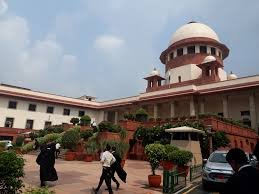

The Supreme Court of India dismissed the criminal appeals and upheld the conviction and sentences imposed by the High Court of Chhattisgarh for offences under Sections 302/34 and 307/34 of the Indian Penal Code, 1860 (IPC), reversing the Trial Court’s acquittal. The Court held that the High Court’s conviction was neither perverse nor founded on irrelevant material, and upon independent review reached the same conclusion.
- Background & Reversal of Acquittal: The appeals challenged the common judgment dated October 8, 2025 passed by the High Court of Chhattisgarh at Bilaspur in ACQA No. 84 of 2016 and ACQA No. 31 of 2017. By that judgment, the High Court overturned the Trial Court’s May 16, 2016 acquittal in Sessions Trial No. 63 of 2014 and convicted the appellant under Sections 302/34 and 307/34 IPC.
- Sentences Imposed: Under Section 302/34 IPC, the appellant was sentenced to rigorous imprisonment for life and a fine of Rs. 1,000/- (with two months’ simple imprisonment in default). Under Section 307/34 IPC, he was sentenced to ten years’ rigorous imprisonment and a fine of Rs. 200/- (with fifteen days’ simple imprisonment in default).
- Appellant’s Arguments: Counsel for the appellant argued for the benefit of doubt, pointing to the appellant’s arrest roughly four months later without clarity on how his name surfaced or the sequence of events, allegedly perfunctory recovery from his room lacking exact location details or clear proof that it was at his behest, and a forensic report not indicating whether blood on seized clothes/articles was human blood. It was also contended that eye-witness PW-3 (the deceased’s wife) made improvements regarding identification and sequence of events between her Section 164 CrPC statement and court deposition, citing Balu Sudam Khalde and Another v. State of Maharashtra (2023) 13 SCC 365.
- Respondent’s Arguments: Senior counsel for the informant argued that the High Court thoroughly examined the evidence and all raised points, taking a plausible view with only reasonable variations that were not fatal to the prosecution, and that the record as a whole established the appellant’s participation in the crime.
- Supreme Court Ruling & Remission Note: After reviewing the record and material from the courts below, the Supreme Court held that the High Court’s finding of guilt was not perverse or based on non-germane material, and independently arrived at the same conclusion. The appeals were dismissed, while noting that the appellant’s case shall be considered by the State authorities/Government when eligible under the State remission policy in terms of the order dated February 18, 2025 in Suo Motu Writ Petition (Crl.) No. 4 of 2021, and leaving other legal remedies open.
2026 INSC 1262
Vijay Chaudhary vs. State of Chhattisgarh & Anr. (Criminal Appeal Nos. 5088–5089 of 2025) (D.O.J. 17.11.2026)