
Indian Judgements

Indian Judgements

High Court Affirms Conviction in Landmark Murder Appeal

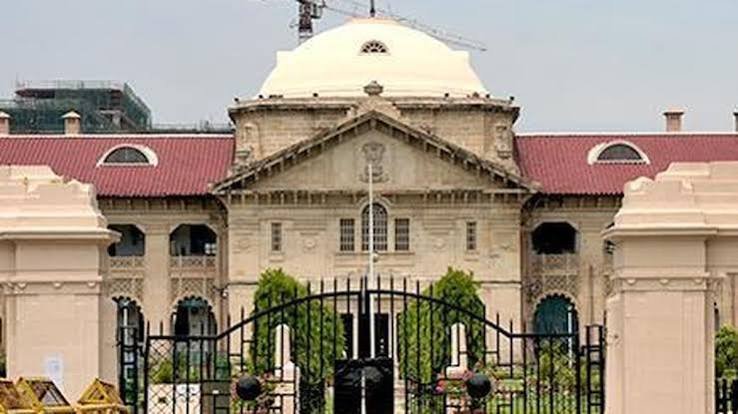
This criminal appeal challenges the judgment and order dated July 3, 2013, passed by the Additional District and Sessions Judge, Court No. 3, Fatehpur, in Sessions Trial No. 38 of 2009, whereby the appellants were convicted under Section 302 of the IPC. The case stems from an incident on October 11, 2008, where the victim, Bhura Singh, was fatally shot during a property dispute over a recently purchased ruined house. The Allahabad High Court dismissed the appeal, affirming the conviction while modifying it to Section 302 read with Section 34 of the IPC to reflect joint liability and common intention, directing the appellants on bail to surrender into custody immediately.

  • Factual Background:
    • Informant Rajendra Singh and his father Bhura Singh purchased a fallen-down kutcha house from Awadhram via a registered sale deed on October 7, 2008.
    • The appellants, seeking to protect Rupa Devi (Awadhram’s widowed daughter-in-law who worked for them and stood to inherit), measured the property and created a dispute, prompting the victim’s family to seek a compromise through one Ram Swaroop Singh on October 11, 2008.
    • While talking near Ram Swaroop’s house, the appellants—Dinesh Chandra Shukla, Akhilesh Chandra Shukla, Anil Kumar Shukla, and Sunil Kumar Shukla—armed with firearms, arrived, hurled exhortations, and opened indiscriminate fire after the victims fled toward a local Dharamshala.
    • Bhura Singh sustained fatal firearm injuries and succumbed upon reaching Vijaipur Hospital, leading to the prompt registration of an FIR at 5:30 PM on the same day.
  • Appellants’ Submissions:
    • It was argued that the deceased had an extensive criminal history and was likely murdered by unknown individuals under different circumstances, with the appellants falsely implicated due to enmity.
    • Defense counsel contended that eye-witnesses PW-1 and PW-2 were not present at the spot, pointing to discrepancies in their statements and the fact that their names were omitted from the inquest report.
    • Strong reliance was placed on the Forensic Science Laboratory (FSL) report, which showed that empty cartridges recovered from the scene did not match the seized DBBL guns, rendering the prosecution story doubtful.
    • It was further urged that the conviction under Section 302 IPC was legally flawed because no specific fatal role or individual shot was attributed to any single appellant.
  • State’s and Informant’s Submissions:
    • The State and the informant countered that the ocular testimony of PW-1 and PW-2 remained consistent, cohesive, and fully corroborated by the medical autopsy report and site plan particulars.
    • They maintained that the motive was clearly established by the immediate property rivalry, and the prompt lodging of the FIR eliminated any possibility of fabrication or ante-timing.
    • Regarding the ballistic report, it was argued that the non-matching or non-recovery of actual murder weapons does not nullify reliable, unimpeachable ocular testimony.
  • Legal Analysis & Findings:
    • Reliability of Eye-Witnesses: The Court evaluated the testimonies of PW-1 and PW-2 under parameters set in Balu Sudam Khalde v. State of Maharashtra, holding that minor discrepancies do not shake the core credibility of injured or natural eye-witnesses. Furthermore, non-inclusion in an inquest report under Section 174 Cr.P.C. does not discredit an eye-witness.
    • Medical and Ocular Consistency: The autopsy surgeon confirmed ante-mortem firearm injuries and retrieved pellets from the victim’s heart, matching the narrative that the victim was shot while looking back in self-preservation while fleeing.
    • Impact of Ballistic Discrepancies: Relying on Supreme Court precedents such as Rakesh v. State of U.P. and Gurcharan Singh v. State of Punjab, the Court ruled that flaws in investigation or a negative FSL matching report cannot override trustworthy and consistent direct eye-witness testimony.
    • Common Intention (Section 34 IPC): The conduct of the appellants arriving together, armed, exhorting, and firing indiscriminately clearly established a pre-arranged plan and shared common intention to eliminate the deceased.
  • Final Order:
    • The criminal appeal was dismissed.
    • The conviction of the appellants under Section 302 IPC was affirmed with the aid of Section 34 IPC (Section 302 read with Section 34 IPC).
    • The bail bonds were cancelled, and the appellants were directed to be taken into custody immediately to serve out their remaining sentences.

J.O. (Web) 2026 ALL 117

Dinesh Chandra Shukla and 3 others v. State of U.P. (D.O.J. 17.07.2026)

J.O. (Web) 2026 ALL 117 click here to view full text of judgment

Next Story

Subsequent Events Do Not Eclipse Bona Fide Eviction Need

In this judgment, the Supreme Court of India allowed the landlord’s appeal, set aside the Bombay High Court’s revisional order, and restored the concurrent eviction decrees passed in favour of the appellant partnership firm. The Court held that subsequent events—such as the death of one partner and his spouse, alleged firm dissolution, or alternative living arrangements made during protracted litigation—do not automatically extinguish an established bona fide requirement under the Maharashtra Rent Control Act, 1999.

  • Background & Lower Court Decisions: The appellant partnership firm (comprising partners Premchand Kasturchand Jain and Mangilal Okchand Jain) sued in 2002 for eviction of Respondent No. 1 (legal heir of the original tenant) from first-floor premises at Chira Bazar, Mumbai, on grounds of bona fide requirement. The Trial Court decreed eviction on May 2, 2014, and the Appellate Bench affirmed on July 7, 2022. Allowing the tenant’s revision under Section 115 CPC on January 2, 2024, the Bombay High Court set aside the eviction decrees based on subsequent events, including the deaths of Mangilal and his wife, letting out of the second floor, and acquisition of other premises by the partners’ sons.
  • Statutory Framework & Subsequent Events Doctrine: Examining Section 16(1)(g) of the Maharashtra Rent Control Act, 1999 alongside Kedar Nath Agrawal v. Dhanraji Devi, the Court noted that while material subsequent events can be considered to avoid multiplicity of proceedings or do complete justice, the doctrine is not an inflexible rule requiring every intervening change to defeat a claim. Subsequent events must be genuine, material, and have a direct bearing on the original relief without allowing litigation delay itself to defeat a sustainable claim.
  • Partner Death & Plaint Scope: The Court found that the eviction suit was brought by the partnership firm for the residential and medical needs of both partners and their families—including Premchand Shah’s family and both partners having undergone heart/CABG procedures with medical advice against climbing stairs. The demise of Mangilal and his wife did not automatically extinguish the firm’s claim or the independent need pleaded for Premchand Shah and his family.
  • Firm Dissolution & Alternative Arrangements: Regarding contentions of firm dissolution and alternative premises acquired by the partners’ children, the Court observed that under Section 47 of the Indian Partnership Act, 1932, partners’ authority and mutual rights continue for winding up and unfinished matters, and necessity-driven arrangements during two decades of litigation do not by themselves negate bona fide need.
  • Restoration & Time to Vacate: Restoring the Trial Court’s eviction decree, the Supreme Court granted Respondent No. 1 one year from the date of judgment to vacate and hand over peaceful possession, subject to filing an undertaking within four weeks not to create third-party rights, to pay admitted rent arrears and one year’s advance rent within four weeks, and to vacate upon expiry of one year.

2026 INSC 1261

M/s. P.M. Shah and Co. vs. Asmit Vijay Vedak & Ors. (Civil Appeal arising out of SLP (C) No. 6658 of 2024) (D.O.J. 02.11.2026)

2026 INSC 1261 click here to view full text of judgment
Next Story

Minor Custody Retained by Mother With Father Visitation

In this judgment, the Supreme Court of India allowed the mother’s appeal and set aside the High Court’s judgment that had affirmed granting custody of two minor sons (aged 16 and 14) to the father. Holding that the welfare of the minor is the paramount consideration over strict parental rights, the Court allowed custody to remain with the mother—with whom the children had lived continuously since May 2014 and expressed a mature preference to stay—while granting structured visitation rights to the father.

  • Background & Earlier Proceedings: The parties were married on August 23, 2009 and had two sons born in 2010 and 2012, before separating in 2014. On November 19, 2018, the Family Court, Madurai decreed the husband’s divorce petition on grounds of cruelty (unappealed), ordered Rs. 6,000/month maintenance per child in the wife’s petition, and granted custody of the children to the father under the Guardians and Wards Act, 1890 with specified visitation. Criminal charges against the husband and family members under IPC Sections 294(b) and 506 were dropped/abated in 2019, and Section 498-A charges ended in acquittal on March 22, 2022.
  • High Court & Supreme Court Proceedings: The High Court admitted the mother’s appeal in January 2019 with a status quo/visitation order and later upheld custody in favour of the father, finding no proof of mental unfitness against him while noting visitation had not been permitted. The Supreme Court granted an interim stay on January 24, 2025, and subsequently interacted separately with the parents and the two minor sons.
  • Interaction & Welfare Assessment: During interaction, the mother (working in sales at Abbott India in Madurai and pursuing a Ph.D.) had been raising and educating both boys with her parents since 2014, while the father (engaged in business in Coimbatore/Madurai) had not been disqualified as a natural guardian. Both sons, aged 16 and 14, appeared mature, healthy, and confident, stated they had met their father only about four to five times, and clearly preferred living with their mother.
  • Governing Legal Principles: Relying on Section 17 of the Guardians and Wards Act, 1890 and precedents including Anjali Kapoor v. Rajiv Baijal, the Court reiterated that child welfare—encompassing emotional, educational, moral, and physical well-being—is paramount and outweighs a parent’s legal claim or financial capacity alone. Disrupting a stable environment where the children have grown up with their mother and maternal grandparents would not serve their welfare.
  • Final Directions: The Court allowed custody to remain with the mother and granted the father visitation on the second Saturday and Sunday of every month (10:00 AM to 2:00 PM) at the Gandhi Museum, Madurai, as well as during Pongal and half-yearly vacations with prior telephone or WhatsApp intimation, alongside readiness to share future educational expenses if asked by the mother.

2026 INSC 1260

J. Sakthi Devi @ Chriti vs. Joseph Charles (Civil Appeal arising out of SLP (Civil) No. 30284 of 2024) (D.O.J. 23.11.2026)

2026 INSC 1260 click here to view full text of judgment

Next Story

Special Panel Revived for Okhla Enclave Plot Scrutiny

In this order arising out of long-running proceedings in the Okhla Enclave / Edenburg City residential colony dispute in Faridabad, the Supreme Court of India appointed former Supreme Court judge Justice (Retd.) Sanjay Karol as Chairperson of the reconstituted Special Committee following the resignation of Justice (Retd.) Vikramajit Sen. The Court laid down detailed terms of reference and timelines to complete Phase II claim verification, address acute plot deficits and encroachments, probe unauthorized building plan sanctions, audit financial liabilities, and bring the decades-old dispute toward resolution.

  • Background of the Dispute: In 1985, M/s Durga Builders Pvt. Ltd. and associate entities acquired roughly 235 acres in Sector 91, Faridabad for a colony originally called “Okhla Enclave” and later “Edenburg City,” governed by licences under the 1975 Act and a December 2, 1991 Bilateral Agreement earmarking plots in a 20:25:55 ratio for EWS, NPNL, and General categories. Allegations of non-development, over-allotment, duplicate/unauthorized conveyances, unpaid dues, and expired licences (not renewed after 1999) led to writ proceedings from 1996 onward, including Writ Petition (C) No. 876 of 1996 (disposed of on October 3, 2019) and subsequent orders including on April 25, 2025 and May 18, 2026.
  • Prior Scrutiny & Resignation: Earlier steps included a Court Commissioner report (January 5, 2010), DGTCP custody/reconciliation orders (2013), and a Special Committee headed by Justice (Retd.) Vikramajit Sen. Following the October 3, 2019 judgment and April 25, 2025 order, 2,036 Phase II claims were received, while 1,011 Phase I allottees had been verified and accepted on July 11, 2023. However, after learning that local DTCP officials sanctioned building plans up to March 25, 2025 for 480 unverified claims ahead of scrutiny, Justice (Retd.) Vikramajit Sen resigned, stalling Phase II scrutiny.
  • Matters Settled vs. Issues Requiring Directions: The Court noted that core parameters—such as the cut-off dates (April 7, 1997 for land cost; December 31, 1999 for development charges), the crystallization of the 1,011 verified claims, the exemption of General Category buyers from the “one plot per family” rule under the April 25, 2025 order, and reduction of usable land to about 187.825 acres due to 46.85 acres of encroachment—are settled. Meanwhile, key issues remain, including acute plot shortages against verified allottees, pending scrutiny of 2,036 Phase II claims, defaulting claimants, building plan irregularities, and financial audits.
  • Reconstitution & Core Directives: The Court appointed Justice (Retd.) Sanjay Karol as Chairperson of the reconstituted Special Committee. It allowed General Category claimants to be verified on individual merits without the one-plot-per-family bar, granted defaulting claimants a final three-week window from November 20, 2026 to file dossiers with the Nodal Officer (with a Rs. 10,000 demand draft toward an escrow account), and directed members of the Okhla Enclave Plot Holders (Allottees) Forum to submit documents for scrutiny rather than claiming automatic exemption.
  • Mandate, Timeline & Next Listing: The Special Committee was tasked with auditing Phase II claims, verifying physical possession and land availability, proposing equitable allocation/re-planning options (including examining EWS land conversion/rezoning), investigating the March 25, 2025 building plan approvals, and auditing developer and allottee financial liabilities. The Nodal Officer must hand over digitized/indexed records within two weeks, the Committee is to submit a sealed-cover report within four months, the Chairperson’s honorarium is fixed at Rs. 60,00,000 (payable by Haryana in three tranches with recovery liberty against the developer), and the matters are listed on March 2, 2027.

2026 INSC 1259

Okhla Enclave Plot Holders Welfare Association vs. Union of India and Others (D.O.J.20.11.2026)

2026 INSC 1259 click here to view full text of judgment

Next Story

Criminal Case Quashed Over Will Amid Pending Probate Case

The Supreme Court of India allowed the appeal and quashed the criminal proceedings and FIR registered against the appellant and attesting witnesses over alleged forgery of a registered Will. The Court held that substantive evidence of execution—including registration and attesting witnesses—generally overrides weak opinion evidence of a handwriting expert, especially where probate proceedings initiated years earlier remain pending and there is no justification to sustain criminal prosecution on the facts of the case.

  • Factual Background: A Will was allegedly executed on April 29, 2011 and registered on May 4, 2011 in favour of the testator’s mother and sister (the appellant). After the testator passed away on May 22, 2013, the appellant and her mother filed a probate petition in 2014. The testator’s son (2nd respondent) and wife had long been estranged from him, though the son alleged undue influence by the mother and sister and sought a handwriting expert’s opinion in the testamentary proceedings.
  • Criminal Proceedings: Based on a handwriting expert report opining that the disputed signature differed from specimen signatures, the 2nd respondent filed an application under Section 156(3) CrPC, leading to an order directing FIR registration and FIR No. 197 of 2024 under Sections 467/471 IPC at PS Laxmi Nagar, Delhi. A petition to quash the proceedings was rejected prior to this appeal.
  • Legal Principles on Expert vs. Substantive Evidence: Reviewing precedents including Pandit Ishwari Prasad Misra, State of Maharashtra v. Sukhdev Singh, Syed Askari Hadi Ali Augustine Imam, Shashi Kumar Banerjee, and Chennadi Jalapathi Reddy, the Court reiterated that handwriting expert opinion is weak/opinion evidence and generally does not take precedence over substantive evidence of execution.
  • Application to the Facts: The Court noted that the Will was registered with the executant’s left-hand thumb impression and two attesting witnesses (one of whom told police during investigation that the executant signed all pages in his presence). It also noted the testator’s long estrangement from his wife and son, his medical history (including prior angioplasty and cerebrovascular accident/stroke, which can affect handwriting), and the fact that the mother was no longer alive.
  • Decision & Directions: The Court quashed the Magistrate’s order directing FIR registration and FIR No. 197 of 2024. It clarified that its observations on the Will and substantive evidence are only prima facie and do not bind the probate court, that rejection of probate would not revive this prosecution on these facts, and directed that the probate proceedings be concluded expeditiously.

2026 INSC 1258

Babita Chopra vs. State (GNCT of Delhi) & Anr. (Criminal Appeal No. 5516 of 2026) (D.O.J. 17.11.2026)

2026 INSC 1258 click here to view full text of judgment

Hi Judgments Online