
Indian Judgements

Indian Judgements

Election: Special Intensive Revision (SIR) of the electoral rolls – Directions

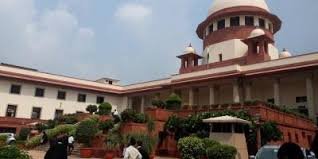
In the case of Association For Democratic Reforms & Ors. v. Election Commission of India & Ors. (2026 INSC 564), the Supreme Court of India examined a batch of writ petitions challenging an Order dated June 24, 2025, issued by the Election Commission of India (ECI). The ECI’s order directed a Special Intensive Revision (SIR) of the electoral rolls across all assembly constituencies in the State of Bihar ahead of the 2025 legislative assembly elections.

The core legal controversy centers on the balance between ensuring an accurate, inclusive electorate and preventing the arbitrary disenfranchisement of lakhs of voters. The petitioners contended that the ECI’s strict verification requirements and reliance on the 2003 electoral roll as baseline evidence would cause mass voter exclusion. Conversely, supporting petitions argued that periodic intensive revisions are necessary to eliminate ineligible listings caused by illegal migration and rapid demographic shifts.

1. Constitutional and Historical Context

  • The Character of Electoral Rolls: Chief Justice Surya Kant, delivering the judgment, observed that disputes regarding electoral rolls are fundamental to the foundation of representative government, going far beyond mere administrative exercises.
  • Historical Origins: The judgment traces the roots of organized public assembly and membership in India back to ancient republican polities like the Vajji confederacy in Vaishali (ancient Bihar). While these historic systems were not modern democracies based on universal adult suffrage, they established a legacy of settled, institutional procedures to determine who could participate in the polity.
  • Colonial Framework to Constitutional Evolution: The modern legal structure for electoral rolls emerged under the Government of India Act, 1935, which transformed registration from scattered practices into a formal legal regime. Post-independence, the framers of the Constitution deliberately shifted the electoral roll from an instrument of an exclusionary franchise into the foundation of universal, independent political participation governed by an insulated, autonomous Election Commission.
  • Plenary Powers of the ECI: Under Article 324 of the Constitution, the ECI is granted the absolute authority of superintendence, direction, and control over the preparation of electoral rolls, keeping the process free from executive interference.

2. Origin of the Controversy

  • The Impugned Order: On June 24, 2025, the ECI exercised its powers under Article 324 of the Constitution and Section 21(3) of the Representation of the People Act, 1950, to order a Special Intensive Revision (SIR) in Bihar.
  • The Justification: The ECI pointed out that Bihar’s last intensive revision occurred in 2003. For over two decades, the state relied strictly on summary revisions. Given significant demographic shifts due to rapid urbanization and large-scale migration, an intensive door-to-door verification was deemed essential prior to the late-2025 Bihar Assembly elections.
  • Conflicting Legal Interests: A batch of petitions filed under Article 32 sought to quash the order, fearing it would result in the arbitrary disenfranchisement of lakhs of eligible citizens. Meanwhile, cross-petitions supported the SIR, arguing that regular intensive revisions are vital to cleanse the rolls of illegal influx and ineligible persons.

3. Key Modalities of the Special Intensive Revision (SIR)

The ECI laid out specific criteria and structured guidelines to govern the house-to-house collection and verification process:

  • The 2003 Benchmark: Clause 11 of the ECI’s order established that names appearing on the 2003 electoral roll serve as probative (primary) evidence of eligibility unless rebutted.
  • Evidentiary Standard for New Voters: Anyone whose name does not appear on the 2003 roll must produce one or more government documents from an indicative list of eleven (11) prescribed options to independently verify their eligibility.
  • Enumeration Requirement: Citizens were required to submit a finalized “Enumeration Form” alongside their documents by July 25, 2025. The draft guidelines directed that the newly prepared draft electoral roll would exclusively feature citizens who submitted these physical or verified digital forms, leaving non-respondents vulnerable to initial exclusion.

4. Statutory Safeguards and Dispute Redressal

To prevent arbitrary omissions, the judgment highlights structural procedural protections embedded within the ECI’s Guidelines:

  • Mandatory Show-Cause Scrutiny: If an Electoral Registration Officer (ERO) or Assistant ERO finds an applicant’s eligibility doubtful, they cannot summarily remove them. They are legally mandated to issue a formal show-cause notice, receive the elector’s defense, and render a transparent, reasoned speaking order.
  • Two-Tier Appellate System: Any individual aggrieved by an ERO’s decision retains the statutory right to file a first appeal before the District Magistrate. If dissatisfaction persists, a second appeal can be preferred before the Chief Electoral Officer (CEO) of the State within thirty days.

2026 INSC 564

Association For Democratic Reforms & Ors. V. Election Commission Of India & Ors. (D.O.J. 27.05.2026)

2026 INSC 564 click here to view full text of judgment

Next Story

Arbitration: Withdrawal of Petition Following Bank Guarantee Expiry

This commercial miscellaneous petition (O.M.P.(I) (COMM.) 319/2026) was filed under the Arbitration and Conciliation Act, 1996, by the petitioner, D C Ajmera, against the National Highways and Infrastructure Development Corporation Limited (NHIDCL) and the Bank of Maharashtra. During the proceedings, counsel for the respondent bank explicitly stated that the original bank guarantee had expired without being invoked within the stipulated period and therefore could not be encashed. In light of this submission, the petitioner sought and was granted leave to withdraw the petition, resulting in the matter being dismissed as withdrawn by the High Court of Delhi.

  • Procedural Context: The matter came up for hearing before the High Court of Delhi on August 12, 2026, under the coram of Hon’ble Mr. Justice Om Prakash Shukla.
  • Bank’s Submission: Respondent No. 2 (Bank of Maharashtra), through its counsel Mr. Santosh Kumar Rout, informed the court that the original bank guarantee in question was never invoked within its stipulated validity period and had since expired, rendering its encashment legally impossible.
  • Petitioner’s Stance: Acknowledging the submission made by the bank regarding the expiration and un-invoked status of the guarantee, the Senior Counsel for the petitioner sought permission from the court to withdraw the present petition.
  • Final Order: Accepting the petitioner’s request, the High Court dismissed the petition as withdrawn, along with the accompanying interlocutory applications (I.A. 20903/2026 and I.A. 20904/2026).

2026 DHC 6570

D C Ajmera v. National Highways and Infrastructure Development Corporation Limited & Anr. (D.O.J. 12.08.2026)

2026 DHC 6570 click here to view full text of judgment

Next Story

Grant of Regular Bail to Alleged Drug Syndicate Kingpin Due to Lack of Direct Evidence and Protracted Delay

This regular bail application was filed under the NDPS Act by the applicant, who was arrested on July 24, 2025, at Cochin Airport via a Look Out Circular (LoC) and accused by the Narcotics Control Bureau (NCB) of being the kingpin of an international drug cartel. The High Court of Delhi allowed the bail application, noting that no contraband was recovered from the applicant, the primary evidence against him consisted of co-accused disclosure statements, telephonic records lacked intercepted proof, and bank transactions were consistent with a legitimate spice business. Furthermore, the court considered the fact that charges had not even been framed yet and co-accused individuals had already been released on bail.

  • Factual Background:
    • Following a 2021 raid where the NCB recovered charas and methamphetamine from a parcel service and various co-accused residences, the applicant was implicated based on disclosure statements alleging he directed the booking as a cartel kingpin.
    • An LoC was issued, and he was apprehended at Cochin Airport on July 24, 2025.
  • Arguments of the Applicant:
    • The applicant maintained his innocence, stating he had been in custody since July 2025 without legally admissible evidence.
    • It was explained that his financial transactions with co-accused individuals were related to his legitimate spice trade business, and the original 2021 complaint did not implicate him.
  • Arguments of the Respondent (NCB):
    • The NCB contended that the applicant was an absconder against whom an LoC had to be executed.
    • They argued that apart from disclosure statements, there was evidence of telephonic connectivity and money transactions between the applicant and co-accused parties.
  • High Court’s Analysis and Findings:
    • Weakness of Evidence: The court observed that no incriminating substances were recovered from the applicant. Furthermore, simple call detail records without intercepted conversations do not prove criminal complicity, and minor bank transfers do not inherently suggest contraband financing.
    • Delayed Action by Authorities: The court noted that although the initial complaint was filed in 2021, little was done to formally summon or investigate the applicant until the LoC was issued in July 2025.
    • Parity and Trial Status: Given that charges were still pending framing and co-accused persons (such as Paschal) had already been granted bail, the court found no justification to continue the applicant’s incarceration.
  • Final Directions:
    • The bail application was allowed.
    • The applicant was ordered to be released on regular bail upon furnishing a personal bond of Rs. 1,00,000/- with one surety in the like amount to the satisfaction of the trial court.

2026 DHC 6565

Nafi Nazar v. Narcotics Control Bureau (D.O.J. 12.08.2026)

2026 DHC 6565 click here to view full text of judgment

Next Story

Grant of Regular Bail to Foreign National Under NDPS Act Due to Protracted Trial Delay

This criminal bail application was filed under the NDPS Act seeking regular bail by a foreign national detained since December 8, 2021, for alleged possession of intermediate and commercial quantities of narcotics (60 grams of cocaine and 55 grams of methamphetamine). The High Court of Delhi allowed the application and granted regular bail primarily on the ground of inordinate trial delay, noting that only 8 out of 22 prosecution witnesses had been examined over a prolonged period and the end of the trial was nowhere in sight. To address concerns regarding his status as a foreign national with an expired visa, the court directed that his custody be handed over directly to the Foreigners Regional Registration Office (FRRO) upon release.

  • Factual and Procedural Background:
    • The applicant/accused sought regular bail in connection with a complaint case registered by PS NCB Delhi for offenses under Sections 8(c), 20(b), 21(b), 22(c), 23, 25, and 29 of the NDPS Act.
    • The applicant had been incarcerated since December 8, 2021. An earlier bail application (Bail Application No. 1950/2025) was dismissed by the bench on May 20, 2025.
  • Core Grounds for Bail:
    • The primary ground pressed by the applicant’s counsel was the severe delay in the progress of the trial.
    • It was pointed out that when the previous bail application was dismissed, 7 out of 22 prosecution witnesses had been examined, and even after more than a year, only 1 additional witness had been examined, bringing the total to just 8 out of 22 witnesses examined.
  • Respondent NCB’s Stance:
    • The NCB did not dispute the slow pace of the trial.
    • However, opposing the bail, the NCB requested that the trial court instead be directed to expedite the trial, highlighting the added risk because the applicant is a foreign national.
  • High Court’s Observations and Findings:
    • Prolonged Incarceration: The court observed that despite diligence by the trial court, the reality remained that the applicant had been in custody for over four and a half years and the trial’s conclusion was not in sight.
    • Addressing Flight Risk of Foreign Nationals: To mitigate the NCB’s apprehension regarding his foreign nationality and expired visa, the court structured the bail release conditional upon transferring his custody directly to the FRRO.
  • Final Directions:
    • The bail application was allowed.
    • The applicant was ordered to be released on regular bail upon furnishing a personal bond of Rs. 1,00,000/- with one surety in the like amount to the satisfaction of the trial court, subject to his immediate custody handover to the FRRO.

2026 DHC 6561

Paschal Obinna Nwagbaoso v. Narcotic Control Bureau (D.O.J. 12.08.2026)

2026 DHC 6561 click here to view full text of judgment

Next Story

Grant of Regular Bail on Grounds of Parity in Money Laundering Case

This judgment resolves two regular bail applications (BAIL APPLN. 2363/2026 and BAIL APPLN. 2382/2026) filed under the Prevention of Money Laundering Act (PMLA) arising from case ECIR/DLZO-II/03/2024. The High Court of Delhi accepted the Directorate of Enforcement’s concession that co-accused persons had already been granted bail and that the said orders remained unchallenged, thereby extending regular bail to the petitioners Tushar Chauhan and Akshay Kumar on grounds of parity.

  • Factual Background: The applicants, Tushar Chauhan and Akshay Kumar, sought regular bail in connection with an ECIR registered by the Directorate of Enforcement (DoE) under Sections 3 and 4 of the Prevention of Money Laundering Act, 2002.
  • Respondent’s Stance: At the very outset of the hearing, the counsel appearing for the Directorate of Enforcement conceded that several co-accused persons—namely Pravez Khan, Suraj Shat, Neeraj Chauhan, Rajesh Kumar, and Lovee Narula—had already been granted bail by the High Court, and that those orders had not been challenged by the DoE. Consequently, the DoE submitted that the present applicants could also be granted regular bail on the principle of parity.
  • High Court’s Directions and Conditions:
    • Considering the factual and legal matrix established in the prior bail orders of the co-accused, the High Court allowed both bail applications.
    • The applicants were directed to be released on regular bail upon furnishing a personal bond of Rs. 1,00,000/- each, along with one surety in the like amount to the satisfaction of the trial court.
    • A specific condition was imposed restricting the applicants from leaving India without prior permission from the trial court.
    • A copy of the order was ordered to be transmitted immediately to the concerned Jail Superintendent for execution.

2026 DHC 6560

Tushar Chauhan v. Directorate of Enforcement (D.O.J. 12.08.2026)

2026 DHC 6560 click here to view full text of judgment

Hi Judgments Online