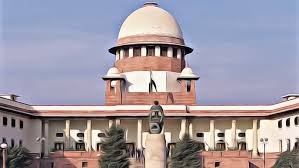
In this case, the Supreme Court addressed the misuse of criminal machinery in what was fundamentally a civil and commercial dispute. The appellant, who served as the Chief Executive Officer and authorized signatory of a company, had entered into a Memorandum of Understanding (MoU) with the first respondent concerning a tea estate. After disputes arose over performance obligations, the MoU was terminated, following which the respondent filed a criminal complaint alleging cheating under Sections 417 and 420 of the IPC. The Gauhati High Court had previously refused to quash the criminal proceedings. Setting aside the High Court’s order, the Supreme Court ruled that a mere breach of a contract—without evidence of a fraudulent or dishonest intention existing at the very inception of the transaction—cannot give rise to criminal prosecution for cheating. The Court emphasized that continuing criminal proceedings in a purely commercial disagreement amounts to an abuse of the process of law, and consequently quashed the criminal case against the appellant while keeping civil remedies open.
- Nature of the Transaction: The transaction was a corporate agreement (MoU) signed by the appellant strictly in his official capacity as the Chief Executive Officer of Darjeeling Organic Tea Estates Private Limited, with funds transferred directly to the company’s bank account rather than to the appellant personally.
- Absence of Initial Dishonest Intent: For an offence of cheating under Sections 417 and 420 of the IPC, a fraudulent or dishonest intention must exist at the inception of the transaction. The court noted that the complainant was already aware that the tea estate was mortgaged with UCO Bank prior to signing the MoU, and a bare assertion of false representation did not establish initial bad faith.
- Civil Character of Subsequent Disputes: The conflict arose entirely out of performance issues regarding reciprocal obligations under the MoU, culminating in its termination. The Supreme Court reiterated that contractual failures and claims for refunds carry purely civil consequences and cannot be converted into criminal cases simply because the relationship broke down.
- Misapplication of Law by the High Court: While the High Court correctly observed that an arbitration clause does not automatically bar criminal proceedings, it failed to assess whether the core ingredients of a criminal offense were actually present before allowing the prosecution to proceed.
- Final Relief: The Supreme Court allowed the appeal, set aside the Gauhati High Court’s judgment dated May 13, 2025, and quashed C.R. Case No. 17 of 2022 pending before the Judicial Magistrate First Class at Dimapur, Nagaland, against the appellant, while clarifying that the complainant remains free to pursue any available civil or contractual remedies.