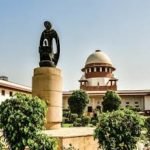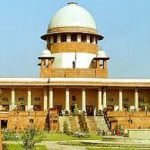
The Supreme Court of India allowed the criminal appeal filed by Kailash Chandra Kapri (the Appellant) and quashed the 35-year-old criminal proceedings pending against him. The case originated from a trivial fight over food in a police mess in 1989 involving five constables. While two co-accused passed away and the other two were acquitted in 2023 because the prosecution failed to produce a single witness for over three decades, the proceedings against the Appellant remained pending.
The Supreme Court ruled that a 35-year delay for a minor trial involving simple hurt and criminal intimidation constitutes an egregious violation of the fundamental right to a speedy trial as guaranteed under Article 21 of the Constitution. Emphasizing that guidelines often remain only on paper due to a lack of accountability, the Court expanding the scope of the matter to address systemic delays, directing the Registrar General of the Allahabad High Court to submit a comprehensive, data-driven status report on judicial vacancies, pendency, and long-term undertrial detentions across Uttar Pradesh.
- Factual Background
The Incident: On February 19, 1989, a physical alteration occurred over a trivial issue regarding food at a police mess under the GRP Rambagh Police Station.
The FIR: Constable Gajendra Singh filed a First Information Report (FIR) alleging that five police constables, including the Appellant (who was then 22 years old), surrounded, abused, and assaulted him with fists, kicks, and shoes.
The Charges: A chargesheet was filed under Sections 147 (rioting), 323 (voluntarily causing hurt), and 504 (intentional insult) of the Indian Penal Code (IPC) alongside Section 120 of the Railways Act, culminating in Criminal Case No. 545 of 1991.
- Procedural History & Lower Court Action
Status of Co-Accused: During the absolute pendency of the 33-year trial, two co-accused passed away. The other two co-accused were formally tried and acquitted on February 1, 2023, because the prosecution—despite all witnesses being police personnel and receiving summons up to the Director General of Police—failed to produce a single witness in court across three decades.
The Appellant’s Situation: The Appellant was transferred to the State of Uttarakhand following the bifurcation of Uttar Pradesh, resulting in a failure to serve him trial summons until the year 2021. He is currently 59 years old.
High Court Order: The Appellant approached the High Court of Allahabad under Section 482 of the Cr.P.C. to quash the proceedings on account of the 35-year delay. The High Court dismissed the application on February 23, 2006, refusing to quash the file and directing him to file a discharge application instead. The Appellant challenged this dismissal before the Supreme Court.
III. Core Issue Determined by the Court
Whether the criminal proceedings pending against the Appellant for over 35 years deserve to be quashed solely on the ground that his fundamental right to a speedy trial under Article 21 of the Constitution of India has been violated.
- Supreme Court’s Analysis and Legal Findings
- Right to Speedy Trial under Article 21
Procedural Fairness: Invoking foundational jurisprudence including *Maneka Gandhi v. Union of India* and *Hussainara Khatoon v. State of Bihar*, the Court reiterated that any state procedure depriving an individual of life or liberty must be “reasonable, fair, and just”. A procedure cannot meet this constitutional bar unless it ensures a reasonably expeditious trial.
The Impact of Accusation: Citing the Constitution Bench ruling in *Abdul Rehman Antulay v. R.S. Nayak*, the Court highlighted that simply carrying the tag of an “accused” harms a person’s standing, vocational peace, and mental health, making a speedy trial a fundamental human right.
Nature of the Offence: The Court noted that the case involved minor offenses (simple hurt and criminal intimidation) rather than heinous crimes. Forcing a public servant to live in “suspended animation” for 35 years over a minor mess hall dispute completely defeats the spirit of due process.
Failure of Guidelines: The Court expressed deep disappointment with how multiple directives issued over two decades (such as *State of Kerala v. Rasheed*) regarding court calendars are completely ignored by lower courts due to zero institutional accountability.
- Systemic Institutional Query
The Court determined that simply relieving the individual appellant would not solve the overarching issue. Consequently, it treated the matter as part-heard and exercised its powers to demand exhaustive data on pathologically delayed trials and bail applications in Uttar Pradesh.
The Court directed the Registrar General of the Allahabad High Court to submit a sworn affidavit containing the following statistics by **July 13, 2026**:
- Total pending criminal cases, their ages, and undertrial stagnation counts in the courts of Magisterial and Sessions levels.
- Total sanctioned, working, and vacant posts for judicial officers, and whether recruitment proposals are stuck with the State Government.
- Categorized tracking data on all pending bail applications as of April 30, 2026, classified specifically by the applicant’s duration of custody (ranging from under 1 year to over 10 years).
- Existing or potential procedural measures designed to prioritize and fast-track bail pleas where detention has exceeded 5 years.
- Final Decision
The Supreme Court granted leave, allowed the appeal, and explicitly directed that the criminal trial or prosecution against the Appellant “proceed no further”, effectively quashing the decades-old dispute. The macro-institutional case has been slated for further hearing upon the receipt of the Allahabad High Court’s status report.
2026 INSC 473
Kailash Chandra Kapri V. State of Uttar Pradesh &Ors. (D.O.J. 29.04.2026)