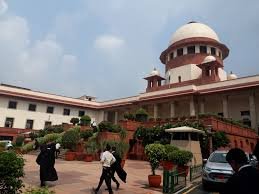
Supreme Court allowed the appeals filed by the State of West Bengal, ruling that the deposition of a deceased witness recorded in an earlier trial is admissible in a subsequent trial against an absconding accused, provided the requirements of Section 299 of the Code of Criminal Procedure (CrPC) are met. The Court clarified that the provision serves to preserve evidence when an accused deliberately absconds, preventing them from benefiting from the unavailability of material witnesses due to the passage of time. The Court set aside the High Court’s order, which had denied the admission of the victim’s testimony, confirming that the statutory preconditions—the accused absconding and no immediate prospect of arrest—were satisfied at the time the witness deposed.
- Background: In a 2012 gang-rape case, the respondent and another accused were absconding while three others were tried and convicted. The victim, a key witness, testified in the first trial but passed away in 2015. After the respondent was arrested in 2016, the prosecution sought to admit the victim’s earlier deposition as evidence under Section 33 of the Indian Evidence Act read with Section 299 of the CrPC.
- High Court Order: The High Court of Calcutta had rejected the application, observing that the prosecution had a duty to obtain a specific direction from the Trial Court to record evidence against the absconder during the first trial, and thus the earlier deposition could not be used against the respondent.
- Interpretation of Section 299 CrPC: The Supreme Court held that Section 299 CrPC acts as an exception to the general rule requiring a witness to be examined in the presence of the accused. It does not mandate a formal, prior order from a Magistrate to record that the accused is absconding; rather, what is relevant is whether the conditions—that the accused is absconding and there is no immediate prospect of arrest—were established at the time the evidence was recorded.
- Preventing Misuse of Process: The Court reasoned that taking a restrictive view of Section 299 would jeopardize the criminal justice system by incentivizing accused persons to wilfully abscond and await the death or unavailability of material witnesses.
- Application to Facts: The Court noted that the respondent was a declared absconder when the victim’s testimony was recorded (2013), and he remained at large until his arrest in 2016. As the two essential conditions of Section 299(1) were met, the deceased victim’s evidence is admissible in the trial against the respondent.
Legislative Continuity: The Court noted that the legislature has maintained this principle in Section 335 of the recently enacted Bharatiya Nagarik Suraksha Sanhita, 2023, reinforcing the intent to ensure evidence is preserved against those who evade trial.
2026 INSC 718
The State of West Bengal v. Kader Khan – (D.O.J. 17.07.2026)