Indian Judgements

Indian Judgements

Anticipatory Bail: Political Overtones and Personal Liberty

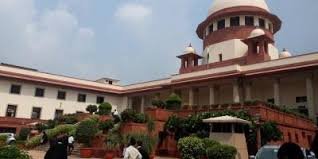
In the case of Pawan Khera v. State of Assam (2026), the Supreme Court of India granted anticipatory bail to the appellant, a senior member of the Indian National Congress, emphasizing that personal liberty should not be jeopardized by criminal proceedings influenced by political rivalry.

Case Background and Allegations

The dispute originated from press conferences held by the appellant on April 5, 2026, in New Delhi and Guwahati. During these events, the appellant displayed documents on a large screen alleging that the complainant—the wife of the Chief Minister of Assam—held three foreign passports (from Egypt, the UAE, and Antigua and Barbuda) and owned an undisclosed company in Wyoming, USA, with investments exceeding ₹50,000 crores.

The complainant filed an FIR alleging that these documents were fabricated and forged using fake seals and QR codes. The appellant was subsequently charged under various sections of the Bharatiya Nyaya Sanhita (BNS), including provisions related to forgery and public mischief.

Procedural History

The appellant initially received transit anticipatory bail from the Telangana High Court, but following further legal challenges, he was directed to apply before the competent court in Assam. The Gauhati High Court refused to grant anticipatory bail on April 24, 2026, leading to this appeal before the Supreme Court.

Key Findings of the Supreme Court

The Supreme Court set aside the High Court’s order and granted the appellant protection from arrest based on the following rationale:

  • Political Overtones and Personal Liberty: The Court noted that the case was heavily “coloured by political rivalry” . It highlighted various public statements and “election rhetoric” made by the Chief Minister of Assam against the appellant, including threats to “drag him out” of hiding and ensure he spent his days in an Assam jail.
  • No Necessity for Custodial Interrogation: Relying on the landmark Gurbaksh Singh Sibbia case, the Court held that since the allegations were based primarily on documentary evidence already in the possession of the prosecution, custodial interrogation was not necessary.
  • Error in High Court’s Reasoning: The Supreme Court found that the High Court had erroneously shifted the burden of proof onto the accused and failed to properly appreciate the material on record. It observed that the appellant, being a resident of India with no flight risk, was ready to cooperate with the investigation.
  • Constitutional Protection (Article 21): The Court reaffirmed that the right to personal liberty is a cherished fundamental right, and any deprivation must be justified by a high threshold, especially when surrounding circumstances indicate political motives.

Conclusion and Directions

The Supreme Court allowed the appeal and directed that the appellant be released on anticipatory bail in the event of his arrest, subject to the following conditions:

  • He must cooperate with the investigation and appear at the police station when required.
  • He must not influence witnesses or tamper with evidence.
  • He is prohibited from leaving India without the prior permission of the competent court.

The Court clarified that these observations were limited to the grant of bail and should not influence the eventual trial on the merits of the criminal case.

2026 INSC 437

Pawan Khera  V. State of Assam (D.O.J. 30.04.2026)

2026 INSC 437 click here to view full text of judgment

Next Story

Arbitration: Withdrawal of Petition Following Bank Guarantee Expiry

This commercial miscellaneous petition (O.M.P.(I) (COMM.) 319/2026) was filed under the Arbitration and Conciliation Act, 1996, by the petitioner, D C Ajmera, against the National Highways and Infrastructure Development Corporation Limited (NHIDCL) and the Bank of Maharashtra. During the proceedings, counsel for the respondent bank explicitly stated that the original bank guarantee had expired without being invoked within the stipulated period and therefore could not be encashed. In light of this submission, the petitioner sought and was granted leave to withdraw the petition, resulting in the matter being dismissed as withdrawn by the High Court of Delhi.

  • Procedural Context: The matter came up for hearing before the High Court of Delhi on August 12, 2026, under the coram of Hon’ble Mr. Justice Om Prakash Shukla.
  • Bank’s Submission: Respondent No. 2 (Bank of Maharashtra), through its counsel Mr. Santosh Kumar Rout, informed the court that the original bank guarantee in question was never invoked within its stipulated validity period and had since expired, rendering its encashment legally impossible.
  • Petitioner’s Stance: Acknowledging the submission made by the bank regarding the expiration and un-invoked status of the guarantee, the Senior Counsel for the petitioner sought permission from the court to withdraw the present petition.
  • Final Order: Accepting the petitioner’s request, the High Court dismissed the petition as withdrawn, along with the accompanying interlocutory applications (I.A. 20903/2026 and I.A. 20904/2026).

2026 DHC 6570

D C Ajmera v. National Highways and Infrastructure Development Corporation Limited & Anr. (D.O.J. 12.08.2026)

2026 DHC 6570 click here to view full text of judgment

Next Story

Grant of Regular Bail to Alleged Drug Syndicate Kingpin Due to Lack of Direct Evidence and Protracted Delay

This regular bail application was filed under the NDPS Act by the applicant, who was arrested on July 24, 2025, at Cochin Airport via a Look Out Circular (LoC) and accused by the Narcotics Control Bureau (NCB) of being the kingpin of an international drug cartel. The High Court of Delhi allowed the bail application, noting that no contraband was recovered from the applicant, the primary evidence against him consisted of co-accused disclosure statements, telephonic records lacked intercepted proof, and bank transactions were consistent with a legitimate spice business. Furthermore, the court considered the fact that charges had not even been framed yet and co-accused individuals had already been released on bail.

  • Factual Background:
    • Following a 2021 raid where the NCB recovered charas and methamphetamine from a parcel service and various co-accused residences, the applicant was implicated based on disclosure statements alleging he directed the booking as a cartel kingpin.
    • An LoC was issued, and he was apprehended at Cochin Airport on July 24, 2025.
  • Arguments of the Applicant:
    • The applicant maintained his innocence, stating he had been in custody since July 2025 without legally admissible evidence.
    • It was explained that his financial transactions with co-accused individuals were related to his legitimate spice trade business, and the original 2021 complaint did not implicate him.
  • Arguments of the Respondent (NCB):
    • The NCB contended that the applicant was an absconder against whom an LoC had to be executed.
    • They argued that apart from disclosure statements, there was evidence of telephonic connectivity and money transactions between the applicant and co-accused parties.
  • High Court’s Analysis and Findings:
    • Weakness of Evidence: The court observed that no incriminating substances were recovered from the applicant. Furthermore, simple call detail records without intercepted conversations do not prove criminal complicity, and minor bank transfers do not inherently suggest contraband financing.
    • Delayed Action by Authorities: The court noted that although the initial complaint was filed in 2021, little was done to formally summon or investigate the applicant until the LoC was issued in July 2025.
    • Parity and Trial Status: Given that charges were still pending framing and co-accused persons (such as Paschal) had already been granted bail, the court found no justification to continue the applicant’s incarceration.
  • Final Directions:
    • The bail application was allowed.
    • The applicant was ordered to be released on regular bail upon furnishing a personal bond of Rs. 1,00,000/- with one surety in the like amount to the satisfaction of the trial court.

2026 DHC 6565

Nafi Nazar v. Narcotics Control Bureau (D.O.J. 12.08.2026)

2026 DHC 6565 click here to view full text of judgment

Next Story

Grant of Regular Bail to Foreign National Under NDPS Act Due to Protracted Trial Delay

This criminal bail application was filed under the NDPS Act seeking regular bail by a foreign national detained since December 8, 2021, for alleged possession of intermediate and commercial quantities of narcotics (60 grams of cocaine and 55 grams of methamphetamine). The High Court of Delhi allowed the application and granted regular bail primarily on the ground of inordinate trial delay, noting that only 8 out of 22 prosecution witnesses had been examined over a prolonged period and the end of the trial was nowhere in sight. To address concerns regarding his status as a foreign national with an expired visa, the court directed that his custody be handed over directly to the Foreigners Regional Registration Office (FRRO) upon release.

  • Factual and Procedural Background:
    • The applicant/accused sought regular bail in connection with a complaint case registered by PS NCB Delhi for offenses under Sections 8(c), 20(b), 21(b), 22(c), 23, 25, and 29 of the NDPS Act.
    • The applicant had been incarcerated since December 8, 2021. An earlier bail application (Bail Application No. 1950/2025) was dismissed by the bench on May 20, 2025.
  • Core Grounds for Bail:
    • The primary ground pressed by the applicant’s counsel was the severe delay in the progress of the trial.
    • It was pointed out that when the previous bail application was dismissed, 7 out of 22 prosecution witnesses had been examined, and even after more than a year, only 1 additional witness had been examined, bringing the total to just 8 out of 22 witnesses examined.
  • Respondent NCB’s Stance:
    • The NCB did not dispute the slow pace of the trial.
    • However, opposing the bail, the NCB requested that the trial court instead be directed to expedite the trial, highlighting the added risk because the applicant is a foreign national.
  • High Court’s Observations and Findings:
    • Prolonged Incarceration: The court observed that despite diligence by the trial court, the reality remained that the applicant had been in custody for over four and a half years and the trial’s conclusion was not in sight.
    • Addressing Flight Risk of Foreign Nationals: To mitigate the NCB’s apprehension regarding his foreign nationality and expired visa, the court structured the bail release conditional upon transferring his custody directly to the FRRO.
  • Final Directions:
    • The bail application was allowed.
    • The applicant was ordered to be released on regular bail upon furnishing a personal bond of Rs. 1,00,000/- with one surety in the like amount to the satisfaction of the trial court, subject to his immediate custody handover to the FRRO.

2026 DHC 6561

Paschal Obinna Nwagbaoso v. Narcotic Control Bureau (D.O.J. 12.08.2026)

2026 DHC 6561 click here to view full text of judgment

Next Story

Grant of Regular Bail on Grounds of Parity in Money Laundering Case

This judgment resolves two regular bail applications (BAIL APPLN. 2363/2026 and BAIL APPLN. 2382/2026) filed under the Prevention of Money Laundering Act (PMLA) arising from case ECIR/DLZO-II/03/2024. The High Court of Delhi accepted the Directorate of Enforcement’s concession that co-accused persons had already been granted bail and that the said orders remained unchallenged, thereby extending regular bail to the petitioners Tushar Chauhan and Akshay Kumar on grounds of parity.

  • Factual Background: The applicants, Tushar Chauhan and Akshay Kumar, sought regular bail in connection with an ECIR registered by the Directorate of Enforcement (DoE) under Sections 3 and 4 of the Prevention of Money Laundering Act, 2002.
  • Respondent’s Stance: At the very outset of the hearing, the counsel appearing for the Directorate of Enforcement conceded that several co-accused persons—namely Pravez Khan, Suraj Shat, Neeraj Chauhan, Rajesh Kumar, and Lovee Narula—had already been granted bail by the High Court, and that those orders had not been challenged by the DoE. Consequently, the DoE submitted that the present applicants could also be granted regular bail on the principle of parity.
  • High Court’s Directions and Conditions:
    • Considering the factual and legal matrix established in the prior bail orders of the co-accused, the High Court allowed both bail applications.
    • The applicants were directed to be released on regular bail upon furnishing a personal bond of Rs. 1,00,000/- each, along with one surety in the like amount to the satisfaction of the trial court.
    • A specific condition was imposed restricting the applicants from leaving India without prior permission from the trial court.
    • A copy of the order was ordered to be transmitted immediately to the concerned Jail Superintendent for execution.

2026 DHC 6560

Tushar Chauhan v. Directorate of Enforcement (D.O.J. 12.08.2026)

2026 DHC 6560 click here to view full text of judgment

Hi Judgments Online