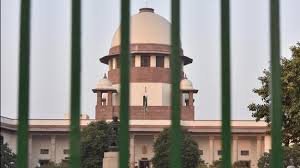

In this appeal from the Armed Forces Tribunal, the Supreme Court held that a retired Army officer who suffered a gunshot wound from an accidental discharge of his own weapon while on duty during Operation Rakshak/Operation Parakram is entitled to the War Injury Element of pension under Regulation 103. Reversing the Tribunal’s refusal based on the lack of final MP-5 approval, missing digital database entries, and primary records destroyed in the 2014 floods, the Court found that surviving official records established the operational nexus and grievous nature of the injury.
- Factual Background: The appellant served in the Army from 24 June 1985 until his retirement on 31 March 2019 as Subedar Major and Honorary Lieutenant. On 7 August 2002, while serving with 31 Sub Area Signal Company in Jammu and Kashmir during Operation Rakshak/Operation Parakram, his loaded weapon accidentally discharged on duty, injuring his left thigh and femoral vein.
- Medical and Service Records: The Release Medical Board (23 September 2018) assessed 40% permanent disablement attributable to military service and noted the case as a “battle casualty” referencing Part II Order No. BC-59 (16 December 2002), which recorded a battle accident/wound during Operation Rakshak/Operation Parakram. Additional records included Education Scholarship Entitlement Cards, a Brigadier’s Attributability/Battle Casualty Certificate dated 5 February 2015, and a Severity Certificate classifying the injury as “grievous” under Parameter No. 2 of Army Order 1/2003/MP.
- Tribunal’s Decision: Although the appellant was already receiving an ordinary Disability Element (40% rounded to 50%) from 1 April 2019, the Armed Forces Tribunal dismissed his claim for the War Injury Element on 10 May 2023 and declined leave to appeal on 19 July 2023, primarily due to the absence of final approval from the Adjutant General’s Branch/MP-5 and missing digital database entries.
- Supreme Court’s Legal Analysis: Examining Regulation 103, Category ‘E’ clause (h) of Regulation 82, and Paragraph 69 of Army Order 1/2003/MP, the Court held that the contemporaneous records established the required operational nexus with counter-militancy operations and grievous severity. The Court ruled that an accidental discharge from a soldier’s own weapon is not a disqualifying “self-inflicted injury” absent evidence of intention or deliberate act, and following Union of India v. Saroj Devi, held that lost 2014 flood records and missing later digital entries could not override consistent, surviving official records.
- Final Decision: The appeal was allowed, the Tribunal’s orders were set aside, and the respondents were directed to sanction and pay the War Injury Element from retirement within three months, adjusting the ordinary Disability Element already paid to avoid duplication.