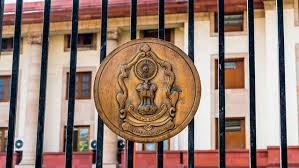
The Supreme Court of India allowed a criminal appeal, setting aside the judgments of the Jharkhand High Court and the Special Judge (ACB), Chaibasa, and cleared the appellant of charges under Sections 7 and 13(2) of the Prevention of Corruption Act, 1988. A Division Bench comprising Justice Ujjal Bhuyan and Justice Atul S. Chandurkar held that proof of demand and voluntary acceptance of illegal gratification is the sine qua non for establishing an offence under the PC Act. The Court reaffirmed that mere recovery of chemically-treated currency notes from an accused’s residence or a positive phenolphthalein test—devoid of direct or corroborative evidence showing actual demand and acceptance—is insufficient to sustain a conviction beyond reasonable doubt.
- Factual Background:
- The appellant, an Assistant in the District Education Office at Saraikella, was accused of demanding a bribe of ₹5,000 from the complainant (a school orderly) to release his withheld salary.
- Following a complaint to the Vigilance Bureau, a trap operation was conducted on May 20, 2010. The complainant went with the appellant to the latter’s rented accommodation, where the bribe money was allegedly paid and placed under a bed/pillow.
- The trap team subsequently retrieved ₹5,000 from the appellant’s residence and conducted a hand-wash solution test, which turned pink. The trial court convicted the appellant, and the High Court affirmed the conviction.
- Evidentiary Inconsistencies & Unwitnessed Transaction:
- The Supreme Court analyzed witness depositions and noted major contradictions regarding whether the appellant was arrested at his office or at his residence.
- Crucially, no member of the trap team, shadow witness, or independent witness actually saw or heard the appellant demand the bribe or accept the money. The prosecution relied solely on the uncorroborated testimony of the complainant.
- Independent witnesses (office clerks) testified that they merely signed seizure papers under police instructions without witnessing any money recovery or transaction.
- Reaffirmation of Legal Precedents (Sine Qua Non of Demand):
- Referring to settled law in Satyanarayana Murthy, the Constitution Bench ruling in Neeraj Dutta, Aman Bhatia, and Jaswinder Singh, the Court reiterated that:
- Proof of demand is the foundation (sine qua non) of offences under Sections 7 and 13 of the PC Act.
- Acceptance and demand must be proven as matters of fact beyond reasonable doubt.
- Recovery of tainted currency notes from the possession or premises of a public servant, standing alone without proof of demand, cannot bring home a conviction.
- Supreme Court’s Verdict:
- The Court concluded that the prosecution failed to prove demand and acceptance of illegal gratification.
- Even though the appellant had already completed serving his four-year prison sentence and paid the fine, the Court allowed the appeal to clear his name, setting aside both lower court orders and exonerating him of all charges.
- Referring to settled law in Satyanarayana Murthy, the Constitution Bench ruling in Neeraj Dutta, Aman Bhatia, and Jaswinder Singh, the Court reiterated that: