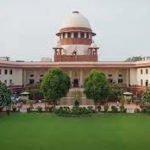
The Supreme Court of India dismissed the civil appeals challenging the Delhi High Court’s judgment dated April 29, 2026, which had refused to interfere with the tender conditions issued by the Directorate of Education, Government of NCT of Delhi, for procuring sports goods and outdoor gymnasium equipment for government schools. The appellants had contended that various tender clauses—such as past performance thresholds, physical sample requirements, denial of MSME relaxations, and the requirement of a functional office and warehouse in Delhi/NCR for the past three years—were arbitrary, onerous, and exclusionary. The Supreme Court upheld the High Court’s view that a challenge to tender eligibility conditions must be brought with prompt expedition. Because the appellants delayed filing their writ petition until the tender process had materially advanced (with some contracts already awarded and others at the financial evaluation stage) and many of the challengers had not even participated in the tenders, judicial intervention was unwarranted. The Court also distinguished previous case law, noting that operational requirements for swift school supplies differ from restrictive local-sourcing barriers, and accordingly dismissed the appeals.
- Factual and Procedural Background:
- The Directorate of Education (DoE), Delhi, floated six Sports Equipment Tenders (SETs) between November and December 2025 and an Outdoor Gym Tender in January 2026 to procure equipment worth approximately INR 34 crores for nearly 1.6 million school students.
- The appellants collectively filed a Writ Petition challenging several stringent tender conditions, which was dismissed by the High Court on grounds of delay, laches, and non-participation, prompting the present appeals.
- Core Issues & Submissions:
- Delay and Laches: The respondents argued that challenges to tender conditions must be raised immediately upon publication rather than after the process has substantially progressed. The appellants claimed their challenge was timely, having been filed while technical evaluations were ongoing and after exhausting representations.
- Operational Clause (Clause 2.17): The appellants argued that the requirement of maintaining a functional office and warehouse in Delhi/NCR for the last three years was exclusionary, relying on Vinishma Technologies Pvt. Ltd. v. State of Chhattisgarh. Conversely, the respondents maintained that the clause was operational—ensuring swift installation, maintenance, and safety compliance for school children—rather than a geographical monopoly.
- Supreme Court’s Analysis and Rulings:
- Significance of Time in Public Procurement: The Court reiterated that time is of the essence in public procurement. Delay cannot be measured merely by counting calendar days, but must be assessed against the progression of the tender stages and the third-party interests that crystallize in the interim. Fence-sitters who stand by and approach the court late cannot disrupt an ongoing process.
- Inapplicability of Vinishma Precedent: The Court distinguished Vinishma, noting that the clause struck down in that case created an artificial barrier by demanding prior local state-supplies, whereas Clause 2.17 here imposed a neutral operational requirement to guarantee prompt servicing and child safety in schools.
- Final Conclusion: Finding the challenge belated, lacking bona fides, and potentially damaging to public interest and student welfare, the Supreme Court dismissed both civil appeals and left the wider question regarding the validity of Clause 2.17 open for an appropriate future case.