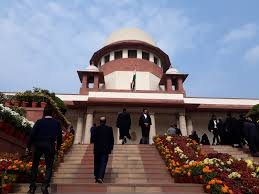
The Supreme Court addressed systemic concerns regarding the need for sensitivity, compassion, and empathy in judicial decisions involving sexual offences and vulnerable or minor victims. Setting aside an erroneous High Court judgment, the Court appointed an Expert Committee chaired by former Supreme Court Justice Aniruddha Bose to develop comprehensive guidelines and a publication aimed at eliminating stereotypes, victim-blaming, and insensitive language from judicial discourse. The Supreme Court formally approved this publication as a mandatory guiding resource for the judiciary, police, tribunals, and quasi-judicial bodies to ensure that legal processes uphold human dignity and constitutional values.
- Initiation and Committee Formation: Following a letter from the forum ‘We the Women of India’ regarding an insensitive High Court order, the Supreme Court recognized a systemic need for a victim-centric approach in sexual offence cases. It requested former Supreme Court Justice Aniruddha Bose to constitute and chair a domain-expert committee to draft comprehensive guidelines.
- Expert Committee Composition: The Committee comprised Justice Sonia G. Gokani (Former Chief Justice, Gujarat High Court), Ms. Anuradha Shankar (Advocate and Former DGP, Madhya Pradesh), Dr. Surat Singh (Supreme Court Advocate), and Prof. Lucy T.V. Zehol (Anthropology Professor, NEHU), assisted by academy faculty and judicial officers.
- Scope and Content of the Publication: The resulting publication outlines the evolution of gender jurisprudence, addresses the legal framework against stereotyping and victim-blaming, and warns against secondary trauma caused by aggressive interrogation or cross-examination.
- Language and Stereotype Redressal: The publication provides a compilation of common gendered and stereotypical expressions found in judicial discourse along with neutral alternatives, and offers guidance on regional terminology, transgender identities, and SOGIESC (sexual orientations, gender identities, expressions, and sex characteristics) to safeguard individual dignity.
- Approval and Implementation Directives:
- The Supreme Court approved the publication as a mandatory guiding resource for members of the judiciary dealing with sexual offences and vulnerable persons.
- The Registry was directed to upload the handbook on the Supreme Court website and circulate copies to all High Courts, Tribunals, and quasi-judicial bodies for similar dissemination to the district judiciary.
- The National Judicial Academy and State Judicial Academies must publish the handbook, while copies are to be sent to Law Departments, Legal Services Authorities, and the Ministry of Women and Child Development, alongside regional translations for law universities.
- Directors General of Police and Directors of Prosecution across all states are directed to implement the handbook and instruct police stations to follow its contents during FIR registration and chargesheet filing.
- Authorities are mandated to conduct orientation programmes, training sessions, and workshops to ensure the effective integration of these principles into institutional practice.
(In Re: Order dated 17.03.2025 Passed by the High Court of Judicature at Allahabad in Criminal Revision No. 1449/2024 and Ancillary Issues) (D.O.J. 14.07.2026)