
Indian Judgements

Indian Judgements

High Court Affirms Conviction in Landmark Murder Appeal

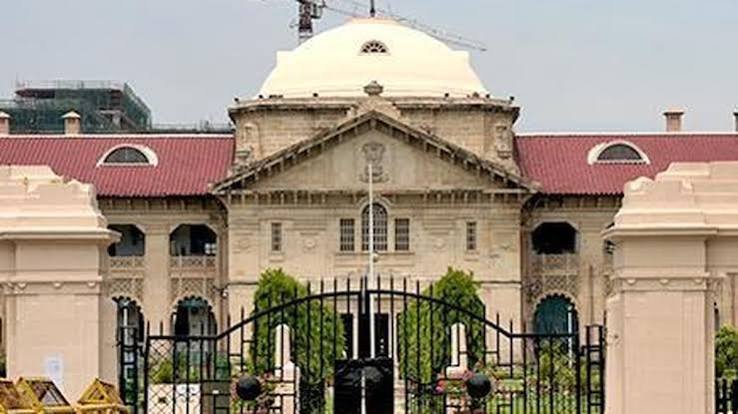
This criminal appeal challenges the judgment and order dated July 3, 2013, passed by the Additional District and Sessions Judge, Court No. 3, Fatehpur, in Sessions Trial No. 38 of 2009, whereby the appellants were convicted under Section 302 of the IPC. The case stems from an incident on October 11, 2008, where the victim, Bhura Singh, was fatally shot during a property dispute over a recently purchased ruined house. The Allahabad High Court dismissed the appeal, affirming the conviction while modifying it to Section 302 read with Section 34 of the IPC to reflect joint liability and common intention, directing the appellants on bail to surrender into custody immediately.

  • Factual Background:
    • Informant Rajendra Singh and his father Bhura Singh purchased a fallen-down kutcha house from Awadhram via a registered sale deed on October 7, 2008.
    • The appellants, seeking to protect Rupa Devi (Awadhram’s widowed daughter-in-law who worked for them and stood to inherit), measured the property and created a dispute, prompting the victim’s family to seek a compromise through one Ram Swaroop Singh on October 11, 2008.
    • While talking near Ram Swaroop’s house, the appellants—Dinesh Chandra Shukla, Akhilesh Chandra Shukla, Anil Kumar Shukla, and Sunil Kumar Shukla—armed with firearms, arrived, hurled exhortations, and opened indiscriminate fire after the victims fled toward a local Dharamshala.
    • Bhura Singh sustained fatal firearm injuries and succumbed upon reaching Vijaipur Hospital, leading to the prompt registration of an FIR at 5:30 PM on the same day.
  • Appellants’ Submissions:
    • It was argued that the deceased had an extensive criminal history and was likely murdered by unknown individuals under different circumstances, with the appellants falsely implicated due to enmity.
    • Defense counsel contended that eye-witnesses PW-1 and PW-2 were not present at the spot, pointing to discrepancies in their statements and the fact that their names were omitted from the inquest report.
    • Strong reliance was placed on the Forensic Science Laboratory (FSL) report, which showed that empty cartridges recovered from the scene did not match the seized DBBL guns, rendering the prosecution story doubtful.
    • It was further urged that the conviction under Section 302 IPC was legally flawed because no specific fatal role or individual shot was attributed to any single appellant.
  • State’s and Informant’s Submissions:
    • The State and the informant countered that the ocular testimony of PW-1 and PW-2 remained consistent, cohesive, and fully corroborated by the medical autopsy report and site plan particulars.
    • They maintained that the motive was clearly established by the immediate property rivalry, and the prompt lodging of the FIR eliminated any possibility of fabrication or ante-timing.
    • Regarding the ballistic report, it was argued that the non-matching or non-recovery of actual murder weapons does not nullify reliable, unimpeachable ocular testimony.
  • Legal Analysis & Findings:
    • Reliability of Eye-Witnesses: The Court evaluated the testimonies of PW-1 and PW-2 under parameters set in Balu Sudam Khalde v. State of Maharashtra, holding that minor discrepancies do not shake the core credibility of injured or natural eye-witnesses. Furthermore, non-inclusion in an inquest report under Section 174 Cr.P.C. does not discredit an eye-witness.
    • Medical and Ocular Consistency: The autopsy surgeon confirmed ante-mortem firearm injuries and retrieved pellets from the victim’s heart, matching the narrative that the victim was shot while looking back in self-preservation while fleeing.
    • Impact of Ballistic Discrepancies: Relying on Supreme Court precedents such as Rakesh v. State of U.P. and Gurcharan Singh v. State of Punjab, the Court ruled that flaws in investigation or a negative FSL matching report cannot override trustworthy and consistent direct eye-witness testimony.
    • Common Intention (Section 34 IPC): The conduct of the appellants arriving together, armed, exhorting, and firing indiscriminately clearly established a pre-arranged plan and shared common intention to eliminate the deceased.
  • Final Order:
    • The criminal appeal was dismissed.
    • The conviction of the appellants under Section 302 IPC was affirmed with the aid of Section 34 IPC (Section 302 read with Section 34 IPC).
    • The bail bonds were cancelled, and the appellants were directed to be taken into custody immediately to serve out their remaining sentences.

J.O. (Web) 2026 ALL 117

Dinesh Chandra Shukla and 3 others v. State of U.P. (D.O.J. 17.07.2026)

J.O. (Web) 2026 ALL 117 click here to view full text of judgment
Next Story

Probate: Supreme Court Upholds Admissibility of Evidence and Dismisses Challenge to Proof Affidavit

The Supreme Court dismissed the civil appeal filed by the appellants, upholding the Madras High Court division bench and single judge orders that had declined to eschew the plaintiff’s proof affidavit and documents in a pending testamentary suit for probate. The Court ruled that evidence—both oral and documentary—should not be shut down at the threshold stage under Order XIII Rule 3 of the Civil Procedure Code, 1908 unless documents are patently inadmissible or irrelevant. Reaffirming settled legal principles, the bench emphasized that the mere marking or exhibiting of a document does not dispense with the statutory requirement of proving its contents in accordance with law during trial.

  • Factual Background:
    • The respondent (plaintiff) filed a petition in 2020 (later converted to T.O.S. No. 12 of 2021) seeking probate of the will of late C. Shyamalavalli before the Madras High Court.
    • After the appellant (defendant) filed a written statement and the plaintiff submitted a proof affidavit, the appellant filed an application seeking to eschew the proof affidavit, averments, and exhibited documents on the ground of irrelevance.
    • The Single Judge dismissed the application (while appropriately excluding certain xerox copies submitted without explanation) and the Division Bench subsequently dismissed the resulting Original Side Appeal, leading to the present appeal before the Supreme Court.
  • No Premature Shutting Down of Evidence:
    • The Supreme Court found no error in the lower courts’ refusal to exercise power under Order XIII Rule 3 of the CPC to reject the documents at the threshold.
    • Contentions and documents relating to the pendency of other suits and property transfers within the family structure cannot be abruptly blocked from consideration at an initial stage.
  • Marking Versus Proving of Documents:
    • Citing precedents including LIC v. Ram Pal Singh Bisen, the Court reiterated that the mere admission of a document in evidence or marking it as an exhibit does not amount to its proof or establish the truth of its contents.
    • The contents of marked documents must still be duly proved through primary or secondary evidence under the law of evidence during the course of the trial.
  • Final Disposition:
    • The appeal was dismissed, and the Madras High Court’s judgment dated August 21, 2024, was upheld.
    • The stay of proceedings granted earlier by the Supreme Court was vacated, and the testamentary proceedings (T.O.S. No. 12 of 2021) were directed to proceed uninfluenced by observations made in the order.

2026 INSC 813

S. Sangeetha & Ors. v. Tmt. P. Ponni (D.O.J. 07.08.2026)

2026 INSC 813 click here to view full text of judgment

Next Story

Legality of State Land Encroachment Notice and Official Record Reliance in Writ Jurisdiction

The petitioners, former directors of a struck-off company, challenged a demolition communication issued by the Additional Deputy Commissioner, Leh, directing the removal of alleged encroachments from State land where a tourist resort named ‘The Last Resort’ was established. During the proceedings, the petitioners restricted their challenge solely to the quashing of the demolition communication, abandoning other consequential reliefs. The official respondents defended the action, stating that notices were duly served upon the registered proprietor reflected in official tourism and electricity records. The High Court held that administrative authorities are legally justified in acting upon contemporaneous official records and are under no obligation to issue independent notices to third parties whose names do not figure therein. Consequently, the writ petition challenging the demolition notice was dismissed, leaving all private civil disputes and contractual claims open for adjudication before a competent civil forum.

  • Core Issue: Whether an administrative demolition notice concerning State land is vitiated for violation of principles of natural justice when issued to the person registered in official records rather than third-party claimants asserting unregistered private arrangements.
  • Official Records Prevail: The Court observed that the resort and its electricity connection stood officially registered in the name of Respondent No. 14, and the petitioners failed to produce statutory evidence recognizing them as owners, lessees, or legal occupiers at the time the notice was issued.
  • Application of Natural Justice: Principles of natural justice cannot be applied in the abstract; authorities are fully justified in proceeding against individuals reflected as proprietors in official state documentation without tracking down unrecorded third-party interests.
  • Bar on Disputed Questions of Fact: Relying on Supreme Court precedent (Roshina T. v. Abdul Azeez), the High Court reiterated that rival property claims, possessory rights, and private contractual agreements involve pure questions of fact that cannot be adjudicated under writ jurisdiction.
  • Final Order: The writ petition challenging the demolition notice was dismissed as devoid of merit, and related contempt proceedings were closed, while explicitly clarifying that all civil rights and contentions regarding title or lease agreements remain open to be agitated before a proper civil court.

J.O. (Web) 2026 J & K 23

Kunzang Dolma & Ors. v. Union of India & Ors. (D.O.J. 21.07.2026)

J.O. (Web) 2026 J & K 23 click here to view full text of judgment

Next Story

Murder: Allahabad High Court Acquits Surviving Appellant in 1983 Murder Case

This criminal appeal challenged the validity of the judgment and order dated May 9, 1989, passed by the Vth Additional Sessions Judge, Agra in Sessions Trial No. 232 of 1987, whereby the appellants were convicted under Section 302 read with Section 34 of the IPC and sentenced to imprisonment for life. During the pendency of the appeal, appellant no. 1 (Anil Kumar Pachauri) passed away, causing the appeal to abate against him, leaving only the surviving appellant, Rama Kant. The prosecution’s case alleged that the appellants intercepted the deceased (Neksey @ Vinod) on November 11, 1983, where Rama Kant caught hold of him and Anil Kumar delivered fatal knife blows. Upon a meticulous re-evaluation of the evidence, including material contradictions in the testimonies of eye-witnesses and compelling defence testimony regarding a power outage at the scene, the Allahabad High Court concluded that the prosecution failed to establish the guilt of the surviving appellant beyond reasonable doubt. Consequently, the appeal was allowed, and the conviction and sentence of Rama Kant were set aside.

  • Abatement Against Deceased Appellant: Appellant no. 1, Anil Kumar Pachauri @ Guddu, expired during the pendency of the appeal, and the proceedings against him officially abated, restricting the court’s review to the surviving appellant, Rama Kant.
  • Doubtful Presence and Contradictory Ocular Testimony: The testimonies of the primary eye-witnesses—PW-2 (Ram Nath, the informant/brother) and PW-3 (Praveen Kumar)—suffered from irreconcilable material contradictions regarding whether the local paan shop was open or closed, whether a rickshaw was present, and their unnatural post-incident conduct of failing to protect or immediately assist the victim.
  • Corroborating Defence Evidence: DW-1 (Mohan Lal, the local shopkeeper) testified that no such incident occurred in front of his shop and crucially confirmed that there was a total power outage from 6:00 PM to 9:30 PM on the night of the incident. This completely discredited the eyewitness claims that street lights and electric bulbs were actively illuminating the crime scene.
  • Motive and Prior Enmity: A previous altercation had taken place between the parties on Diwali (November 4, 1983), which had been amicably compromised. The Court noted that prior animosity is a double-edged sword, and in light of the close familial relationship of the witnesses, the possibility of a false implication due to past enmity could not be ruled out.
  • Legal Standard of Proof: The Court reiterated that an eyewitness must establish their presence beyond a reasonable doubt through confidence-inspiring evidence. Because the prosecution’s foundational pillars—such as illumination and witness presence—collapsed under cross-examination and defence evidence, the benefit of doubt must be extended to the accused.
  • Final Ruling: The criminal appeal filed by the surviving appellant was allowed, the conviction and sentence under Section 302/34 IPC were set aside, and Rama Kant was acquitted of all charges with his bail bonds and sureties discharged.

J.O. (Web) 2026 ALL 190

Anil Kumar and Others v. State of U.P. (D.O.J. 07.08.2026)

J.O. (Web) 2026 ALL 190 click here to view full text of judgment

Next Story

Service Law: A Zero-Tolerance Stance on State Exchequer Drain – Dismissal Valid

This intra-court appeal challenged a learned Single Judge’s order that dismissed the appellant’s writ petition against his termination and ordered the recovery of Rs. 2,16,000/- as costs (quantified at a nominal rate of Rs. 1,000 per month for the years salary was drawn). The appellant had secured a teaching appointment in 1992 under the guise of a short-term vacancy created by an alleged teacher on leave. Decades later, records revealed that the leave-holder was an imaginary or non-salaried figure utilized to facilitate fraudulent appointments by a corrupt District Inspector of Schools (D.I.O.S.). When cornered in previous proceedings, the appellant cleverly tried to dismiss his own petition as infructuous to avoid scrutiny, but authorities subsequently terminated his services. The Allahabad High Court dismissed the appeal, holding that fraud vitiates all solemn acts and that interim orders cannot protect undeserved benefits derived from the State exchequer.

  • Background and Genesis of Fraud: The appellant claimed appointment to a short-term vacancy in an aided inter college purportedly caused by an assistant teacher going on leave without pay. However, institutional records and salary registers confirmed that the supposed leave-holder never received a salary from the State exchequer and was essentially a fictitious placeholder created to engineer a fraudulent vacancy.
  • Role of Corrupt Officials: The erstwhile D.I.O.S., who initially approved the appellant’s appointment, was later penalized by the State Government after charges of facilitating 96 fraudulent appointments and salary payments were proven against him. Furthermore, the appellant had deliberately omitted the State of U.P. as a respondent in his original 1993 writ petition to bypass proper state-level scrutiny.
  • Abuse of Judicial Process: The appellant managed to cling to public employment for nearly two decades purely under the shelter of an interim order. When the High Court directed him to prove the legality of his appointment, he avoided adjudication by stating that his writ petition had become infructuous, prompting the management to terminate his services.
  • Application of the Doctrine of Restitution: The Court reiterated that an interim order is always subject to the final outcome and does not create an indefeasible right. Under the doctrine of restitution, a party who derives an undeserved advantage through judicial proceedings must restore it, ensuring no one profits from illegality or a transient court order.
  • Inapplicability of Regularization Protections: The appellant’s reliance on Section 33-F of the U.P. Secondary Education Services Selection Board Act, 1982, for regularization was rejected. The Court ruled that statutory regularisation provisions cannot be mechanically applied to shield a wrongdoer or validate a foundational fraud.
  • Final Verdict: The special appeal was completely dismissed with costs and the interim stay on recovery was vacated, paving the way for consequential recovery actions by the administration.

J.O. (Web) 2026 ALL 189

Subhash Chandra Tyagi v. State of U.P. and others (D.O.J. 07.08.2026)

J.O. (Web) 2026 ALL 189 click here to view full text of judgment
Hi Judgments Online