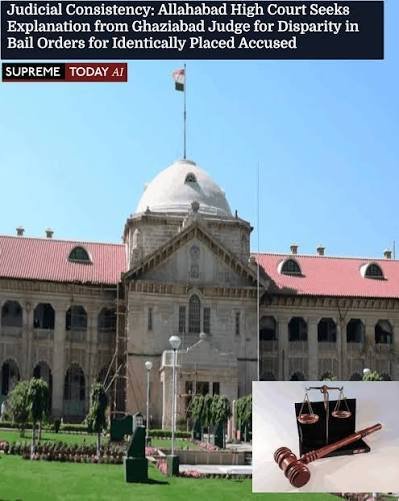
This writ petition, adjudicated by a Division Bench comprising Hon’ble Atul Sreedharan, J. and Hon’ble Vivek Saran, J. at the High Court of Judicature at Allahabad, addresses a challenge brought by an existing Yatri Plaza operator against an e-tender advertisement issued by the Uttar Pradesh State Road Transport Corporation for establishing an additional AC bus Yatri Plaza near Gajraula on the Moradabad-Delhi route. The petitioner contended that the new tender violated the Corporation’s internal policy guidelines of November 2020 and would adversely affect its commercial interests by dividing passenger traffic. The High Court dismissed the petition, ruling that the contract between the parties was purely commercial and non-statutory, that administrative guidelines without statutory force do not vest enforceable legal rights, and that courts exercising writ jurisdiction under Article 226 will not interfere with commercial tender processes or protect private business interests at the cost of public interest and healthy competition.
- Factual Background: The petitioner entered into a three-year contract with the U.P. State Road Transport Corporation on October 19, 2024, to operate a Yatri Plaza for AC buses near Gajraula on the Moradabad-Delhi route. On July 16, 2025, the Corporation issued an e-tender inviting bids for establishing another Yatri Plaza for AC buses on the same route section. Aggrieved by potential competition and proximity, the petitioner filed Writ-C No. 24716 of 2025 seeking to quash the tender notification.
- Petitioner’s Submissions: The petitioner argued that opening an additional Yatri Plaza contravened the Corporation’s policy guidelines dated November 26, 2020, which allegedly restricted additional plazas unless traffic exceeded 300 buses, and that the move severely harmed its heavy capital investments and commercial viability.
- Respondents’ Submissions: The Corporation countered that the contract contained no restrictive covenants barring the establishment of competing facilities, that the internal guidelines possessed no statutory force, and that introducing another plaza fosters healthy competition and benefits the traveling public.
- Legal Analysis & Findings:
- Nature of Contract: The Court found that the contract between the petitioner and the Corporation was purely commercial and non-statutory; the mere fact that the Corporation is an instrumentality of the State under Article 12 does not elevate the contract to a statutory one.
- Locus Standi and Legal Injury: Citing Supreme Court precedents such as Vinoy Kumar v. State of U.P., the Bench noted that a writ petitioner must demonstrate the violation of a fundamental or legal right. The petitioner failed to show any legal wrong or statutory breach committed by the Corporation, as the existing contract did territorial exclusivity.
- Status of Administrative Guidelines: The Court held that the policy guidelines dated November 26, 2020, were internal administrative instructions issued by the Managing Director without statutory backing, and thus lacked binding force. Furthermore, a proper reading of the guidelines and tender terms revealed explicit provisions allowing separate Yatri Plazas for AC bus halts.
- Scope of Judicial Review in Tenders: Relying on Jagdish Mandal v. State of Orissa, the Bench reiterated that judicial review in tender and commercial matters is extremely limited. Courts will not interfere with bona fide decisions taken in public interest or to protect private commercial losses at the expense of consumer welfare.
- Final Order: The writ petition was dismissed as devoid of merit, and any interim orders stood vacated.
J.O. (Web) 2026 ALL 114
M/s Moga Dhaba With Family Hall v. State of U.P. and 2 others (D.O.J. 17.07.2026)
J.O. (Web) 2026 ALL 114 click here to view full text of judgment