Indian Judgements

Indian Judgements

Quashing of FIR: Protection of Management from Unfounded Atrocity Charges – “Public View”

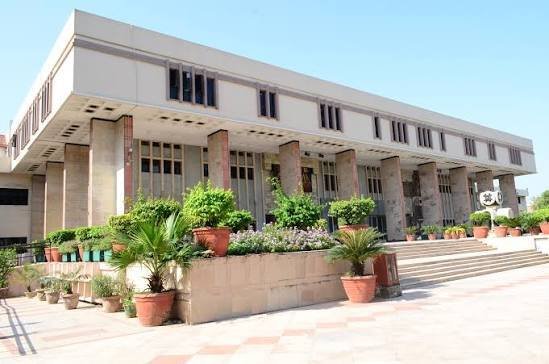
This petition under Section 482 of the Code of Criminal Procedure, 1973 was filed by the management personnel of Trans World Radio India challenging an order passed by the Additional Sessions Judge directing the framing of charges against them under Section 3(1)(x) of the Scheduled Castes and Scheduled Tribes (Prevention of Atrocities) Act, 1989. The High Court of Delhi examined whether the essential ingredients of the alleged offence—specifically that the insult or intimidation must occur “in any place within public view”—were satisfied. Holding that the alleged remarks were made privately inside office rooms without the presence of independent members of the public, the Court set aside the charges under the SC/ST Act and remanded the matter back to the trial court to consider charges under the Indian Penal Code (IPC).

  • Factual Background:
    • The petitioners served as management executives and technical staff of Trans World Radio India, while respondent Nos. 2 to 6 were employed as safai karamcharis.
    • Following disciplinary proceedings, respondent No. 2 (Ram Babu) was dismissed from service on 25.04.2008 for misconduct.
    • Prior to his dismissal, the complainants filed police complaints alleging pressure to convert to Christianity and discrimination, but made no mention of caste-based remarks.
    • Subsequently, on 29.02.2008, a complaint under Section 200 Cr.P.C. was filed before the Chief Metropolitan Magistrate alleging that the petitioners used caste-based slurs inside their respective offices.
  • Trial Court Action:
    • The Additional Sessions Judge, via order dated 22.03.2012, held that a prima facie case was made out and directed the framing of charges under Section 3(1)(x) of the SC/ST Act, noting that discrepancies in earlier complaints could be tested during trial.
  • Contentions of the Petitioners:
    • The petition argued that the SC/ST complaint was a clear counterblast to the lawful disciplinary action and dismissal of respondent No. 2.
    • It was emphasized that the alleged remarks occurred strictly within the four walls of private office rooms, meaning the foundational statutory requirement of being “in any place within public view” was completely absent.
    • Reliance was placed on landmark precedents like Hitesh Verma v. State of Uttarakhand and Daya Bhatnagar v. State to assert that the absence of independent public witnesses invalidates charges under the SC/ST Act.
  • High Court’s Analysis and Findings:
    • The Court observed that a plain reading of the complaint dated 29.02.2008 indicated the incidents took place inside private offices without any assertion that independent members of the public were present.
    • Reaffirming principles from Supreme Court rulings, the Court reiterated that the statutory ingredient of “public view” goes to the very root of an offense under Section 3(1)(x) of the SC/ST Act and cannot be bypassed.
    • Because the core foundational ingredients were missing from the complaint itself, the continuation of criminal proceedings under the special statute constituted an abuse of process.
  • Final Decision:
    • The petition was allowed, and the trial court’s order framing charges under Section 3(1)(x) of the SC/ST Act was set aside.

The matter was remanded to the trial court to evaluate the maintainability of framing alternative charges under the Indian Penal Code (IPC) independently.

2026 DHC 5767

Christine Swaroop Raj & Ors. v. State & Ors. (D.O.J. 21.07.2026)
2026 DHC 5767 click here to view full text of judgment

Next Story

Supreme Court Demolishes Intra-Court Appeal Bar: Clarifies Scope of Articles 226 and 227 and Decries “Bench-Hunting”

The Supreme Court allowed the civil appeal, setting aside the Division Bench, Single Judge, and State Transport Appellate Tribunal (STAT) orders which had gone against the appellant-transport operator. The Apex Court held that the Division Bench committed a grave error of law by dismissing an intra-court appeal on the ground of maintainability under the misconception that a challenge to a tribunal’s order falls exclusively under Article 227 rather than Article 226 of the Constitution. Furthermore, the Court clarified the wide amplitude of writ jurisdictions, ruled on stage carriage permit allocations under the Motor Vehicles Act, 1988, and issued systemic guidelines to High Courts to curb the menace of “bench-hunting”.

  • Factual Background: The appellant applied for a stage carriage permit on the joint route of Bikaner-Suratgarh and Suratgarh-Ganganagar following a 2015 notification by the Government of Rajasthan. The State Transport Authority (STA) and subsequently the STAT rejected his application on the grounds that he could not hold multiple permits or had not surrendered a previous one. A Single Judge dismissed his writ petition under Article 226, and an intra-court appeal was subsequently dismissed by a Division Bench solely on the grounds of maintainability under Rule 134 of the Rajasthan High Court Rules, 1952, assuming the matter arose under Article 227.
  • Distinction Between Articles 226 and 227:
    • Article 226 is the repository of judicial review, enabling High Courts to issue writs, orders, or directions (including Certiorari and Mandamus) against statutory tribunals and state authorities for breaches of fundamental rights or other legal purposes.
    • Article 227 is the repository of supervisory jurisdiction meant to keep subordinate courts and tribunals within their bounds.
    • The Court reaffirmed that orders of statutory tribunals (like the STAT under the Motor Vehicles Act) can be challenged under Article 226, Article 227, or both, and the choice of invoking Article 226 cannot be arbitrarily disregarded.
  • Removal of Permit Caps under the Motor Vehicles Act: The Court noted that Section 71(4) of the Motor Vehicles Act, 1988, which previously capped individual stage carriage permits, was completely omitted by the 1994 Amendment Act. Therefore, there is no legal ceiling on the number of permits an individual can hold, and courts cannot re-introduce caps.
  • Possession of Vehicles and Mandatory Reasons: Possession of a ready vehicle is not a mandatory prerequisite at the exact time of submitting an application, as long as the vehicle’s registration certificate is produced within the permitted time after sanction under Rule 5.11 of the Rajasthan Motor Vehicles Rules, 1990. Additionally, under Section 80, the STA must record mandatory and sufficient reasons when rejecting an application.
  • Currbing Bench-Hunting: Expressing serious concern over systemic “bench-hunting” where litigants pick and choose benches when orders can be challenged under either Article 226 or 227, the Supreme Court commended High Courts to frame appropriate rules or practice guidelines (such as assigning specific Division Benches for tribunal-related writ matters). The Registry was directed to circulate this judgment to all High Court Chief Justices.

Final Ruling: The Supreme Court set aside the judgments of the Division Bench, Single Judge, and STAT, and restored Appeal No. 168/2019 to the STAT for a fresh decision on merits within six months.

2026 INSC 733

Ajit Singh v. State of Rajasthan & Ors. (D.O.J. 13.07.2026)

2026 INSC 733 click here to view full text of judgment

Next Story

Supreme Court Affirms Settlement Terms: Income-Linked Maintenance Ceases Upon Full Lump-Sum Payment

The Supreme Court of India dismissed the civil appeal filed by the appellant-wife, thereby affirming the concurrent judgments of the Family Court and the High Court. The Apex Court held that under a true and harmonious construction of Clauses 8, 9, and 10 of the mutual settlement petition, the interim income-linked maintenance obligation (Clause 9) automatically ceased and stood satisfied upon the full payment of the agreed lump-sum amount of Rupees Two Crore Twenty Lakhs (Clauses 8 and 10). The Court ruled that execution proceedings cannot be used to rewrite or alter the clear terms of a concluded consent decree.

  • Factual Background: The appellant-wife and respondent-husband married in 2000 and had a son, Aarav. Following marital discord, they sought a dissolution of marriage by mutual consent under Section 13B of the Hindu Marriage Act, 1955, through a Settlement Petition dated August 29, 2015. The appellant later filed an Execution Petition in 2022 to enforce Clause 9 (demanding 20% of the respondent’s annual income), which both the Family Court and High Court dismissed, holding that the clause became inoperative once the lump-sum settlement under Clauses 8 and 10 was fully paid.
  • Interpretation of Settlement Clauses: The Supreme Court emphasized that Clauses 8, 9, and 10 form a single interlocking arrangement. Clause 8 fixed a total capital sum of Rs. 2,20,00,000/-, Clause 9 provided interim support during installment payouts, and Clause 10 explicitly discharged the husband from further maintenance upon payment of the first Rs. 1 Crore. The court noted that interpreting Clause 9 as a perpetual obligation would render Clause 10’s discharge terms entirely redundant.
  • Conduct of the Parties: The Court highlighted the conduct of the appellant-wife—such as a five-year delay in filing the execution petition, executing a release deed for a Chennai apartment, and issuing a no-objection letter without reservations—as strong corroboration that the parties understood the settlement to be full and final.
  • Rejection of Extraordinary Relief under Article 142: While acknowledging the son’s aspirations to study abroad, the Court declined to create a fresh financial corpus under Article 142 of the Constitution, noting that executing courts cannot rewrite negotiated, acted-upon consent decrees. However, the Court formally recorded and accepted the respondent-husband’s voluntary relinquishment of any right to claw back the Rs. 1 Crore he had previously transferred for his son’s foreign education.

Final Ruling: The appeal was dismissed, affirming the concurrent decisions that the maintenance obligation under Clause 9 stood completely satisfied.

2026 INSC 731

Vijayalakshmi R. v. C. L. Balaji (D.O.J. 21.07.2026)

2026 INSC 731 click here to view full text of judgment

Next Story

Eviction Decree Restored: Revisional Court Cannot Reappreciate Evidence and Substitute Concurrent Findings

The Supreme Court allowed the civil appeal, setting aside the Punjab and Haryana High Court’s judgment which had reversed concurrent eviction orders passed against the respondent-tenant. The Apex Court held that the High Court exceeded its limited revisional jurisdiction under Section 115 of the Code of Civil Procedure, 1908 by reappreciating evidence, re-examining facts, and interfering with concurrent findings of the Rent Controller and Appellate Authority regarding the landlord’s bona fide requirement.

  • Factual Background: Kamla Devi (predecessor-in-interest of the appellants) filed a suit for eviction against the tenant under Section 13 of the East Punjab Urban Rent Restriction Act, 1949, on grounds of non-payment of rent and bona fide requirement for herself and her son, Madan Mohan. Both the Rent Controller (Nabha) and the Appellate Authority (Patiala) ruled in favor of the landlords and ordered eviction. However, the High Court reversed these concurrent findings in a revision petition, prompting the current appeal.
  • Nature of Rent Legislation & Bona Fide Requirement: The Court underscored that rent control legislations are social welfare measures designed to balance the rights and protections of tenants against the genuine, honest, and non-pretextual needs of landlords. Once a court is objectively satisfied with the bona fide nature of the landlord’s need, the landlord’s subjective choice regarding the selection of accommodation must be respected.
  • High Court’s Erroneous Reversal: The High Court had interfered on the ground that the landlady concealed the availability of a third shop (claimed to be used for storing waste/garbage) and thus lacked clean hands. The Supreme Court dismissed this reasoning, noting that utilizing an alternative space for storage does not invalidate a genuine business requirement, and the lower forums had already recorded a factual finding on the matter.
  • Limits of Revisional Jurisdiction: Reaffirming landmark precedents like Hindustan Petroleum Corpn. Ltd. v. Dilbahar Singh and Ambadas Khanduji Shinde v. Ashok Sadashiv Mamurkar, the Supreme Court reiterated that the High Court cannot act as a court of first appeal under Section 115 CPC to reappreciate evidence or substitute concurrent findings of fact unless the lower courts’ findings are perverse or suffer from jurisdictional errors.

Final Ruling: The Supreme Court set aside the High Court’s judgment and restored the concurrent orders of the Rent Controller and the Appellate Authority. The respondent-tenant was directed to hand over vacant and peaceful possession of the demised shop to the appellants within two months.

2026 INSC 730

Madan Mohan (Dead) Through LRs. v. Thakar Dass (Dead) Thr. LRs.(D.O.J. 21.07.2026)

2026 INSC 730 click here to view full text of judgment

Next Story

Beyond Compromise: High Court Refuses to Quash Heinous Matrimonial and Sexual Offenses FIR

In this criminal miscellaneous petition filed under Section 482 of the Code of Criminal Procedure, 1973, Justice Girish Kathpalia of the High Court of Delhi declined to quash an FIR involving serious allegations under Sections 498A, 406, 506, 509, 377, and 34 of the IPC alongside Sections 3/4 of the Dowry Prohibition Act. The Court emphasized that the case goes far beyond a simple matrimonial dispute, featuring graphic allegations of forced unnatural sexual intercourse and the non-consensual video recording of intimate acts. Given that the complainant reaffirmed these serious allegations on oath under Section 164 CrPC and maintained their truthfulness before the Court, the matter requires testing through a full trial, and inherent jurisdiction cannot be invoked to quash such heinous charges.

  • Background of the Case: The petitioner sought the quashing of FIR No. 179/2024 registered at Police Station Shastri Park on merits, which included grave allegations of matrimonial cruelty, dowry harassment, and unnatural sexual offenses.
  • Complainant’s Stance: Appearing via videoconferencing, respondent no. 2 explicitly affirmed that the allegations leveled in the FIR were truthful, a position she had previously supported under oath in her statement recorded under Section 164 CrPC.
  • Court’s Observations:
    • The Court pointed out that the FIR contained graphic details regarding the manner in which forcible unnatural sexual intercourse was committed, alongside allegations that the petitioner video-recorded intimate acts from their first wedding night.
    • The judiciary cannot prematurely brand such serious allegations as false without a full-dress trial.
    • It is a settled legal principle that High Courts should not exercise their inherent jurisdiction under Section 482 CrPC to quash an FIR involving offenses of a serious or heinous nature.

Final Decision: Finding no merit in the petition to warrant quashing the proceedings, the petition was dismissed.

2026 DHC 5823

Irfan Ahmad v. State of NCT of Delhi and Anr. (D.O.J. 22.07.2026)

2026 DHC 5823 click here to view full text of judgment

Hi Judgments Online