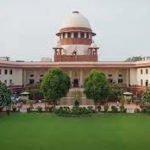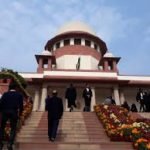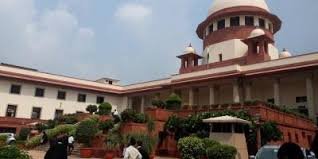
In Hansraj v. Mukesh Nath and Others (Civil Appeal of 2026, arising out of SLP (C) No. 13122 of 2024, 2026 INSC 454), the Supreme Court of India addressed a motor accident compensation claim involving a 14-year-old pillion rider who suffered 100% permanent functional disability. Expressing dissatisfaction with the partial enhancement granted by the Rajasthan High Court, the Supreme Court extensively revised and increased the total compensation from ₹16,79,743/- to ₹56,83,663/-.
The Court heavily emphasized the legal obligation to ensure a “just compensation” that attempts to restore an injured minor to the position they would have occupied but for the tragic accident. Applying key legal precedents such as Kajal v. Jagdish Chand, the Court calculated comprehensive damages across several critical heads, factoring in a 40% enhancement for future prospects based on functional regular income, an extensive lifelong lump sum for a professional attendant, and substantial awards for future medical expenses, loss of marriage prospects, and loss of amenities.
Details
1. Key Parties and Bench
- Appellant (Claimant): Hansraj (represented through his natural guardian/father).
- Respondents: Mukesh Nath and Others (The driver, owner, and insurer of the offending vehicle).
- Bench: Hon’ble Justice Atul S. Chandurkar.
2. Factual Matrix of the Case
- The Accident: On November 8, 2016, the appellant, then a 14-year-old minor, was riding pillion on a motorcycle driven in a negligent manner by the first respondent. The motorcycle struck the rear portion of a tractor-trolley.
- Grievous Injuries: The appellant suffered critical injuries to his neck, head, and backbone, alongside multiple fractures. He remained hospitalized for 203 days and underwent multiple surgical operations.
- 100% Functional Disability: The Medical Board certified that the appellant suffered 100% permanent physical and functional disability, leaving him completely bedridden, dependent on a wheelchair, and incapable of performing basic bodily functions without a continuous lifelong caretaker.
3. Procedural History & Lower Court Awards
- The MACT Award: The Motor Accident Claims Tribunal (MACT) awarded a total compensation of ₹13,49,743/-.
- The High Court Modification: On appeal, the Rajasthan High Court partially enhanced the compensation to ₹16,79,743/-. It assessed a notional income of ₹30,000/- per annum for the minor, applied a multiplier of 18, but completely refused to award amounts for future prospects or professional attendant charges.
4. Key Legal Issues Addressed by the Supreme Court
- Whether a minor suffering from 100% permanent functional disability is legally entitled to a financial enhancement for “future prospects” when calculating the loss of future earnings.
- Whether independent attendant charges can be recognized for a bedridden claimant even if family members are currently acting as caretakers.
- What constitutes “just compensation” for non-pecuniary losses such as mental agony, loss of amenities, and loss of marriage prospects for an injured child.
5. Observations and Key Rulings of the Supreme Court
A. The Principle of Just Compensation for Minors
Citing Kajal v. Jagdish Chand and Master Ayush v. Branch Manager, Reliance General Insurance Co. Ltd., the Supreme Court noted that calculating damages for a child requires a higher degree of judicial empathy and comprehensive assessment because the child has lost all future opportunities for career, marriage, and basic human experiences.
B. Recalculation of Loss of Future Earnings & Future Prospects
The Court rejected the High Court’s restricted notional assessment. It ruled that minimum wage guidelines must serve as the structural baseline for a 14-year-old’s projected income.
- Baseline Income: Fixed at ₹5,330/- per month (based on prevailing minimum wages for an unskilled worker at the time of the accident).
- Future Prospects: The Court held that the High Court erred by denying future prospects. It added a 40% enhancement for future prospects since the minor’s entire potential career was completely extinguished.
- Multiplier: Applying a multiplier of 18, the Court calculated the total loss of future earnings at ₹16,11,920/- (including future prospects).
C. Necessity of Attendant Charges
The Court strongly set aside the High Court’s refusal to grant attendant charges. Relying on Kajal, the Court observed that even if family members care for a bedridden victim out of natural love and affection, they do so by sacrificing their own independent economic livelihood. Therefore, a professional caretaker’s cost must be factored into the award.
- The Court awarded a separate sum of ₹21,60,000/- for lifelong attendant charges, based on a conservative estimation of ₹10,000/- per month scaled across the multiplier of 18.
D. Non-Pecuniary and Medical Damages
The Supreme Court enhanced or introduced allocations across multiple specialized heads to secure a fair financial outcome:
- Medical Expenses & Operations: Allowed at ₹2,69,743/-.
- Future Medical Expenses: Fixed at ₹3,00,000/- to cover long-term treatments and rehabilitation.
- Mental Pain, Suffering, & Loss of Amenities: Awarded a major lump sum of ₹10,00,000/-.
- Loss of Marriage Prospects: Awarded ₹3,00,000/-.
- Special Diet & Transportation: Finalized at ₹1,00,000/-.
6. Final Order
The Supreme Court allowed the appeal, modifying the High Court’s judgment to award a total enhanced compensation of ₹56,83,663/- along with interest at the rate of 6% per annum from the date of filing the claim petition until actual payment.
To protect the financial security of the bedridden appellant, the Court directed that 25% of the attendant charges (₹21,60,000/-) be immediately released to the family, while the remaining 75% be securely invested in a fixed deposit account with annual payouts of ₹1,20,000/- to consistently meet the ongoing future caretaking costs.
2026 INSC 454
Hansraj V. Mukesh Nath And Others (D.O.J. 06.05.2026)