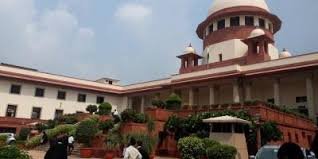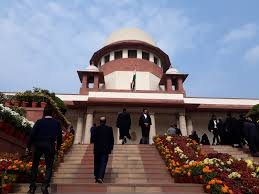
In the case of Vinay Raghunath Deshmukh v. Natwarlal Shamji Gada and Another (2026), the Supreme Court of India addressed whether a court can examine the merits of a case while considering a request to amend a plaint, particularly following the death of an original landlord in an eviction dispute.
Case Background and Procedural History
The dispute began in 2005 when the appellant’s father filed a suit for the eviction of tenants from a shop in Mumbai. The eviction was sought on several grounds, including bonafide need for the landlord “for himself and their family members”. In 2016, the Trial Court dismissed the suit, finding that the landlord failed to prove a specific bonafide need as he had not decided on the exact nature of the business he intended to start.
During the pendency of the appeal, the original landlord died in 2022. His legal heirs (the appellants) sought to amend the plaint to reflect their own bonafide needs: specifically, that the appellant’s wife required the space for her legal practice and his son needed it to start a medical practice.
- Appellate Bench of the Small Causes Court: Allowed the amendment, noting that the original suit already mentioned the needs of the family and that the amendment was necessary to avoid a multiplicity of proceedings.
- Bombay High Court: Set aside the amendment, ruling that the original landlord’s need had “eclipsed” upon his death and that the heirs were trying to introduce a “totally new case”. The High Court suggested the heirs file a fresh suit instead.
Key Findings of the Supreme Court
The Supreme Court allowed the appeal and restored the order permitting the amendment, based on the following legal principles:
- Prohibition on “Mini-Trials” During Amendment: The Court held that when considering an application to amend a plaint, a court cannot go into the merits or demerits of the case. The High Court erred by assessing whether the heirs would eventually succeed at trial rather than focusing on whether the amendment was permissible under procedural law.
- Misinterpretation of Original Pleadings: The Supreme Court found that the High Court factually erred by claiming the original landlord only pleaded for his own personal need. The record showed the original plaint explicitly included the needs of his “family members”.
- Consideration of Subsequent Events: Relying on the principle of restitutio in integrum and precedents like Pasupuleti Venkateswarlu, the Court affirmed that judges have the power to take notice of subsequent events (such as the death of a party) to “mould the relief” and ensure substantial justice.
- Limits of Supervisory Jurisdiction: The Court ruled that the High Court exceeded its jurisdiction under Article 227 of the Constitution. Supervisory jurisdiction is intended to check for jurisdictional errors, not to allow a High Court to “review or reassess the material” or conduct a fresh inquiry into the merits.
Conclusion
The Supreme Court set aside the High Court’s judgment and restored the order allowing the amendment to the plaint. The Court directed the parties to appear before the Trial Court on June 8, 2026, to proceed with the matter. The Court clarified that it had not examined the actual merits of the eviction claim, which must be decided by the Trial Court in accordance with the law.
2026 INSC 416
Vinay Raghunath Deshmukh V. Natwarlal Shamji Gada And Another (D.O.J. 24.04.2026)