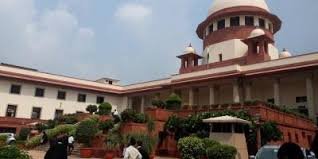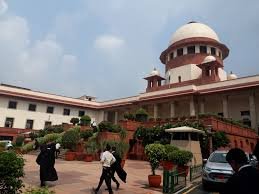
In the case of Rajendra Singh Bora v. Union of India & Ors. (2026), the Supreme Court of India set aside a High Court judgment and ordered the immediate reallocation of an employee from the Uttar Pradesh cadre to the Uttarakhand cadre, citing significant administrative delays and family hardship.
Case Background and Prolonged Litigation
The appellant cleared a competitive examination in 1995 for the position of Sub-Deputy Inspector of Schools and specifically opted for a “hill region” posting. However, his appointment was delayed for years due to a “hyper-technical” rejection of his application (submitting a marksheet at the interview rather than with the initial form).
Although a Single Judge cleared the way for his appointment in 2004—granting him notional seniority from June 11, 1997—the State’s unsuccessful appeals delayed his actual joining until July 2011. Since his appointment, the appellant has repeatedly requested a transfer to the “hill cadre” (Uttarakhand), noting that he is a resident of that state and that his son is cognitively disabled, requiring family support.
Key Legal Findings
The Supreme Court allowed the appeal based on several critical determinations:
- Distinction Between Transfer and Cadre Change: The Court clarified that while a “transfer” is an administrative incident of service involving a change in location, a “change in cadre” is a structural shift that affects the very framework of an employee’s service, including seniority and promotional avenues.
- Impact of Administrative Delays: The Court observed that if the appellant’s appointment had not faced unnecessary “roadblocks,” he would have been appointed to the hill cadre before the reorganization of the States, which would have automatically translated into an appointment with the State of Uttarakhand.
- Application of Allocation Criteria: Under the Department of Personnel and Training (DOPT) guidelines, cadre allocation is governed by options, domicile, and seniority. The appellant met both the “option” and “domicile” criteria for Uttarakhand.
- Medical Hardship Exception: The Court highlighted that the allocation policy includes exceptions for “medical hardship cases,” specifically including “mental illness” of family members. Given that the appellant’s son is cognitively challenged with little scope for improvement, the Court held that the request for reallocation should have been granted on this ground alone.
Conclusion and Relief
The Supreme Court expressed “deep sense of anguish” over the “apathy” of the State, noting that the appellant has been fighting for his rights for 22 years and has been away from his family since 2011.
The Court issued the following directions:
- Reallocation: The Chief Secretary of Uttar Pradesh is directed to facilitate the immediate reallocation of the appellant to the State of Uttarakhand .
- Protection of Benefits: The appellant’s seniority and all relevant benefits must be protected during and after the reallocation .
- Litigation Costs: The State of Uttar Pradesh was ordered to pay ₹1,00,000 as costs to the appellant within four weeks.
- Judicial Reform: The Court requested the Chief Justice of the High Court to identify long-pending service disputes and endeavor to have them decided expeditiously to prevent similar cases of extreme delay.
2026 INSC 404
Rajendra Singh Bora V. Union Of India & Ors. (D.O.J. 22.04.2026)