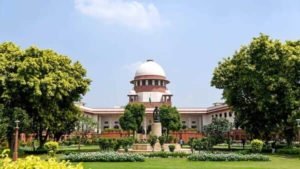
In the case of Nikhat Parveen @ Khusboo Khatoon v. Rafique @ Shillu (2026), the Supreme Court of India addressed a dispute over child maintenance centered on the conflict between the legal presumption of legitimacy and scientific DNA evidence.
Case Background
The appellant worked as domestic help for the respondent and alleged that they had a sexual relationship on the pretext of marriage. The parties eventually married on March 2, 2016, and a child was born less than a month later, on April 1, 2016. Following a breakdown in the relationship, the appellant filed a complaint under the Protection of Women from Domestic Violence Act, 2005, seeking interim maintenance and protection.
The respondent denied paternity and requested a DNA test, which the Trial Court accepted. The resulting report, dated May 8, 2017, concluded that the respondent was not the biological father of the child.
Procedural History
- Trial Court and First Appellate Court: Rejected the application for interim maintenance for the child based on the DNA report and alleged concealment of income by the mother.
- High Court of Delhi: Refused maintenance for the child, ruling that while Section 112 of the Indian Evidence Act (IEA) presumes the legitimacy of a child born during a marriage, this protection was unavailable because a definitive DNA test—which had attained finality—was already on record. However, the High Court remanded the mother’s own maintenance claim back to the Trial Court for fresh consideration.
Supreme Court’s Legal Analysis
The primary issue was the application of Section 112 of the IEA (now Section 116 of the Bharatiya Sakshya Adhiniyam, 2023), which provides that birth during a valid marriage is “conclusive proof” of legitimacy unless non-access is proven.
The Court reviewed the evolution of judicial opinion on this matter:
- Upholding Legitimacy: Historically, courts have been hesitant to order DNA tests to avoid the social stigma of “illegitimacy” for the child.
- DNA vs. Legal Presumption: In Nandlal Wasudeo Badwaik, the Court established that when there is a conflict between a legal presumption and a scientifically accurate DNA report that is already available and undisputed, the scientific evidence must prevail over the legal fiction.
- Distinguishing Precedent: The Court distinguished this case from others where DNA tests were blocked to protect a child’s privacy or identity. In this instance, the appellant had consented to the test and never disputed its final conclusion.
Final Decision and Child Welfare Direction
The Supreme Court upheld the High Court’s decision, finding no error in denying maintenance to the daughter given the conclusive DNA evidence. The appeal was dismissed.
However, out of concern for the child’s well-being despite the parentage dispute, the Court issued a special directive:
- The Secretary of Women and Child Development (NCT of Delhi) must depute an experienced official to visit the child’s residence.
- This official is to assess the child’s education, nutrition, health, and general welfare.
- The Department is expected to take remedial measures if the child’s situation is found lacking in basic material goods required for a minimum standard of living.
2026 INSC 399
Nikhat Parveen @ Khusboo Khatoon V. Rafique@Shillu (D.O.J. 21.04.2026)