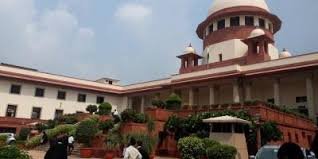
In the case of Prahlad Sahai v. Haryana Roadways & Anr. (2026), the Supreme Court of India significantly enhanced the compensation awarded to a motor accident victim, particularly focusing on the legal principles for awarding costs related to prosthetic limbs.
Case Background
In May 2007, the appellant’s right leg was crushed and subsequently amputated below the knee after a motorcycle he was traveling on was hit from behind by a Haryana Roadways bus. At the time of the accident, the appellant was 32 years old. The Motor Accident Claims Tribunal (MACT) originally awarded Rs. 8,73,211/-, which the High Court later enhanced to Rs. 13,02,043/-. The appellant approached the Supreme Court seeking further enhancement under several heads, most notably for the purchase and maintenance of a prosthetic limb, which had been completely overlooked by the lower courts.
Key Legal Principles and Findings
The Supreme Court allowed the appeal and established several important precedents regarding compensation for amputees:
- Indispensability of Prosthetics: The Court observed that for amputees, a prosthetic limb is integral to life, providing confidence and self-belief, and its necessity is best appreciated by the disabled individual.
- Principle of Restitutio in Integrum: The Court applied the principle of restitutio in integrum, which aims to restore the injured party to their original position as far as money can compensate for a tortious act.
- Freedom of Choice in Treatment: The Court rejected the insurance company’s reliance on low government rates for prosthetics . It held that a claimant is entitled to seek treatment or appliances from a private center that properly meets their personal needs and is not obliged to rely solely on the National Health Service or government-prescribed rates.
- Standardized Replacement and Lifespan: Following previous precedents, the Court assumed a life expectancy of 70 years and recognized that a prosthetic limb typically requires replacement every five years to function effectively.
- Documentation for Future Claims: The Court issued a general directive that henceforth, any claim for a prosthetic limb must be accompanied by price quotations from at least two or three service providers to enable Tribunals to make an informed assessment of future costs.
Enhanced Compensation Awards
The Supreme Court calculated the new compensation based on the appellant’s status as a driver with 100% functional disability. The enhancements included:
- Prosthetic Limb and Maintenance: The Court awarded a consolidated sum of Rs. 26,00,000/- (Rs. 21,00,000/- for seven replacement limbs and Rs. 5,00,000/- for lifelong maintenance).
- Loss of Future Income: Based on a monthly income of Rs. 6,000/-, this head was enhanced by Rs. 8,02,368/-.
- Other Heads: The Court also enhanced the loss of income during the treatment period by Rs. 18,000/- and awarded Rs. 2,00,000/- as litigation costs.
Conclusion
The Supreme Court directed the insurance company to pay a total additional sum of Rs. 36,20,350/- (over and above the High Court’s award) within four weeks. Failure to pay within this period will attract interest at the rate of 9% per annum.
2026 INSC 396
Prahlad Sahai V. Haryana Roadways & Anr. (D.O.J. 21.04.2026)