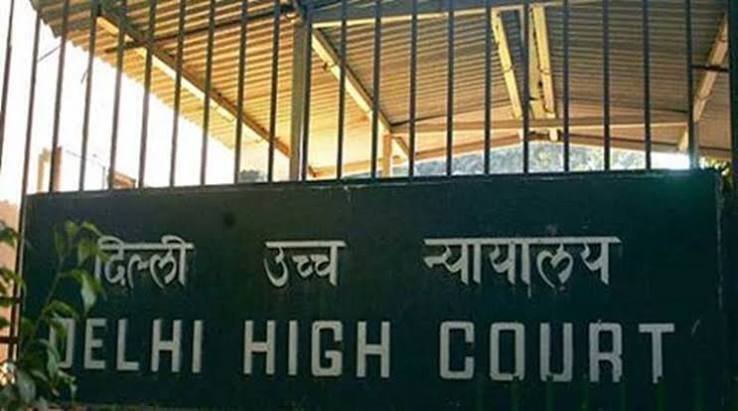
The present Execution First Appeal was filed under Order XXI Rule 58 of the Code of Civil Procedure, 1908, to challenge an order passed by the Executing Court which had dismissed the Appellant’s objections in an Execution Petition. The dispute arose from a Settlement Agreement dated 30.11.2015 concerning the division of a property in Gokulpuri, Delhi, wherein the basement was to be shared equally between the Respondent and the Appellant’s daughters. The Appellant resisted execution by claiming that the basement was filled with waste material in 2019 due to being declared illegal and dangerous by the MCD, and that the Respondent and the Appellant’s daughters had consented to this closure. The Delhi High Court held that the Appellant failed to place any documentary evidence on record to substantiate either the MCD’s declaration or the Respondent’s consent, and reaffirmed that a party cannot unilaterally alter a crystallised settlement or benefit from their own wrong. Consequently, the appeal was dismissed, and the trial court’s order upholding the execution was affirmed.
- Failing Foundation of Objections: The Appellant’s challenge rested entirely on two unproven assertions: that the Municipal Corporation of Delhi (MCD) declared the basement illegal and dangerous, and that the Respondent/Decree Holder consented to its filling and closure.
- Lack of Documentary Evidence: The Appellant candidly admitted before the Court that no documents, notices, or communications from the MCD or any written proof of consent existed to support these claims.
- Inadmissibility of Intra-Family Consent: The Court ruled that any alleged consent given by the Appellant’s daughter had no binding effect on the Respondent, whose independent rights stemmed directly from the formal Settlement Agreement dated 30.11.2015.
- No Benefit from Own Wrong: Applying the principle that nobody can take advantage of their own wrong, the Court noted that the Appellant could not unilaterally fill up the basement and then claim it was incapable of division or execution.
- Limited Scope of Executing Courts: The High Court emphasized that an executing court cannot travel beyond the terms of the decree, and unsupported factual assertions cannot be used to frustrate a final settlement.
- Final Outcome: Finding no perversity, material irregularity, or error of law in the impugned order, the High Court dismissed the appeal while clarifying that the judgment does not bar any independent remedies otherwise available to the parties in law.