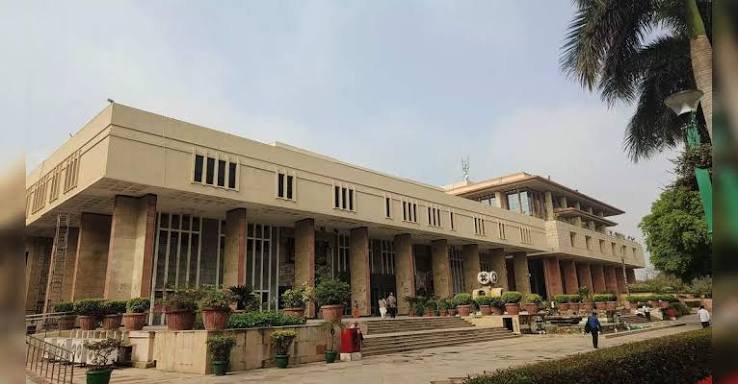
In the case of Rukhmani Keshwani vs. Raju Agarbatti Works & Anr., the Delhi High Court set aside a Trial Court order that had returned a trademark and copyright infringement suit for lack of territorial jurisdiction. The Court ruled that although both parties carried on their primary business in Ajmer, Rajasthan, the plaintiff had successfully established a jurisdictional nexus in Delhi through evidence of actual commercial deliveries within Delhi and the defendants’ interactive online listings on platforms like IndiaMart. Emphasizing that modern e-commerce transcends physical boundaries, the Court held that purposeful commercial targeting through electronic means constitutes a material part of the “cause of action” under Section 20(c) of the Code of Civil Procedure (CPC), thereby restoring the suit to the Delhi Courts.
- Background and Allegations
The appellant (plaintiff) filed a suit for permanent injunction, passing off, and infringement of the trademark and trade dress “RADHEY KRISHNA” used for the manufacture and trade of agarbattis (incense sticks). The plaintiff claimed prior adoption and continuous use of the mark since 1995 and alleged that the defendants had adopted deceptively similar marks, such as “Lucky Radha Krishna” and “Harsh Radha Krishna,” for identical goods.
- Trial Court’s Findings
The Shahdara District Court (Trial Court) initially granted an ex-parte ad interim injunction but ultimately returned the plaint under Order VII Rule 10 CPC. The Trial Court’s reasoning was:
- Common Business Situs: Both parties admittedly conducted their primary business from Ajmer, Rajasthan, which the Trial Court deemed the “natural forum”.
- Insufficient Evidence: The Trial Court held that mere accessibility of an interactive website or online listings did not confer jurisdiction without cogent evidence of purposeful commercial activity or actual infringing sales within Delhi.
- Prevention of Forum Shopping: It relied on the Supreme Court’s judgment in IPRS v. Sanjay Dalia to conclude that dragging defendants to a distant jurisdiction when both parties reside elsewhere was contrary to legal principles.
- High Court’s Reasoning and Analysis
The High Court held that the Trial Court committed a “manifest error” by applying an unduly narrow and restrictive standard to jurisdictional facts in the context of contemporary digital commerce.
- Evidence of Local Transactions: Unlike cases resting on “mere assertions” of online accessibility, the plaintiff produced documentary evidence of commercial deliveries and transactions effected within Delhi through her official interactive platform.
- Purposeful Availment: The Court noted that the defendants maintained IndiaMart listings with GST-verified business details and took no steps to dispute them. By consciously projecting their goods on interactive platforms accessible to Delhi consumers, the defendants purposefully availed themselves of the Delhi market.
- Interpretation of “Cause of Action”: The Court clarified that while IPRS cautions against abuse of process, it does not exclude jurisdiction in forums where a part of the cause of action independently arises under Section 20(c) of the CPC.
- Digital Reality: The Court emphasized that modern e-commerce platforms are designed to transcend territorial barriers. Insisting on proof of a “concluded sale” as the only way to establish jurisdiction would ignore the reality of modern online commercial solicitation.
- Conclusion and Directions
The High Court concluded that the cumulative circumstances—including commercial deliveries and interactive online listings—established a real, substantial, and proximate nexus with the territorial jurisdiction of the Delhi Courts.
- Appeal Allowed: The finding that Delhi Courts lacked jurisdiction was set aside.
- Restoration of Suit: The suit was restored to its original number for adjudication on its merits.
- Next Hearing: The parties were directed to appear before the learned District Judge on July 10, 2026, for further proceedings.
2026 DHC 5232
Rukhmani Keshwani V. Raju Agarbatti Works & Anr. (D.O.J. 01.07.2026)