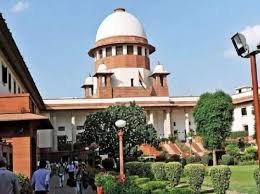
In the matter of Rajat Kumar and Others vs. SD Adarsh Janya Kanya Mahavidyalaya Sadhaura and Others (2026 INSC 648), the Supreme Court of India set aside a High Court judgment that had improperly substituted a decree for mandatory injunction (requiring the removal of illegal encroachments) with an order for monetary compensation, despite no such relief being sought by the plaintiff. The Supreme Court remanded the matter back to the High Court, directing it to re-examine the Second Appeals on their merits in accordance with Section 100 of the Code of Civil Procedure, 1908.
The original plaintiff, Om Parkash, filed two civil suits against the respondents regarding illegal encroachments:
- CS No. 426 of 1996: Seeking mandatory injunction for the removal of walls constructed on common open space, which obstructed air, light, and water flow.
- CS No. 148 of 2000: Seeking mandatory injunction for the removal of a school building lintel erected on the plaintiff’s house wall.
Both suits were decreed in favor of the plaintiff by the Trial Court and subsequently upheld by the first Appellate Court.
Proceedings in the High Court
The defendants filed Regular Second Appeals (RSA) before the High Court. Initially, the High Court modified the decrees, ordering the defendants to pay compensation to make the structures “common,” a decision that was later set aside by the Supreme Court with instructions for a fresh hearing. Upon remand, the High Court again set aside the lower courts’ decrees, instead directing the Executing Court to assess the value of the structures to compensate the plaintiff’s legal heirs.
Supreme Court Analysis and Findings
The Supreme Court allowed the appeals filed by the plaintiff’s legal heirs, identifying several errors in the High Court’s judgment:
- Absence of Prayer for Damages: The original plaintiff never requested monetary compensation or damages. By compelling the legal heirs to accept compensation instead of the requested injunction, the High Court acted outside the scope of the suit.
- Lack of Legal Basis for Execution: By setting aside the original decrees, there was no remaining decree for an Executing Court to enforce, and the High Court’s directive to assess value found no support under Order XXI of the Code of Civil Procedure, 1908.
- Repetition of Error: The High Court repeated the exact error for which its previous judgment was set aside by the Supreme Court—imposing monetary compensation without consent or prayer.
- Procedural Failures: The High Court proceeded on the incorrect premise that the Trial Court had labeled the wall as “common” and failed to properly frame or address substantial questions of law as required for Second Appeals.
Final Order
The Supreme Court set aside the High Court’s common judgment dated 02.05.2016 and remanded the Second Appeals for expeditious consideration on their own merits.
2026 INSC 648
Rajat Kumar And Others V. S D Adarsh Jain Kanya Maha Vidyalaya Sadhaura And Others (D.O.J. 19.06.2026)