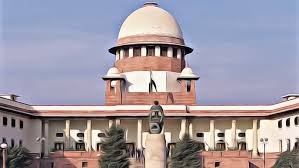
The Supreme Court of India set aside the judgment of the High Court, affirming that a clause in an Agreement to Sell providing for the refund of earnest money in the event of default does not automatically bar a decree for specific performance. The Court held that such a clause is a consequence of non-performance rather than an alternative option for the defaulting party, and it cautioned that the High Court exceeded its jurisdiction under Section 100 of the Code of Civil Procedure (CPC) by disturbing concurrent findings of fact without establishing perversity.
Background
The appellant (plaintiff) entered into an Agreement to Sell (2003) to purchase an undivided share in a property from the respondent (defendant). After extending the deadline for the sale deed multiple times, the appellant sought specific performance, while the respondent contended the agreement was a fabricated security for a separate travel arrangement. The Trial Court decreed recovery of earnest money, but the First Appellate Court granted specific performance, finding the agreement valid and the appellant ready and willing to perform. The High Court subsequently reversed this, ruling that the lack of an express enforcement clause and the appellant’s suppression of collateral financial facts rendered the agreement a sham.
Key Findings of the Supreme Court
- Construction of the Earnest Money Clause:
- The Court clarified that under Section 23 of the Specific Relief Act, 1963, a contract can be specifically enforced even if a sum is named as a penalty or damages, unless the contract explicitly provides for an “election” to pay money in lieu of performance.
- The clause in question was held to be a deterrent for non-performance, not a substitute for the obligation to execute the sale deed.
- Limits of Second Appeal (Section 100 CPC):
- The Court emphasized that the High Court, as a second appellate court, cannot interfere with concurrent findings of fact unless they are shown to be perverse (i.e., recorded without evidence or by ignoring material evidence).
- The High Court erred by re-appreciating evidence and casting suspicion on the transaction’s genuineness despite the Trial Court and First Appellate Court having already confirmed the execution of the agreement.
- Rejection of Respondent’s Defenses:
- The respondent failed to provide handwriting or expert evidence to support the claim that the agreement was a result of fraud or “blank papers”.
- The Court noted that the transfer of an undivided share in a jointly owned property is a legally recognized and enforceable transaction.
- The appellant’s explanation for a collateral financial transaction (a loan) remained unrebutted, and the suppression of such a peripheral matter did not invalidate the primary Agreement to Sell.
Conclusion
The Supreme Court allowed the appeals, quashed the High Court’s judgment, and restored the decree for specific performance granted by the First Appellate Court.
2026 INSC 700
Jaspal Singh v. Ashwani Kumar (D.O.J. 14.07.2026)