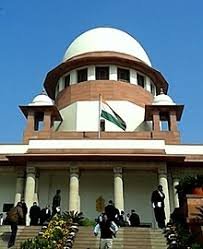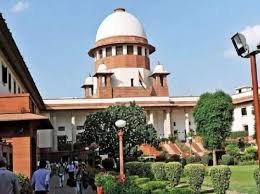
In a Public Interest Litigation (PIL) under Article 32 of the Constitution of India, the Supreme Court addressed the lack of an enforceable legal framework to curb unethical marketing practices by pharmaceutical companies. The petitioners raised concerns regarding freebies, travel facilities, hospitality, and monetary inducements extended to doctors, which lead to irrational drug prescriptions, high healthcare costs, and public health risks like antimicrobial resistance. Recognizing that the right to health is an integral facet of the Right to Life under Article 21, the Court exercised its powers under Articles 32 and 142 to order the Union of India to constitute a high-level committee to examine the issue and lay down a binding statutory and regulatory mechanism for the pharmaceutical sector.
1. Right to Health and Regulatory Asymmetry
- Constitutional Imperative: The Court emphasized that protecting public health and preventing unfair pharmaceutical promotion directly falls within the ambit of the right to life under Article 21.
- Regulatory Asymmetry: While medical professionals face strict disciplinary action and license cancellation under the Indian Medical Council (Professional Conduct, Etiquette and Ethics) Regulations, 2002 for receiving freebies, pharmaceutical companies previously faced no equivalent statutory consequences for offering them.
- Public Health Risks: Unethical marketing drives irrational consumption of drugs, over-prescription of high-value/branded medicines, increased patient cost burden, and severe risks like antimicrobial resistance.
2. Inefficacy of Voluntary Codes
- UCPMP Framework: The Department of Pharmaceuticals introduced the Uniform Code for Pharmaceutical Marketing Practices (UCPMP) in 2015 as a voluntary measure.
- Lack of Enforceability: The voluntary nature rendered the 2015 code ineffective due to the absence of statutory monitoring, transparency, accountability, or legal sanctions for violations.
- Evolution to UCPMP 2024: Recommendations from earlier deliberations led to the UCPMP 2024, which added CEO self-declarations and oversight committees (ACPMP), but the need for a comprehensive statutory backbone remained unfulfilled.
3. Separation of Powers vs. Judicial Duty
- Executive Policy Domain: The Court acknowledged that enacting laws or formulating commercial-medical regulatory codes falls within the policy sphere of the Executive and Legislature.
- Judicial Facilitation: While maintaining judicial restraint, the Supreme Court held that it cannot remain indifferent when public health is affected. Its role is to facilitate a time-bound, objective, and binding consultative framework.
4. Key Directions Issued by the Supreme Court
- Committee Formation: The Union of India must formally constitute the proposed 3-member high-level Committee within two weeks of the order.
- Consultative Mandate: The Committee must consider all materials submitted by petitioners and intervenors, providing reasonable opportunities to all stakeholders (medical bodies, pharma trade associations, watchdog groups) to present their suggestions.
- Expert Consultation: The Committee is authorized to consult domain, technical, and regulatory experts as needed.
- Time-Bound Recommendations: The Committee must submit its final recommendations to the Union Government within two months of its first meeting.
- Executive Decision: Upon receiving the recommendations, the Union of India must take an immediate reasoned decision to frame an enforceable statutory/regulatory framework.
5. Timeline and Compliance Reporting
- Compliance Affidavit: The Union of India is directed to file a compliance affidavit detailing the committee’s formation, consultative process, final recommendations, and government decisions within two weeks after the expiry of the committee’s two-month deadline.
- Next Date of Hearing: Listed as Part-Heard on January 29, 2027, to evaluate the compliance affidavit.
2026 INSC 1097
Federation of Medical & Sales Representatives Association of India & Ors. v. Union of India & Ors. (D.O.J. 08.10.2026)