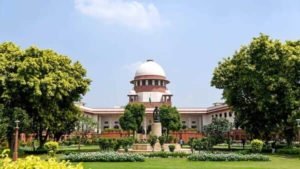
In the case of Tikka Shatrujit Singh & Ors. v. Sukjit Singh & Anr. (2026 INSC 571), the Supreme Court of India adjudicated a long-standing property dispute between two branches of the erstwhile royal family of Kapurthala. The core legal issue centered on whether the “Chateau” property in Mussoorie devolved upon the heirs as private personal property or remained tied to the sovereign estate. The Court scrutinized the historical Covenant of Merger signed by Maharaja Jagatjit Singh when the princely state of Kapurthala merged into the Patiala and East Punjab States Union (PEPSU) in August 1948. The Bench—led by Justice Pankaj Mithal—affirmed that after the integration into the Indian Union, the Maharaja retained absolute ownership and full user rights over explicitly declared “private properties” as distinct from State assets. Relying on the Maharaja’s formal declarations made in August 1948 and April 1949, the Supreme Court upheld the lower court’s findings that the contested estate constitutes private personal property, thereby settling the inter-se devolution rights among the royal descendants.
1. Factual Background and Parties to the Dispute
- The Royal Family: The dispute involves two branches of the erstwhile royal family of Kapurthala.
- Branch One: Led by Brigadier Sukjit Singh, the eldest male lineal descendant of the late Maharaja Paramjit Singh of Kapurthala, who was recognized as the ruler of Kapurthala by the Government of India.
- Branch Two: Led by his estranged wife, Smt. Gita Devi (now deceased), their two sons (Shatrujit Singh and Amanjit Singh), and their two daughters (Priti Devi and Gayatri Devi).
- The Properties: The conflict originated from two original civil suits filed in 1977 (Suit No. 35 of 1977 and Suit No. 1052 of 1977). Brigadier Sukjit Singh sought a formal judicial declaration confirming a list of properties, including the “Chateau” located in Mussoorie, as his exclusive personal private properties.
2. Historical Context and Constitutional Transition
- The End of Sovereignty: Prior to India’s independence and subsequent integration, Maharaja Jagatjit Singh was the absolute sovereign ruler of the State of Kapurthala.
- The Merger Covenant: Following independence, the rulers of eight princely states—Faridkot, Jind, Malerkotla, Nabha, Patiala, Kalsia, Nalagarh, and Kapurthala—signed a formal Covenant of Merger.
- Creation of PEPSU: By virtue of this covenant, all eight princely estates merged into the Patiala and East Punjab States Union (PEPSU) with effect from August 20, 1948.
- Status of the Ruler: Upon the merger, the absolute sovereignty of Maharaja Jagatjit Singh came to an end. He was divested of the governance of the State of Kapurthala and was subsequently recognized as a ruler primarily for the limited purposes of receiving a privy purse and enjoying specific royalty privileges attached to the throne.
3. Separation of State and Private Properties
- Statutory Guarantee of Ownership: The Covenant of Merger explicitly provided a protective guarantee that the erstwhile ruler would be entitled to full ownership, clear use, and unhindered enjoyment of all properties declared distinct from the State properties.
- The Maharaja’s Declarations: In strict accordance with the accession documentation and prior to the finality of the merger, Maharaja Jagatjit Singh declared that the “Chateau” in Mussoorie would devolve upon his direct heirs and successors specifically as private personal property.
- The Inventories: The Maharaja solidified this status by executing formal, written declarations dated August 11, 1948, and April 11, 1949, listing the specific assets that would comprise his private personal estate under the covenant terms.
4. Key Legal Issues and Court’s Analysis
The Supreme Court primarily evaluated whether properties held under historical royal covenants could be re-characterized or claimed as public/State assets, or whether the personal declarations of the ruler at the time of accession held absolute finality:
- Finality of the Covenant Inventory: The Court observed that the schedule of private properties agreed upon between the political authorities and the integrating ruler at the time of merger forms the ultimate legal bedrock for determining ownership.
- Vesting of Personal Title: Since the Chateau in Mussoorie was explicitly claimed by the sovereign and accepted by the government as private property rather than an asset of the state administration, it devolved straight to his heirs under personal family laws rather than vesting with the succeeding government.
5. Final Verdict
The Supreme Court, bench consisting of Justice Pankaj Mithal, rejected the challenges raised against the characterization of the properties. It affirmed the validity of the historical declarations from 1948 and 1949, upholding the lower court’s decisions that recognized the assets as private personal properties belonging to the designated royal lineage.
2026 INSC 571
Tikka Shatrujit Singh & Ors. V. Sukjit Singh & Anr. (D.O. J. 27.05.2026)