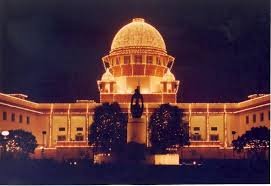
In the case of Justice Sunanda Bhandare Foundation v. Union of India & Ors. (2026), the Supreme Court of India issued a reportable order addressing the persistent failure of several States and Union Territories to implement statutory mandates under the Rights of Persons with Disabilities (RPwD) Act, 2016.
- Appointment of Nodal Officers
The Court expressed “serious displeasure” over the “lackadaisical and indifferent approach” of multiple States and Union Territories that failed to appoint Nodal Officers as directed in a September 2025 judgment.
- The Defaulting Entities: The Court identified 12 States (including Kerala, Jharkhand, and Madhya Pradesh) and 5 Union Territories (including Delhi and Ladakh) that had not complied despite a seven-month lapse.
- Final Opportunity: The Court granted a “last opportunity” to these entities to ensure compliance before the next hearing.
- Mandatory Presence: If Nodal Officers are not appointed by the next date, the Chief Secretaries and concerned departmental Secretaries must remain personally present in Court with affidavits explaining the delay.
- Upward Movement of Meritorious PwBD Candidates
The Court addressed a critical query regarding whether meritorious candidates with disabilities who qualify based on their own merit can be adjusted against unreserved (UR) vacancies.
- Clarification of “Own Merit”: The Union of India (DoPT) clarified that a Person with Benchmark Disability (PwBD) candidate selected on merit, without availing “relaxed standards,” must be adjusted against unreserved vacancies and not the reserved quota.
- Defining Relaxation: The Court specified that facilitative measures, such as the provision of a scribe or compensatory time, are not to be treated as “relaxation of standards”. However, relaxations in cut-off marks, age, or number of attempts do constitute relaxed standards.
- Horizontal Reservation: The Court endorsed the position that horizontal reservation for PwBD candidates must ensure meritorious candidates are not denied rightful placement while preserving the efficacy of the reservation system.
- Status of RPwD Act Implementation
The Court noted that nearly eight years after the Act’s enactment, full and effective compliance remains “elusive,” necessitating continued judicial oversight.
- Project Ability Empowerment: To move beyond formal compliance, the Court entrusted National Law Universities (NLUs) with a structured and substantive assessment of the Act’s implementation across all jurisdictions.
- Mapping Compliance:National Law University, Delhi is specifically directed to map the extent of compliance achieved by the Union of India.
- Inter-Agency Cooperation: The Union of India is directed to depute an officer (not below the rank of Joint Secretary) to participate in NLU Delhi’s assessment meetings.
Conclusion
The Supreme Court concluded that the appointment of Nodal Officers provides an essential institutional framework for accountability and data collection. The Registry is directed to transmit this order to the Registrars of eight designated NLUs and senior government officials to ensure immediate action. The matter is listed for September 22, 2026, to receive updated status reports.
2026 INSC 441
Justice Sunanda Bhandare Foundation V. Union of India & Ors. (D.O.J. 28.04.2026)