Indian Judgements

Indian Judgements

Retiral Redemption: Stifling Harassment and Securing Dues After Decades of Administrative Apathy

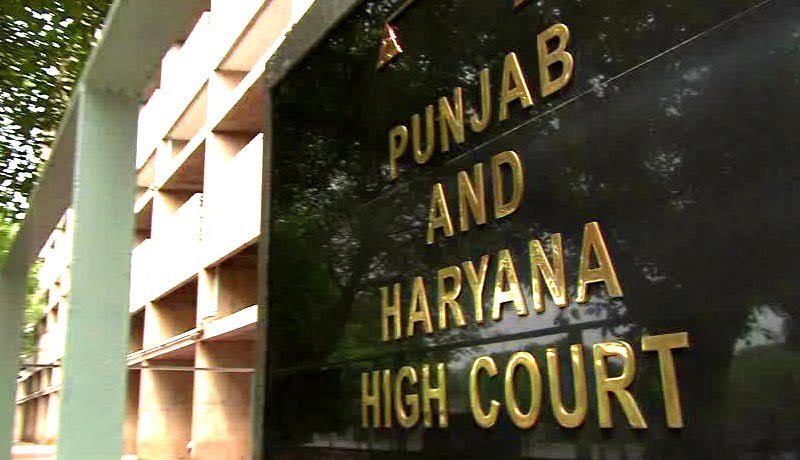
This writ petition filed under Articles 226/227 of the Constitution of India sought directions for the release of full retiral benefits along with the refund of rent amounts illegally deducted from the salary of the petitioner, who retired as a Zonal Taxation Officer on 30.06.1993. The Punjab and Haryana High Court strongly condemned the decades-long administrative harassment, arbitrary withholding of pension and gratuity based on unadjusted temporary advances without a finding of guilt, and the coercion of the employee into signing exploitative undertakings. Allowing the petition, the Court ordered the immediate release of all pending retiral dues, refund of deducted rent and advances with 6% interest per annum.

  • Factual Background:
    • The petitioner served as a Clerk, Accounts Clerk, and Assistant before selection as a Secretary-cum-Accountant in 1966, eventually equating to a Zonal Taxation Officer under the Faridabad Complex Administration.
    • He retired on 30.06.1993. Prior to and around his retirement, he was subjected to multiple departmental inquiries, a vigilance inquiry, and criminal proceedings (FIR No. 8 dated 20.02.1991), resulting in his acquittal by the Chief Judicial Magistrate on 15.12.1997.
    • Although the charge sheets were later quashed by the High Court in CWP No. 6362 of 2001 on 15.09.2003, the respondent-Corporation withheld 1/3rd of his retiral benefits and periodically stopped his pension under the pretext of unadjusted temporary advances.
  • Contentions of the Petitioner:
    • Retiral benefits are property under Article 300-A of the Constitution and cannot be withheld as bounty.
    • The petitioner was never found guilty in any departmental or judicial proceedings; hence, withholding 1/3rd of his retiral benefits, deducting rent in violation of a specific order granting free accommodation in lieu of a special allowance, and halting his monthly pension were arbitrary and illegal.
    • Under duress and administrative arm-twisting, he was forced to sign an undertaking in 2015, leading to massive deductions from his pension.
  • Contentions of the Respondents:
    • The respondents argued that last pay, leave salary, and gratuity could be withheld under Civil Service Rules 6.16-A and 2.2(b) due to outstanding temporary advances as a Purchase Officer that were yet to be adjusted by the Audit Department.
    • They maintained that the rent deductions followed audit objections that overrode the initial free residential accommodation order.
  • Observations and Analysis by the High Court:
    • Lack of Misconduct Finding: Under Rule 2.2(b) of the Civil Service Rules, pension and gratuity can only be withheld or reduced if the retiree is found guilty of grave misconduct or causing pecuniary loss in departmental or judicial proceedings. No such finding existed, and the charge sheets were already quashed.
    • Exploitative Undertakings: The Court heavily criticized the “arm-twisting tactics” of the Corporation in extracting undertakings under duress from a senior citizen to clear advances, reiterating that employees cannot be deprived of statutory rights through coercion.
    • Mala Fide and Harassment: Referencing strict strictures passed by the Corporation’s own Commissioner highlighting internal record disarray and systemic delays, the Court noted clear elements of personal vendetta and administrative apathy.
    • Rent Deduction: The abrupt reversal of the 1974 order granting rent-free accommodation without affording an opportunity of hearing was held legally unsustainable.

Final Conclusion: The writ petition was allowed with directions to the respondents to release all remaining retiral benefits, refund the deducted rent, and restore the amount deducted from his pension (totalling Rs. 5,74,840) within two months, along with an interest of 6% per annum from the date the charge sheets were quashed until actual realization.

J.O. (Web) 2026 P&H 3

D.C. Tanwar v. State of Haryana and others (D.O.J. 01.07.2026)

J.O. (Web) 2026 P&H 3 click here to view full text of judgment

Next Story

Conditional Deposits, Interest Liability, and the Call for Judicial Standardization: A Blueprint for Reform

In this civil appeal, the Supreme Court of India addressed whether an award-debtor remains liable to pay interest on a conditional deposit made to secure a stay during challenge proceedings, and highlighted systemic inconsistencies in how Indian courts handle and invest litigation deposits. The Supreme Court held that under Order XXI Rule 1 of the Code of Civil Procedure, 1908, a deposit must be unconditional and freely withdrawable by the decree-holder to cease the accrual of interest; because the appellant made a conditional deposit and resisted its withdrawal at every stage, its liability to pay interest continued until the funds were finally released. Furthermore, taking note of national and international practices (such as pooled registry systems in the US and Canada), the Court requested the Law Commission of India to examine the systemic asymmetry in court deposits and recommend a unified legislative framework.

  • Conditional Deposits vs. Satisfaction: A deposit made merely to obtain a stay of enforcement pending challenge proceedings—where the decree-holder cannot withdraw the amount unconditionally or is met with opposition—does not amount to “payment” under Order XXI Rule 1 of the CPC and fails to halt the running of interest.
  • Inaction and Resistance by the Debtor: The appellant deposited funds in tranches under interim stay orders, failed to issue notices under Order XXI Rule 1(2), and actively resisted the respondent’s withdrawal applications throughout Section 34 and Section 37 proceedings; consequently, interest continued to accrue until the award attained finality and the funds were released.
  • Systemic Asymmetry in Court Deposits: The Court observed a glaring lack of uniformity across Indian high courts and tribunals regarding how litigation deposits are administered, invested in financial institutions, or protected against inflation and opportunity costs (the time value of money).
  • Comparative Insights and Recommendations: Drawing parallels with centralized models like the Court Registry Investment System (CRIS) in the United States and the Consolidated Revenue Fund in Canada, the Supreme Court emphasized the need for a standardized common platform or framework.
  • Referral to the Law Commission: The Court formally requested the Law Commission of India—in consultation with the Reserve Bank of India, the Ministry of Finance, and the Ministry of Law and Justice—to study the issue and formulate comprehensive legislative guidelines.
  • Final Order: The Supreme Court dismissed the appeal, affirmed the High Court’s order holding the appellant liable for interest up to the date of unconditional release, and directed the Registry to transmit copies of the judgment to the Law Commission, RBI, and concerned ministries.

2026 INSC 1017

National Seeds Corporation Ltd. v. National Agro Seed Corporation (India) (D.O.J. 18.09.2026)

2026 INSC 1017 click here to viwe full text of judgment

Next Story

Overturning Murder Convictions Based on Pitch-Dark Identification and Broken Circumstantial Chains

In these criminal appeals, the Supreme Court of India examined a case where the appellants were convicted of murder and rioting based primarily on the testimonies of related eyewitnesses and circumstantial evidence. The Supreme Court held that the conviction was unsustainable because the incident occurred on a pitch-dark night, rendering visual identification from a distance impossible, and the remaining circumstantial evidence failed to forge a complete, unbroken chain pointing exclusively to the guilt of the accused. Consequently, the Court set aside the concurrent findings of the lower courts, gave the appellants the benefit of the doubt, and acquitted them of all charges.

  • Discarding Ocular Testimony: The High Court correctly rejected the eyewitnesses’ claims of seeing the assault, as identifying assailants from a distance on a pitch-dark night merely by the sound of the assault is unreliable.
  • Flawed Circumstantial Chain: The chain of circumstances relied upon by the prosecution had significant gaps, including unproven motives for certain appellants, unnatural conduct of witnesses, and the absence of independent testimony despite hundreds of people allegedly searching for the deceased.
  • Alternative Possibility and Criminal Antecedents: The deceased had a long criminal history involving 13 serious cases (such as rape and murder), meaning a large number of villagers bore grudges against him, making alternative suspects and false implication a realistic possibility.
  • Failure to Prove Material Evidence: The prosecution’s theory regarding a heavy 53 kg laterite stone used in the crime lacked physical recovery, forensic verification, or medical substantiation matching the weapon.
  • Final Outcome: The Supreme Court allowed the appeals, quashed the judgments and sentences passed by the Trial Court and the High Court, and acquitted the remaining appellants, directing their release if not required in any other case.

2026 INSC 1015

Kartika @ Kirtan @ Kirtan Charan Jena & Anr. Etc. v. The State of Odisha (D.O.J. 18.09.2026)

2026 INSC 1015 click here to view full text of judgment

Next Story

Arbitration: Striking Down Arbitrary Tribunal Appointments and Unilateral Interim Orders

In this civil appeal, the Supreme Court of India addressed a dispute where the respondent bank unilaterally appointed an Arbitral Tribunal—despite clear objections regarding the tribunal’s close ties to the bank and a lack of proper consent from the appellants—which then proceeded to pass drastic interim orders freezing accounts and seizing properties. The Supreme Court held that arbitration cannot be conducted in an arbitrary manner, declared the very initiation of the arbitration proceedings to be non est in law, and set aside both the High Court’s dismissal and the tribunal’s coercive interim orders. Furthermore, the Court ordered the immediate remittance of funds taken from the appellants’ accounts, restored possession of their properties, and appointed a neutral independent arbitrator to resolve the underlying disputes.

  • Arbitrary Tribunal Formation: The respondent appointed an Arbitral Tribunal without demonstrable consent from the appellants and in the face of valid objections regarding potential bias and close links to the respondent.
  • Coercive Interim Measures: The improperly constituted tribunal passed intrusive Section 17 interim orders freezing the appellants’ bank accounts across multiple institutions, authorizing the takeover of their movable/immovable properties, and transferring deposited funds to the respondent.
  • Declaration of Non Est Proceedings: The Supreme Court ruled that arbitration must not result in arbitrary measures, finding the entire initiation of the arbitration process to be void (non est in law) and setting aside the High Court’s dismissal order on limitation grounds.
  • Restitution and Penalties: Any funds transferred from the appellants’ accounts to the respondent must be remitted back within one week, failing which they will attract compound interest at 18% with monthly rests; all property takeovers or attachments were also set at naught.
  • Appointment of New Arbitrator: The Supreme Court appointed Ms. Mayuri Raghuwanshi, Advocate, as the sole Arbitrator to adjudicate the merits of the dispute independently, leaving all substantive claims open for consideration.

2026 INSC 1014

Arth Micro Finance Private Ltd. And Ors. v. Shivalik Small Finance Bank Ltd. (D.O.J. 17.09.2026)

2026 INSC 1014 click here to view full text of judgment

Next Story

Admissibility at the Threshold: Can an Unregistered Document Ground the Rejection of a Plaint?

In this civil appeal, the Supreme Court of India considered whether the non-admissibility or lack of registration of a document relied upon by a plaintiff can serve as a valid ground to reject a plaint under Order VII Rule 11(a) and (d) of the Code of Civil Procedure, 1908. The Court held that the issue of admissibility of a document is a matter of trial and cannot be used to non-suit a plaintiff at the threshold stage. Because an application under Order VII Rule 11 must rely solely on the averments made in the plaint and its accompanying documents—taking them at face value—a defense concerning a document’s registration or inadmissibility is premature and irrelevant for plaint rejection.

  • Scope of Order VII Rule 11: Rejection of a plaint is a drastic power that terminates an action without trial; consequently, only the plaint averments and attached documents are material, while a defendant’s stand or defense is wholly irrelevant.
  • Admissibility as a Trial Issue: The question of whether a document is inadmissible under Section 49 of the Registration Act, 1908, or whether it qualifies for exceptions like collateral transactions, must be evaluated during the trial after giving parties an opportunity to lead evidence.
  • No Pre-Trial Judgment on Documents: Courts cannot prematurely evaluate or rule on the admissibility of an unregistered supplementary lease deed before evidence has been recorded.
  • Final Outcome: The Supreme Court allowed the appeal, set aside the High Court’s remand order, rejected the defendants’ application under Order VII Rule 11, and directed the trial court to proceed with the suit on its own merits without being influenced by preliminary observations.

2026 INSC 1011

Sheo Kumar Singh and Others v. M/S Sharda Educational Society and Others (D.O.J. 09.09.2026)

2026 INSC 1011 click here to view full text of judgment

Hi Judgments Online