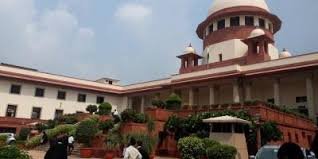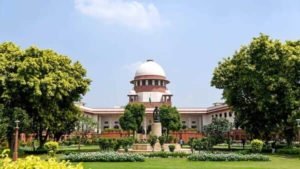
The Supreme Court of India, in State of Punjab v. Balraj Singh @ Billa (2026 INSC 618), allowed a criminal appeal filed by the State challenging a regular bail order granted by the High Court of Punjab and Haryana to an accused facing charges under the Narcotic Drugs and Psychotropic Substances Act, 1985 (NDPS Act). The matter involved the recovery of a commercial quantity of narcotics. The Supreme Court set aside the High Court’s bail order, emphasizing that whenever a case involves a commercial quantity, compliance with the stringent twin conditions stipulated under Section 37 of the NDPS Act is legally mandatory. The Court ruled that since the High Court completely failed to consider these statutory requirements and given the accused’s criminal antecedents of a similar nature, the bail could not be sustained.
1. Factual Background of the Case
- The Incident and Registration: The case originated from an FIR (No. 06 dated January 10, 2024) registered under Sections 21(c), 29, 61, and 85 of the NDPS Act. The police had set up a checkpoint at a bridge where the alleged recovery took place.
- Commercial Quantity: The recovery made from the accused/respondent involved a “commercial quantity” of narcotics under the statutory definitions of the NDPS Act.
- Period of Incarceration: At the time of the Supreme Court’s evaluation, the respondent had undergone custody for a period of only 1 year and 7 months out of a potential maximum sentence of twenty years if convicted.
2. Procedural History
- High Court Order: The Respondent (Balraj Singh) filed a criminal main petition (CRM-M No. 46383 of 2025) before the High Court of Punjab and Haryana at Chandigarh seeking regular bail. The High Court allowed the petition and directed his release on regular bail via an order dated October 15, 2025.
- Appeal by the State: Aggrieved by the regular bail order, the State of Punjab preferred a special leave petition (subsequently converted to a criminal appeal) before the Supreme Court of India.
3. Key Legal Issues Addressed
The primary issue before the Supreme Court was whether the High Court was justified in granting regular bail to an accused involving a commercial quantity of narcotics without checking compliance against the restrictive boundaries of Section 37 of the NDPS Act.
4. Legal Principles and Observations of the Court
A. Mandatory Application of Section 37 NDPS Act
- The Supreme Court highlighted a consistent line of precedents reinforcing that in cases involving a “commercial quantity” of contraband, considering the twin conditions under Section 37 is not optional but strictly mandatory.
- The Twin Conditions: Under Section 37, bail can only be granted if:
- The Public Prosecutor has been given an opportunity to oppose the application.
- The Court is satisfied that there are reasonable grounds to believe the accused is not guilty of the offense and that they are not likely to commit any offense while on bail.
- Upon perusing the impugned bail order, the Supreme Court observed that the High Court had passed the order without any consideration or reference to these mandatory twin conditions. Consequently, the order was declared legally unsustainable.
B. Impact of Criminal Antecedents
- The Court evaluated the respondent’s profile and noted that he possessed past criminal antecedents involving the commission of offenses of the exact same nature under the NDPS Act.
- Due to these specific antecedents, the Court observed that it was impossible to conclude or satisfy the legal requirement that the respondent would not likely engage in similar criminal conduct if left out on bail.
C. Proportionality of Incarceration under Article 21
- The Court briefly touched upon the argument of prolonged detention vis-à-vis individual liberty under Article 21 of the Constitution.
- It noted that an incarceration period of 1 year and 7 months against a potential maximum sentence of 20 years does not constitute an exceptionally long period of delay that would warrant overriding the statutory bars of the NDPS Act to grant bail on humanitarian or constitutional delays.
5. Final Conclusion of the Court
The Supreme Court granted leave, set aside the judgment and regular bail order passed by the High Court of Punjab and Haryana, and dismissed the respondent’s case for bail.
2026 INSC 618
State of Punjab V. Balraj Singh @ Billa (D.O.J. 02.06.2026)