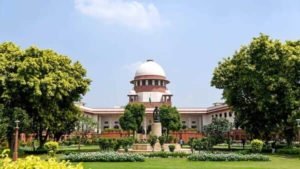
In Mehtab v. State of Uttarakhand (Criminal Appeal Nos. 1342-1343 of 2018, with Sushil @ Bhura v. State of Uttarakhand, decided on May 27, 2026), the Supreme Court of India adjudicated a capital punishment case involving the brutal rape and murder of a 55-year-old woman in a forest. The trial court had awarded the death sentence to both appellants, which was subsequently confirmed by the High Court of Uttarakhand.
On special leave appeal, the Supreme Court completely reversed the concurrent findings of the lower courts, allowed the appeals, and acquitted both accused of all capital charges. The Apex Court held that in a case resting entirely on circumstantial evidence, the prosecution must establish a complete, unbroken chain of custody and proof that points unerringly to the guilt of the accused. The Court found the “last seen together” theory wholly unproved due to the non-holding of a Test Identification Parade (TIP), highly suspicious unverified sketches, and the suppression of a material relative witness. Furthermore, the forensic and recovery evidence fell apart due to an unproved chain of custody, an unexplained delay in laboratory transmission, and medical evidence establishing that one of the accused was physically incapable of sexual intercourse.
1. Factual Matrix and Trial History
- The Incident: On December 29, 2012, the 55-year-old deceased-victim went into a forest in Uttarakhand to graze her goats. When the livestock returned unattended in the evening, her son and other villagers launched a search party. Her blood-smeared, partially denuded dead body was recovered from bushes near a water channel around 8:00 p.m., showing multiple bite marks on her face and torso.
- The Initial Clues: Three local girls gathering grass reported that around 3:00 p.m. that afternoon, two intoxicated unknown youths had approached them inquiring about the location of an elderly woman. Based on descriptions given by one of the girls, Anusuiya (PW-2), sketches were prepared and circulated.
- Arrest and Purported Recoveries: On January 3, 2013, the police apprehended the two appellants on a forest road. Following custodial confessions, the police seized a striped shirt from Accused No. 1 (Mehtab), whose left pocket was missing. This pocket had allegedly been recovered from the crime scene days earlier. From Accused No. 2 (Sushil), the police purportedly recovered the victim’s missing apparel (salwar) and ornaments tied up in bushes near the crime scene.
- Lower Court Dictums:
- The Trial Court (Special Judge, SC/ST Act, Dehradun) convicted both men under Sections 302/34, 376(2)(g) of the IPC, and the SC/ST Act, awarding them the death sentence for murder and life imprisonment for gang rape.
- The High Court of Uttarakhand acquitted the duo under the SC/ST Act but affirmed their core convictions for murder and gang rape, answering the death reference in the affirmative. The execution was subsequently stayed when the accused approached the Supreme Court.
2. Key Legal Issues & Court’s Observations
A. Demolition of the “Last Seen Together” and Sketch Identification Theory
The prosecution relied on the testimonies of two minor grass-cutters (PW-2 and PW-4) to establish that the accused followed the victim into the woods. The Supreme Court discarded this entire baseline due to severe structural infirmities:
- The Ghost Sketch Artist: The prosecution failed to disclose the name or identity of the sketch expert who drew the suspect profiles, citing a bizarre and unconvincing “confidential security reason”. The original drawings were missing from the trial, and the photocopies on record lacked the signatures of the artist, the witnesses, or the investigating officer.
- Fatal Absence of a TIP: Because the suspects were complete strangers to the witnesses, a Test Identification Parade (TIP) was mandatory to validate a subsequent dock identification. Instead, the police immediately showed the suspects to PW-2 while they were already in custody, rendering the subsequent court identification legally valueless.
- Withholding the Best Evidence: The prosecution deliberately kept Neha—the third girl present during the forest conversation and the granddaughter of the deceased—away from the witness box despite having recorded her statements. The Court ruled that hiding a natural, available relative witness without an explanation amounted to a suppression of the best available evidence.
- Multiple Forest Access Routes: Merely proving that two people entered a massive public forest with multiple open ingress and egress points cannot support an absolute inference that they alone committed a crime deep inside the woods.
B. Breakdown of Recoveries and the Chain of Custody
The state heavily relied on the physical matching of the torn shirt pocket and the discovery of the victim’s ornaments to lock in the convictions. The Supreme Court rejected these conclusions:
- Stitch-by-Stitch Extraction vs. Violent Tearing: While the police claimed the pocket was ripped off during a violent scuffle with the victim, the forensic expert (PW-11) explicitly admitted during cross-examination that the pocket appeared to have been carefully unpicked stitch-by-stitch, with its corner stitching remaining perfectly intact. This strongly supported the defense’s assertion that the piece of cloth was deliberately planted.
- Unproved Malkhana and Transmission Records: The sealed forensic packages completely lacked dates under the thumb impressions and signatures of the accused and officers. Crucially, the investigating officials and Head Moharrir maintained total silence regarding how the items were preserved inside the station’s storage (malkhana).
- Selective Transmission Delay: While primary crime scene components were sent to the Forensic Science Laboratory (FSL) immediately on January 2, 2013, the highly incriminating shirt and torn pocket were intentionally held back by the police and sent much later on January 24, 2013. Referencing Prakash Nishad v. State of Maharashtra (2023), the Court ruled that a broken chain of custody and unexplained transmission delays invite a high risk of tampering, stripping the forensic reports of their legal sanctity.
C. Inconclusive Blood Grouping and Medical Impossibility of Rape
- Common Blood Metrics: The FSL report noted the presence of blood group “O” on the shirt pocket, which matched the victim’s blood type. However, the state never checked the blood types of the accused. Citing Allarakha Habib Memon v. State of Gujarat (2024), the Court reiterated that because blood group “O” is incredibly common, its isolated presence on an item cannot form the sole basis of a conviction.
- Medical Incapacity: Most decisively, the state’s own medical expert, Dr. B.S. Aswal (PW-12), who examined Mehtab (Accused No. 1) upon arrest, explicitly testified that due to an underlying medical condition, it was physically impossible for him to engage in sexual intercourse. This completely discredited the state’s underlying motive theory—that a thwarted sexual assault formed the genesis of the murder. No DNA profiling was ever conducted on the vaginal swabs to provide any alternate biological connection.
3. Final Order and Acquittal Directions
- Appeals Allowed: The Supreme Court allowed both Criminal Appeals and set aside the concurrent judgments of the Special Sessions Trial Court and the High Court of Uttarakhand.
- Death Sentence Set Aside: The capital conviction and death sentences issued against Mehtab and Sushil @ Bhura are completely quashed.
- Immediate Release Mandate: The appellants are fully acquitted of all criminal charges. The Court directed that they be released from prison custody forthwith, provided they are not required in connection with any other legal matter. All connected pending applications were closed.
2026 INSC 578
Mehtab V. State of Uttarakhand (D.O.J. 27.05.2026)