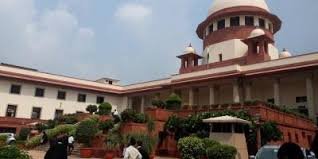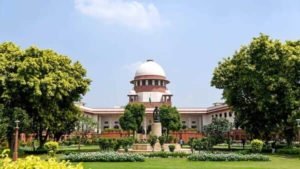
In the case of Juvenile Delinquent v. State of U.P. and Ors. (2026), the Supreme Court of India addressed a grave systemic failure where a declared juvenile was unlawfully detained in a regular adult jail for more than two and a half years. The Court characterized this as a “serious infraction of the Juvenile’s right to life” under Article 21 of the Constitution and a “Constitutional Tort”.
Case Background
The appellant was accused in a double murder case. On June 23, 2023, the Juvenile Justice Board (JJB), Agra, declared him a juvenile, finding that on the date of the incident (July 2, 2022), he was 16 years, 11 months, and 21 days old. Despite this declaration, the appellant’s applications for bail were repeatedly rejected by the JJB, the Appellate Sessions Court, and the High Court of Allahabad. These courts primarily cited the “heinous” nature of the offence and a concern that he might associate with known criminals if released.
Key Findings of the Supreme Court
The Supreme Court allowed the appeal and identified several critical legal and procedural errors in the lower courts’ handling of the case:
- Failure of Statutory Safeguards: Under Sections 15, 18, and 19 of the Juvenile Justice Act, 2015, a juvenile between 16 and 18 years old can only be tried as an adult through a two-tiered process: first, a preliminary assessment by the JJB regarding mental and physical capacity, and second, an independent evaluation by a Children’s Court. In this case, no such orders existed, meaning the juvenile should have been treated strictly as a Child in Conflict with Law (CCL) entitled to reformative measures rather than adult incarceration.
- Insensitivity of Stakeholders: The Court criticized the “lack of sensitivity” and “want of awareness” among judicial and police officers who allowed a declared juvenile to remain in a regular jail despite the JJB’s order.
- Misplaced Reliance on Offence Gravity: The Court found that the lower courts were “swayed” by the heinous nature of the crime and ignored the report of the District Probation Officer (DPO), which noted the juvenile was religious, inclined toward reading, and had a positive chance for rehabilitation in a family environment.
- Unwarranted Detention: The Court emphasized that keeping a juvenile in adult custody defeats the object of the JJ Act, which is focused on reformative and rehabilitative objectives rather than punishment.
Relief and Implementation of SOP
To address these systemic lapses, the Supreme Court issued the following directions:
- Compensation: The State of Uttar Pradesh was ordered to pay ₹5 lakhs in compensation to the appellant for the wrongful detention in adult jail.
- Standard Operating Procedure (SOP): The High Court produced an SOP to ensure the immediate transfer of declared juveniles from regular jails to observation homes. The Supreme Court directed all States and Union Territories to adopt and vigorously follow this SOP to prevent future occurrences .
- Judicial Training: The judgment and SOP are to be circulated to all High Courts and Judicial Academies nationwide to sensitize officers on the implementation of the JJ Act .
The Supreme Court set aside the orders rejecting bail and formally allowed the appeal, noting that the appellant had already been released on bail following an interim order in November 2025.
2026 INSC 387
Juvenile Delinquent V. State of U.P. And Ors. (D.O.J. 06.04.2026)