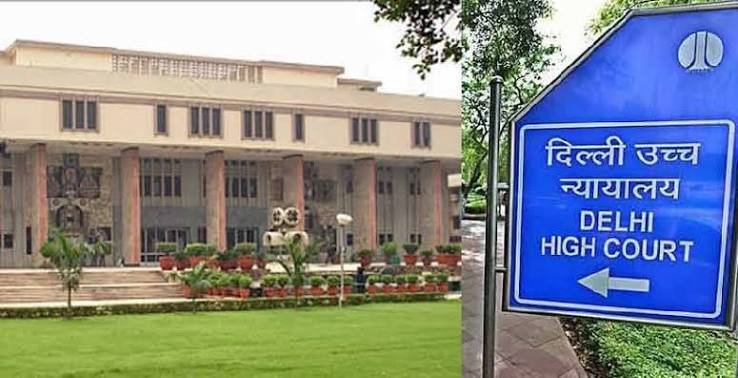
This appeal was filed under Section 96 of the CPC by the appellant (defendant) to set aside an order and decree passed by the Trial Court under Order XII Rule 6 of the CPC, which had partially decreed a suit for possession and directed the appellant to hand over the suit property in the Wazirpur Industrial Area. The respondent (plaintiff) had instituted the suit claiming absolute ownership through agreements from 2001, a conveyance deed from DDA executed in 2014, and a registered license deed designating the appellant as a licensee. The Trial Court ruled that because the appellant admitted to executing the license deed and documents, a clear landlord-tenant/licensor-licensee relationship was established. The Delhi High Court allowed the appeal and set aside the Trial Court’s judgment, holding that the power under Order XII Rule 6 of the CPC requires a clear, unambiguous, and unconditional admission. The High Court observed that the appellant’s written statement consistently denied the respondent’s ownership, asserted that the documents were executed purely as paper transactions for a loan, and noted that a separate suit challenging the validity of the conveyance deed and 2001 documents was already pending adjudication. Consequently, the matter was remanded back to the Trial Court for a full-fledged trial.
- Background and Dispute:
- The respondent filed a suit for possession, damages, and permanent injunction concerning an industrial property in Wazirpur Industrial Area, Delhi, asserting ownership via 2001 transfer documents, a 2001 license deed, and a 2004 DDA conveyance deed.
- The Trial Court decreed possession in favor of the respondent under Order XII Rule 6 of the CPC, finding that the appellant admitted to signing the license deed and failed to counter the title documents.
- Appellant’s Contentions:
- The appellant maintained he is the true owner of the property on behalf of his Hindu Undivided Family (HUF) and has been in continuous possession since 1997-1998 operating an industry named M/s. Mohit Industries.
- He argued that the 2001 documents and the license deed were sham papers executed solely as security for a private loan scheme and were never intended to be acted upon.
- He also highlighted that a separate civil suit (CS No. 578044/2016) filed by the HUF seeking cancellation of the DDA conveyance deed and declaration of the 2001 documents as null and void was actively pending.
- Respondent’s Contentions:
- The respondent argued that the appellant executed an agreement to sell, a registered GPA, a will, and a license deed admitting the respondent’s absolute ownership.
- He contended that the defense of a loan transaction was vague, barred by Sections 91 and 92 of the Indian Evidence Act, and unsupported by contemporaneous complaints or challenges to the license deed.
- High Court’s Observations and Rulings:
- Discretionary Nature of Order XII Rule 6: The Supreme Court precedents (such as Karan Kapoor v. Madhuri Kumar and Himani Alloys v. Tata Steel) establish that a judgment on admissions is a judgment without trial and should only be invoked when admissions are categorical, unequivocal, and unconditional.
- Triable Issues of Ownership and Relationship: Reading the written statement as a whole, the appellant did not admit the respondent’s ownership or a genuine licensor-licensee relationship; rather, he raised a plausible defense regarding sham paper transactions which are permissible to prove under Section 92 of the Evidence Act.
- Pending Parallel Proceedings: The validity of the underlying title documents and the DDA conveyance deed was already sub judice in a separate, pending suit where the DDA itself had issued show-cause notices for cancellation.
- Conclusion:
- The High Court set aside the impugned judgment and decree, remanded the matter back to the Trial Court for trial on merits, and directed that the interim deposits made by the appellant remain secured in an interest-bearing account pending the final outcome.