
Indian Judgements

Indian Judgements

High Court Sets Aside Cryptic Magistrate Order Rejecting Police Closure Report

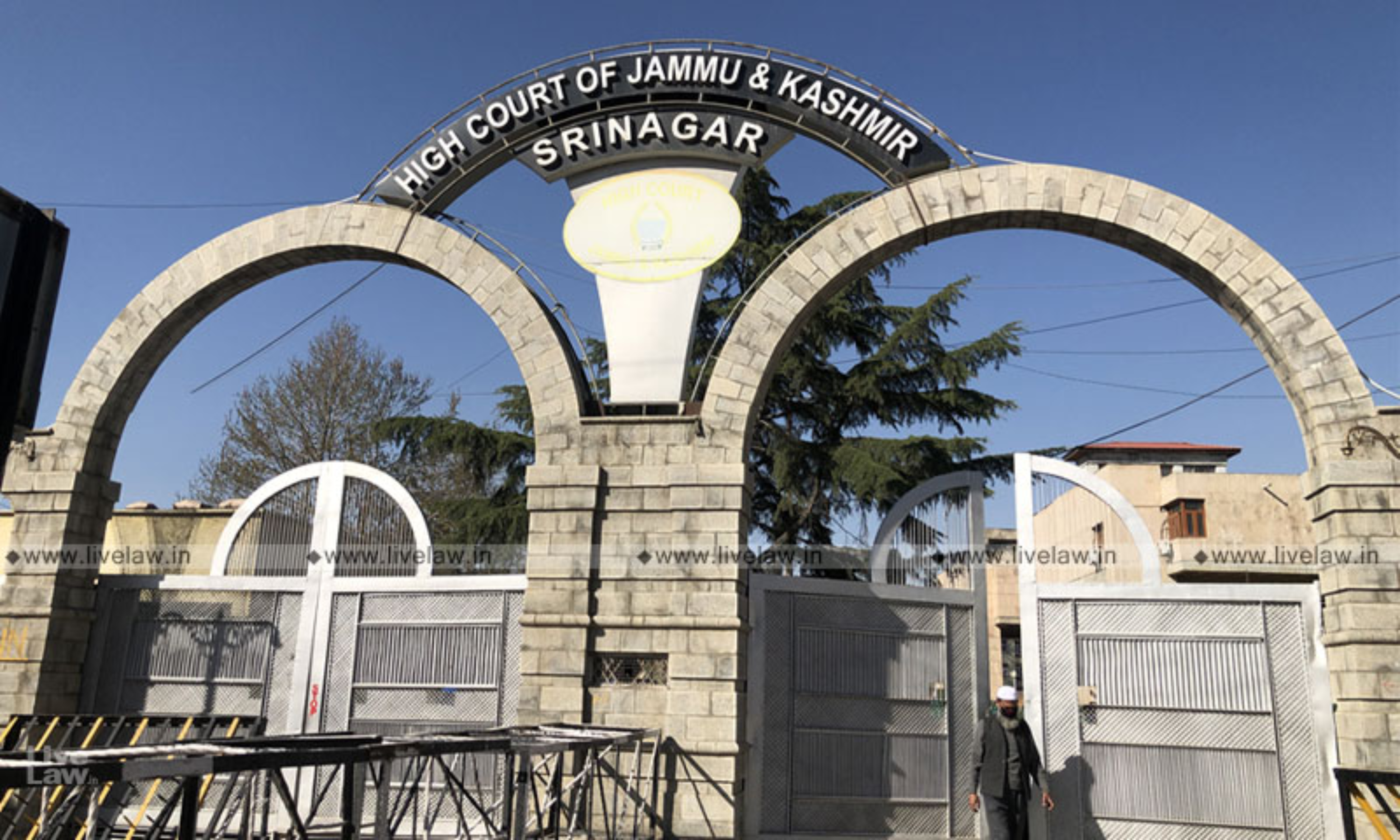
The High Court of Jammu & Kashmir and Ladakh at Jammu allowed a petition filed under Section 528 of the Bharatiya Nagarik Suraksha Sanhita (BNSS), 2023, challenging an order passed by the Magistrate on a protest petition. Following a dispute over land boundaries, FIR No. 133/2023 was registered at Police Station Poonch under Sections 452, 323, 427, 506, and 34 of the IPC. After an in-depth investigation, the police submitted a Final Closure Report stating that no case was made out. However, the Magistrate accepted the complainant’s protest petition—which alleged that the Investigating Officer (I.O.) tampered with witness statements under the influence of a senior police official relative—and returned the case for further investigation in a cryptic manner without discussing the evidence. Justice M.A. Chowdhary held that recording reasons is the “soul of orders” and an essential component of the dispensation of justice, ruling that the trial court’s unreasoned, mechanical order was unsustainable in law. Consequently, the impugned order was set aside and the matter was remanded back to the Magistrate to pass a fresh, reasoned order after hearing the parties.

  • Factual & Procedural Background:
    • A dispute arose between neighbors over partitioned land boundaries, leading to a complaint by Rimpal Kumar Sharma (Respondent No. 2) alleging house trespass, assault, and property damage.
    • Pursuant to a direction under Section 156(3) CrPC by the Chief Judicial Magistrate, Poonch, FIR No. 133/2023 was registered.
    • Upon concluding the investigation, the police filed a Final Closure Report, concluding that no offenses were substantiated based on statements collected from the complainant and his family members.
    • The complainant filed a protest petition alleging that the I.O. colluded with a senior police officer relative to alter witness statements. The Magistrate accepted the protest petition and ordered further investigation without giving reasons.
  • Legal Deficiencies in the Magistrate’s Order:
    • The High Court observed that the Magistrate passed the impugned order in a completely cryptic manner without discussing any evidence collected during the police investigation.
    • The Magistrate failed to point out any specific legal or factual infirmities in the police investigation or explain why the closure report was legally untenable.
    • If the Magistrate suspected that the I.O. had tampered with statements, it was incumbent upon the court to summon those witnesses and confront them with their recorded statements before drawing conclusions, rather than blindly accepting bald assertions.
  • The Mandate of Reasoned Judicial Orders:
    • Relying on the landmark Supreme Court precedent in Assistant Commissioner v. M/s Shukla and Brothers ((2010) 4 SCC 785), the Court underscored that recording reasons is the “soul of orders” and an indispensable facet of fair justice delivery.
    • A litigant is legally entitled to know why their prayer was granted or rejected to enable effective challenge before higher forums.
  • Final Directions Issued by the Court:
    • The petition was allowed, and the Magistrate’s order rejecting the closure report was set aside.
    • The matter was remanded back to the trial court to pass a fresh order in accordance with the law after providing both parties an opportunity to be heard.

J.O. (Web) 2026 J & K 5

Vishnu Kant Sharma and Ors. v. The Union Territory of J&K and Anr. (D.O.J. 03.07.2026)

J.O. (Web) 2026 J & K 5 click here to view full text of judgment
Next Story

Striking the Balance: Safeguarding Custodial Rights vs. Ensuring Effective Police Investigation

This appeal by special leave was filed by the State of Andhra Pradesh against the High Court’s judgment, which had partially modified a Magistrate’s order imposing restrictive conditions on the police custody of a police inspector accused of a custodial death. The Supreme Court examined whether the stringent conditions—such as confining interrogation strictly to prison premises, continuous transit videography, and rigid advocate access—unduly hampered the Special Investigation Team’s (SIT) statutory duty to investigate. The Court held that while constitutional safeguards and transparency measures are paramount, imposing unworkable physical restrictions and foreclosing statutory windows for remand under the Bharatiya Nagarik Suraksha Sanhita, 2023 (BNSS) frustrate the objectives of a fair and effective criminal investigation. Consequently, the appeal was allowed with modifications to the custody conditions.

  • Background of the Case: The respondent (an Inspector of Police) was implicated in a custodial death case under various provisions of the Bharatiya Nyaya Sanhita, 2023 (BNS), following allegations of illegal detention, torture, and the disappearance of the victim’s body. The SIT arrested him and sought police custody to recover evidence and trace the missing body.
  • Magistrate and High Court Orders: The Magistrate granted 8 days of police custody subject to 15 strict conditions (including confining interrogation exclusively to the Central Prison and ensuring continuous transit videography). The High Court largely affirmed these conditions while modifying the custody timeline.
  • Statutory Interpretation of BNSS Provisions:
    • The Supreme Court noted that Section 187 of the BNSS enlarges the window for police custody (up to 15 days in aggregate) to be granted in parts during the initial remand period, allowing flexibility for fresh discoveries. Thus, an absolute and non-extendable outer limit imposed by lower courts runs counter to the statutory scheme.
    • Interpreting Section 38 of the BNSS, the Court clarified that an arrested person has the right to meet an advocate of choice during interrogation, but this does not translate to an entitlement for the continuous, ongoing physical presence of an advocate throughout every second of the interrogation session.
  • Practical Modifications on Custody Conditions:
    • Location: The condition confining interrogation exclusively to the Central Prison was set aside as unworkable; the SIT was granted liberty to use its designated interrogation centre or equivalent secure facilities in Vijayawada.
    • Videography: Mandatory CCTV/audio-visual coverage was retained for actual interrogation sessions and recoveries, but continuous uninterrupted videography during transit (travel over 160 kilometers) was dropped as impractical.
    • Safety and Responsibility: The total police remand period was capped at a maximum of 15 days, and joint and several responsibility was placed on the Investigating Officer, Additional SP, SIT members, and Jail Superintendent to guarantee the accused’s safety and well-being.

2026 INSC 744

The State of Andhra Pradesh v. Suda Suresh Veera Venkata Naga Raju (D.O.J. 27.07.2026)

2026 INSC 744 click here to view full text of judgment
Next Story

Court Rules on Further Investigation Without Prior Court Permission Under BNSS

The Delhi High Court disposed of a writ petition filed by Mr. Rajeev Kansal challenging the legality of further investigation conducted by the police without obtaining prior permission from the Special Court under Section 193(9) of the Bharatiya Nagarik Suraksha Sanhita, 2023 (BNSS). With the consensus of both parties, the High Court took on record the statement of the Investigating Officer that no further investigation in FIR No. 320/2024 would be carried out without following the due process of law. Additionally, the trial court was requested to advance and expedite the hearing of the petitioner’s pending bail application.

  • Writ Petition and Core Challenge:
    • The petitioner filed the writ petition primarily pressing prayer clause (a), seeking a declaration that the further investigation undertaken by the respondents after filing the charge-sheet dated January 17, 2026, without prior permission from the Special Court under Section 193(9) BNSS (corresponding to Section 173(8) CrPC), was illegal and without jurisdiction.
    • Other prayers in the petition included quashing of a notice under Section 67 of the NDPS Act, declaring his subsequent arrest on June 9, 2026, as illegal, and seeking compensation.
  • Submissions of the Parties:
    • The counsel for the petitioner restricted arguments to prayer clause (a) since the petitioner had already been arrested and had filed a bail application before the trial court.
    • The Additional Standing Counsel (ASC) and the Investigating Officer conceded that before initiating further investigation in a matter pending trial, the agency must file a formal application requiring the application of judicial mind, which had not been done initially in this case.
  • Court’s Directions and Order:
    • The High Court disposed of the petition based on the consent of both sides, formally taking on record the Investigating Officer’s statement that they will not carry out any further investigation in FIR No. 320/2024 (PS Special Cell) without adhering to the due process of law.
    • The Court clarified that this order does not prevent the investigative agency from seeking formal permission from the trial court to conduct further investigation in accordance with the law.
    • The trial court was specifically requested to pre-pone the petitioner’s bail application (previously listed for August 24, 2026) and decide it within one week.

2026 DHC 5985

Mr. Rajeev Kansal v. State NCT of Delhi and Anr. (D.O.J. 27.07.2026)

2026 DHC 5985 click here to view full text of judgment

Next Story

Upholding Dignity: High Court Affirms Maintenance and 5% Annual Increase for Wife and Child

The Delhi High Court dismissed a criminal revision petition filed by a husband challenging a Family Court order that directed him to pay monthly maintenance of ₹15,000 to his wife (Respondent No. 1) and ₹10,000 to his minor child (Respondent No. 2), along with a 5% annual enhancement. The petitioner argued that his earnings were restricted to ₹11,000 per month and that an automatic annual enhancement could not be legally granted under Section 125 of the Cr.P.C. The High Court ruled against the husband, noting that his claim of low income was unbelievable given his Hospitality Management degree from Scotland, that the wife’s testimony remained largely unrebutted, and that a modest 5% annual increase is legally permissible to counter inflation and maintain the financial efficacy of the maintenance order.

  • Background and Trial Court Order:
    • The marriage between the petitioner and Respondent No. 1 took place on December 5, 2012, and a child was born in September 2013. Following matrimonial disputes, the wife left the matrimonial home in November 2014 and initiated legal proceedings.
    • Vide judgment dated February 13, 2020, the Family Court directed the husband to pay ₹15,000 per month to the wife and ₹10,000 per month to the child, plus a 5% future annual enhancement.
  • Petitioner’s Contentions:
    • The petitioner contended that he only earned ₹11,000 per month as a cook/marketing executive and that the immovable properties cited by the wife belonged to his father rather than him.
    • He also challenged the jurisdiction of the Family Court to grant an automatic 5% annual increment under Section 125 Cr.P.C. without invoking Section 127 Cr.P.C.
  • Respondents’ Arguments:
    • The respondents defended the Family Court order, highlighting that arrears exceeding ₹7,00,000 were pending execution and that the husband had failed to properly cross-examine the wife during trial, leaving her testimony unrebutted.
    • They relied on judicial precedents to assert that lifestyle status, inflation, and reasonable periodic enhancements are critical factors when calculating fair maintenance.
  • High Court’s Analysis and Decision:
    • Scope of Revisional Jurisdiction: Reiterating that the High Court does not act as an appellate court to re-appreciate evidence, the Court noted that interference is restricted only to cases of patent illegality or perversity.
    • Assessment of Income: The Court dismissed the petitioner’s claim of earning a meager ₹11,000 per month as unconvincing, emphasizing his educational background (Hospitality Management from Scotland) and the sound financial status of the family.
    • Legality of Annual Enhancement: The Court ruled that a 5% annual enhancement is entirely justified to offset inflation and prevent the gradual erosion of the real value of a fixed maintenance amount, ensuring the wife and child live with dignity.
    • The revision petition was accordingly dismissed and the Family Court’s judgment was fully upheld.

2026 DHC 5965

Rahul Gaurav Nagar v. Neeta @ Savita & Anr. (D.O.J. 27.07.2026)

2026 DHC 5965 click here to view full text of judgment
Next Story

Resolving Financial Defaults: Appointment of Sole Arbitrator in Home Loan and Tripartite Dispute

This judgment involves an arbitration petition filed under Section 11 of the Arbitration and Conciliation Act, 1996, by Tata Capital Housing Finance Limited seeking the appointment of a sole arbitrator to resolve disputes arising from a defaulted home loan agreement and a corresponding tripartite agreement. Respondent Nos. 1 and 2 defaulted on loan repayments for a property in Gurugram, Haryana, leading to the account being classified as a Non-Performing Asset and an outstanding claim of Rs. 51,95,678/-. Given the existence of valid arbitration clauses, the failure of mutual consent for appointment, the absence of appearance from Respondent Nos. 1 and 2 despite service, and the explicit consent of Respondent No. 3, the High Court of Delhi appointed a sole arbitrator under the aegis of the Delhi International Arbitration Centre (DIAC).

  • Petition Details: Filed under Section 11 of the Arbitration and Conciliation Act, 1996, bearing ARB.P. 1236/2025.
  • Loan and Default Background: A home loan was sanctioned on July 29, 2017, to Respondent Nos. 1 and 2 for purchasing a flat developed by Respondent No. 3, backed by a Home Loan Agreement and a Tripartite Agreement. Due to continuous defaults, a Loan Recall Notice was issued on December 3, 2021, with an outstanding amount of Rs. 51,95,678/- as of June 19, 2024.
  • Invocation and Representation: The petitioner invoked arbitration via a notice dated June 22, 2024. While Respondent Nos. 1 and 2 did not enter an appearance despite substituted service, Respondent No. 3 consented to the appointment of an arbitrator.
  • Court Findings: The court noted that its jurisdiction under Section 11 is confined to examining the prima facie existence of a valid arbitration agreement, which was satisfied in this case.
  • Arbitrator Appointment: Ms. Nidhi, Advocate (Mobile No. 9953899908), was appointed as the sole arbitrator to adjudicate the disputes.
  • Proceedings and Terms: The arbitration will be conducted under the rules and aegis of the Delhi International Arbitration Centre (DIAC) with fees as per its schedule. The arbitrator must enter upon reference within two weeks and submit disclosures under Section 12(2) of the Act.
  • Liberties: Parties retain the freedom to raise all pleas, including arbitrability, jurisdiction, and limitation, before the learned arbitrator to be decided independently on merits.

2026 DHC 5926

Tata Capital Housing Finance Limited v. Mr. Praveen Jindal & Ors. (D.O.J. 24.07.2026)

2026 DHC 5926 click here to view full text of judgment

Hi Judgments Online