Indian Judgements

Indian Judgements

High Court Refuses to Interfere with Matrimonial Dispute – FIR Requiring Trial Evidence

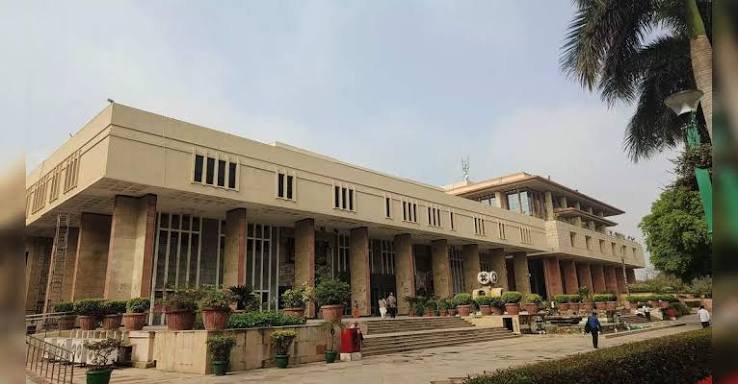
The Delhi High Court dismissed a petition filed under Article 227 of the Constitution of India read with Section 528 of the Bharatiya Nagarik Suraksha Sanhita, 2023 (BNSS) seeking the quashing of FIR No. 0586/2025 registered at Police Station Shalimar Bagh under Sections 406/498A/34 of the IPC. The petitioners (the husband and his family members) argued that the marriage was short-lived, the allegations were vague, the entire family was falsely implicated, and the FIR was merely a counterblast to the legal proceedings and notices initiated by the husband. The High Court held that the contentions raised by the petitioners involved disputed questions of fact that require evidence and cannot be adjudicated in a threshold quashing petition. Consequently, finding no grounds to exercise its inherent jurisdiction, the Court dismissed the petition.

  • Factual Matrix: The marriage between petitioner no.1 and respondent no.2 was solemnized on November 21, 2022, following an introduction through a matrimonial website. The petitioners claimed that respondent no.2 left the matrimonial home multiple times, underwent a medical termination of pregnancy without consent, concealed her identity details, and maintained relations with a third individual. Conversely, respondent no.2 lodged FIR No. 586/2025 alleging cruelty, harassment, and misappropriation of articles.
  • Petitioners’ Contentions: The petitioners contended that the parties cohabited for only about 70 days, the FIR was lodged as an afterthought and a counterblast to prior legal notices, a habeas corpus petition, and a magistrate complaint filed by the husband, and that the allegations failed to disclose essential ingredients of the alleged offences.
  • State’s Stance: The learned Additional Public Prosecutor (APP) opposed the petition, stating that the FIR contains serious allegations involving disputed questions of fact that must be tested through trial evidence.
  • Court’s Analysis and Reasoning:
    • The Court emphasized that matters like whether the allegations are false, motivated, or constitute a counterblast, or whether the implication of family members is omnibus, are purely factual and necessitate evidence before the Trial Court.
    • Under Section 528 of the BNSS, the High Court is not expected to undertake a meticulous appreciation of facts or conduct a mini-trial at the threshold stage.
    • Because the FIR prima facie discloses allegations of cruelty, harassment, and misappropriation, and does not lack a cognizable offence, the continuation of proceedings does not amount to an abuse of the law.

2026 DHC 6002

Kaushal Kishor Mishra and Ors. v. State Govt of NCT of Delhi and Ors.(D.O.J. 28.07.2026)
2026 DHC 6002 click here to view full text of judgment

Next Story

Supreme Court Acquits Accused in Decades-Old Murder Case

This criminal appeal arose from a challenge against the High Court’s order, which had remanded a decades-old murder case back to the Trial Court for a fresh review of evidence following a criminal revision application filed by the victim’s brother against an initial order of acquittal. The incident dated back to February 14, 1988, involving the alleged murder of one Qavi. Upon a thorough re-appreciation of the evidence, the Supreme Court found that the prosecution failed to establish a credible chain of circumstances: the eyewitnesses were untrustworthy chance witnesses, the dying declarations lacked consistency and medical backing, the scene of occurrence was suspicious, and weapon recoveries alone could not sustain a conviction. Emphasizing that an acquittal reinforces the presumption of innocence and that plausible views taken by trial courts should not be lightly disturbed, the Supreme Court allowed the appeal, set aside the High Court’s remand order, and restored the Trial Court’s judgment of acquittal.

  • Procedural and Legal Context: The Court noted that under the 2009 amendment to Section 372 of the Cr.P.C., victims possess a direct statutory right of appeal against acquittals without needing special leave. Although revisions cannot ordinarily be entertained where an appeal lies, courts retain inherent powers to treat a revision as an appeal. However, given that the incident occurred in 1988, the Supreme Court opted to directly re-appreciate the evidence rather than prolong proceedings.
  • Unreliable Eyewitness Testimony: The prosecution’s key eyewitnesses (PW3, PW4, and PW8) were classified as “chance witnesses” whose presence was doubtful. They failed to take the injured victim to the hospital or promptly inform the police station located merely minutes away, and their testimonies contained material contradictions.
  • Dying Declarations and Medical Contradictions: The alleged dying declarations made to family members and doctors suffered from severe infirmities. While a later-attending surgeon (PW11) claimed the victim was conscious, the doctor who initially admitted the victim (PW1) explicitly testified that the injured was brought alone by an auto-driver, remained unconscious throughout, and never regained consciousness. Furthermore, the severity of the internal chest and heart injuries rendered a clear, coherent dying declaration highly improbable.
  • Inconclusive Material Evidence: The motive presented by the prosecution was unconvincing, and the recovery of a weapon under Section 27 of the Indian Evidence Act bearing human blood did not directly link the accused to the crime in the absence of a complete chain of corroborating evidence.
  • Final Verdict: The Supreme Court concluded that the trial court’s acquittal was based on a plausible view of the evidence. The appeal was allowed, the High Court’s order was set aside, and the accused were acquitted, with directions for their immediate release if not required in any other case.

2026 INSC 754

Khalil Pasha & Ors. v. Abdul Rasheed & Anr.(D.O.J. 28.07.2026)

2026 INSC 754 click here to view full text of judgment

Next Story

Supreme Court Protects Country Liquor Licensees from Arbitrary Penalties

This civil appeal, adjudicated by the Supreme Court of India, addressed whether the State of Uttar Pradesh could legally penalize retail country liquor licensees for shortfalls in lifting their Monthly Minimum Guaranteed Quota (MGQ) during isolated months, even when the licensees successfully fulfilled and lifted the entire Annual MGQ and paid all requisite annual licence fees. The Supreme Court upheld the Allahabad High Court’s decision, ruling that the revenue authorities’ rigid insistence on monthly targets—ignoring accumulated credit balances from excess lifting in prior months and failing to issue contemporaneous notices under Rules 14 and 15 of the Uttar Pradesh Excise (Settlement of Licences for Retail Sale of Country Liquor) Rules, 2002—was arbitrary, erroneous, and unsupported by statutory rules. Consequently, the appeals filed by the State were dismissed, affirming the quashing of demand notices and ordering the refund of withheld security deposits.

  • Core Dispute: The controversy arose when the Excise Commissioner issued a circular in March 2009 demanding deficit licence fees, penalties, and interest from country liquor licensees in Bijnor for failing to meet monthly MGQ targets, subsequently adjusting these amounts from their security deposits despite the annual quotas being fully met.
  • Interpretation of Rules 14 and 15: The Supreme Court analyzed the 2002 Rules and noted that a licensee who lifts excess liquor in a given month earns a “credit balance of licence fee” meant to be carried forward. The Court highlighted the absurdity of the State’s interpretation: if a licensee completes their annual MGQ ahead of schedule (e.g., within six months), penalizing them for subsequent monthly underperformance while they continue paying monthly fees would negate the purpose of the annual quota structure.
  • Lack of Contemporaneous Action: Under Rule 14(c), if a shortfall occurs, the District Excise Officer is mandated to issue a notice by the 3rd day of the next month to allow the licensee to replenish the deficit. The authorities failed to issue these notices during the currency of the excise years, instead issuing retroactive demands long after the periods had ended, which invalidated the recovery attempts.
  • Final Verdict: Finding no legal infirmity in the High Court’s reasoning, the Supreme Court dismissed the State’s civil appeals, confirming that non-performance of an isolated monthly MGQ at the completion of the licence period—when annual MGQ obligations have been successfully satisfied—does not justify the levy of penalties or the withholding of security deposits.

2026 INSC 753

State of U.P. & Ors. v. Zafar Ali & Ors. (with connected Civil Appeals) (D.O.J. 28.07.2026)

2026 INSC 753 click here to view full text of judgment

Next Story

Supreme Court Quashes Sanction for Prosecution and Penalizes State for Malafide Review

This criminal appeal addresses the misuse of administrative power and political coercion in granting sanction for prosecution under Section 19 of the Prevention of Corruption Act, 1988. After the competent authorities initially declined to grant sanction due to a lack of evidence and clear indications of foul play during a trap, the Chief Minister’s office exerted undue pressure to compel a review on the exact same material. The Supreme Court dismissed the State’s Special Leave Petition, strongly deprecating political interference in sanction decisions, and upheld the High Court’s ruling to quash the tainted sanction order while imposing costs on the State.

  • Factual Background and Allegations:
    • A complaint was lodged alleging that the respondent (a doctor) demanded ₹5,000 to ₹6,000 for a patient’s knee surgery, leading to an Anti-Corruption Bureau (ACB) trap where ₹2,000 was allegedly recovered from a locked table drawer at his residence.
    • The surgery had already been completed a day prior to the alleged trap, and the recovery of money from a locked drawer that had to be broken open raised severe suspicions of foul play. Furthermore, the positive phenolphthalein handwash test was reasonably explained by the complainant handing over an X-ray and shaking hands in gratitude.
  • Initial Denial of Sanction:
    • The Joint Secretary and the Principal Secretary of the Department of Personnel thoroughly reviewed the case and recommended declining sanction.
    • The Chief Minister’s office subsequently referred the matter back for reconsideration without introducing any new materials or evidence. Although a subsequent review under pressure led the Chief Secretary to suggest approval out of a manufactured dilemma, the foundational lack of evidence remained unchanged.
  • Legal Principles on Review of Sanction:
    • Reaffirming precedents like Mansukhlal Vithaldas Chauhan v. State of Gujarat, State of H.P. v. Nishant Sareen, and State of Punjab v. Mohd. Iqbal Bhatti, the Supreme Court reiterated that an appropriate authority cannot review and reverse an order refusing sanction based on the exact same material without any fresh evidence.
    • A change of opinion per se driven by political dictates or external pressure from a Vigilance Department or a Chief Minister’s office is legally impermissible and vitiates the sanction.
  • Final Directions and Penalties:
    • The Supreme Court dismissed the State’s appeal, ruling that the prosecution was a clear case of victimization and harassment of a public servant.
    • The State of Rajasthan was ordered to pay costs quantified at ₹50,000 each before the High Court and the Supreme Court, to be paid within two months.

2026 INSC 752

State of Rajasthan & Ors. v. Dev Kant Meena (D.O.J. 23.07.2026)

2026 INSC 752 click here to view full text of judgment

Next Story

Supreme Court Modifies Punishment in Electricity Board Bribery Case

This criminal appeal addresses a corruption case where a Junior Engineer with the Tamil Nadu Electricity Board was caught red-handed accepting a bribe during a trap laid by the Vigilance and Anti-Corruption Wing. While both the Trial Court and the High Court convicted the appellant under the Prevention of Corruption Act, 1988, and sentenced him to two years of rigorous imprisonment, the Supreme Court upheld the conviction based on solid corroborative evidence but partly allowed the appeal by reducing the substantive sentence to the statutory minimum period.

  • Factual Background and Trap: The appellant, a Junior Engineer Level-1 at the Tamil Nadu Electricity Board in Coimbatore, demanded a bribe of ₹10,000 from a contractor (PW2) who had applied for an electricity service connection for his wife. Following a complaint, the Vigilance and Anti-Corruption Wing successfully executed a trap where the appellant was caught accepting the bribe.
  • Evidence and Corroboration:
    • PW2 (the complainant) clearly detailed the demand, complaint, and implementation of the trap.
    • PW3 (a friend) corroborated the initial demand when he accompanied PW2 to the electricity office.
    • PW4 (an independent witness) accompanied PW2 inside the office and witnessed the money being counted and pocketed by the appellant.
    • The phenolphthalein tests performed by the trap officer (PW10) on the appellant’s hands and trouser pocket yielded positive results.
  • Rejection of Defense Arguments: The defense attempted to establish a prior grudge held by PW2 through a colleague (DW1); however, DW1 failed to substantiate any altercation during a previous site inspection, thereby disproving the claim of prior enmity. Consequently, the Supreme Court found no grounds to interfere with the concurrent findings on the appellant’s conviction.
  • Modification of Sentence: Noting that notice was restricted to the quantum of punishment, the Supreme Court observed that the substantive sentences at the time of the offense were lower. It modified the rigorous imprisonment from two years down to the statutory minimums: six months under Section 7 and one year under Section 13(1)(d) read with Section 13(2) of the Prevention of Corruption Act, 1988. The fine of ₹5,000 and the default sentences imposed by the lower courts remained unchanged.

2026 INSC 751

N. Damodaran v. State Rep. by the Inspector of Police (D.O.J. 24.07.2026)

2026 INSC 751 click here to view full text of judgment

Hi Judgments Online