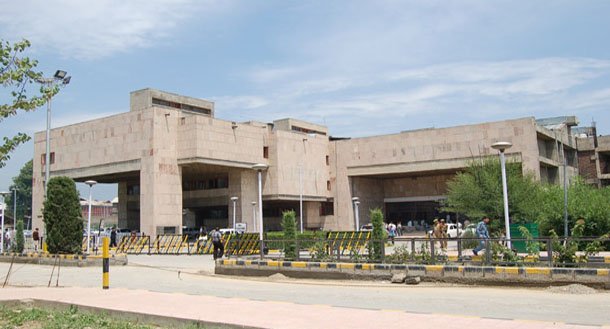
The High Court of Jammu & Kashmir and Ladakh at Srinagar dismissed twin criminal appeals challenging an order passed by the Special Court under the NIA Act, Srinagar, which had framed charges against the appellants under Sections 13, 18, 39, and 40(2) of the Unlawful Activities (Prevention) Act, 1967 (UAPA) and Section 506 of the IPC. The appellants were intercepted carrying threat posters targeting upcoming parliamentary elections and ₹1,00,000 in unaccounted cash intended for a banned outfit (The Resistance Front – TRF). Justice Rajnesh Oswal, speaking for the bench, held that at the stage of framing charges, the court is only required to evaluate whether a prima facie case or grave suspicion exists based on the prosecution’s material, rather than conducting a mini-trial or examining the defense’s version. The bench found robust digital, technical, and physical evidence—including FSL extractions of exclusive photos and location metadata—corroborating the conspiracy with a Pakistan-based handler and supporting the legality of the charges. Consequently, the appeals were dismissed.
- Factual & Procedural Background:
- Following online threats posted by the terrorist organization TRF on a social media group (“Fight Kashmir”) against Booth Level Officials for upcoming elections, FIR No. 11/2024 was registered at Police Station Shaheed Gunj.
- On March 19, 2024, during a routine checkpoint check at Jehangir Chowk, the appellants (Adnan Bashir Bangroo and Mohd. Manan Dar) were intercepted on a motorcycle.
- Police recoveries included 39 propaganda posters matching online Telegram posts, a bottle of glue, and ₹1,00,000 in cash from the possession of the appellants.
- The trial court framed charges under Sections 13, 18, 39, 40(2) of the UAPA and Section 506 IPC, leading to the present appeals.
- Core Legal Arguments of the Appellants:
- The appellants argued that elements of Sections 18 and 39 of the UAPA were not made out and that the trial court erroneously relied on alleged confessions before an Executive Magistrate without corroborative recovery.
- Appellant Mohd. Manan Dar raised a plea of false implication, citing a Habeas Corpus petition (HCP No. 70/2024) allegedly filed to challenge his earlier illegal detention by the Special Operations Group.
- Judicial Scrutiny and Findings:
- Scope at Charge-Framing Stage: Citing Supreme Court precedents such as Sajjan Kumar v. CBI and State of Andhra Pradesh v. Golconda Linga Swamy, the Court reiterated that courts can frame charges on “grave suspicion” and must sift evidence only to see if foundational ingredients are met, without conducting a mini-trial or weighing probative value like a trial.
- Defense Material Exclusion: Relying on State of Orissa v. Debendra Nath Padhi, the Court held that an accused cannot produce extraneous defense material (such as habeas corpus pleadings) at the charge stage to alter the prosecution’s record.
- Substantive Evidence of Conspiracy: Technical and forensic analysis revealed that the appellants’ mobile phones contained a photograph of a neutralized terrorist (Momin Gulzar) not available in public domains, extensive WhatsApp communication between them, location matches via GPRS data placing them with a Pakistan-based handler in Qamarwari, and connections to the Telegram channel “Kashmir Fights”.
- Final Ruling:
- The High Court affirmed that sufficient material existed to establish a prima facie nexus with the proscribed TRF outfit and a conspiracy to strike terror and disrupt the democratic process.
- The appeals were dismissed, with a clarification that observations made by the appellate court are tentative and will not prejudice the final outcome of the trial.
J.O. (Web) 2026 J & K 7
Adan Bashir Bangroo & Anr. v. Union Territory of J&K (D.O.J. 03.07.2026)
J.O. (Web) 2026 J & K 7 click here to view full text of judgment