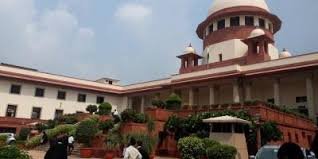
The Supreme Court of India, in Gopalakrishna Surapaneni v. Anuradha Surpaneni Maiden (2026 INSC 623), adjudicated a civil appeal stemming from a long-standing matrimonial dispute where the parties had been living separately since the year 2003. The appellant-husband challenged the decisions of the Family Court and the High Court of Andhra Pradesh, which had dismissed his petition seeking a divorce. The husband contended that the respondent-wife had subjected him to severe harassment and made wild, scandalous allegations against him while they were living abroad, which directly led to the loss of his job and forced his relocation back to India. Finding that the marriage had completely broken down and that continuing the legal bond under such hostile circumstances served no purpose, the Supreme Court allowed the appeals and quashed the lower courts’ orders, thereby granting the decree of divorce.
1. Factual Background of the Case
- The Parties: The case involves the appellant-husband, Gopalakrishna Surapaneni, and the respondent-wife, Anuradha Surpaneni Maiden.
- Separation: The parties have been living separate and independent lives since the year 2003, spanning over two decades of total matrimonial estrangement.
- Allegations of Cruelty: The appellant-husband submitted that right from the beginning of the marriage, the conduct of the respondent-wife was characterized by harassment. Crucially, while they were living abroad, she leveled wild and scandalous allegations against him.
- Consequences of Harassment: As a direct consequence of these severe and unproven allegations, the appellant-husband lost his employment abroad and was forced to relocate to India to reside with his parents in Hyderabad.
2. Procedural History
- Family Court: The appellant-husband initially instituted a petition before the Family Court seeking a dissolution of the marriage on the grounds of cruelty. The Family Court dismissed his divorce petition.
- High Court Appeal: Aggrieved by the dismissal, the husband filed an appeal before the High Court of Andhra Pradesh at Hyderabad. By an impugned final judgment and order dated September 26, 2014 (in FCA No. 16/2007 and FCA No. 22/2007), the High Court upheld the Family Court’s decision and rejected the plea for divorce.
- Supreme Court: The husband subsequently approached the Supreme Court of India via a Special Leave Petition (converted into Civil Appeal Nos. 8212-8213 of 2026). During the Supreme Court proceedings, the appellant was present in person, while the respondent-wife joined the hearings virtually.
3. Arguments and Core Submissions
- For the Appellant-Husband: It was strongly urged by the Senior Counsel that the irretrievable breakdown of the marriage, paired with the active mental harassment and structural damage caused to the husband’s professional career due to the wife’s scandalous allegations, made reconciliation entirely impossible. The long period of separate living (since 2003) demonstrated that the matrimonial tie was a dead letter.
- Wife’s Representation: The respondent-wife participated in the proceedings through the virtual mode to contest the appeal.
4. Conclusion and Final Order of the Court
- Allowing of Appeal: After hearing the learned counsel for both sides and assessing the background of continuous separation for over 23 years, the Supreme Court determined that the orders of the lower courts could not be sustained.
- Quashing of Lower Court Judgments: The Supreme Court formally granted leave and set aside the impugned judgments of the High Court and Family Court.
- Grant of Divorce: The petitions for divorce filed by the appellant-husband were approved, and the marriage was ordered to be dissolved. All pending applications associated with the appeals were systematically disposed of.
2026 INSC 623
Gopalakrishna Surapaneni V. Anuradha Surpaneni Maiden (D.O.J. 27.05.2026)