
Indian Judgements

Indian Judgements

Correcting Clerical Property Misdescriptions at the Execution Stage

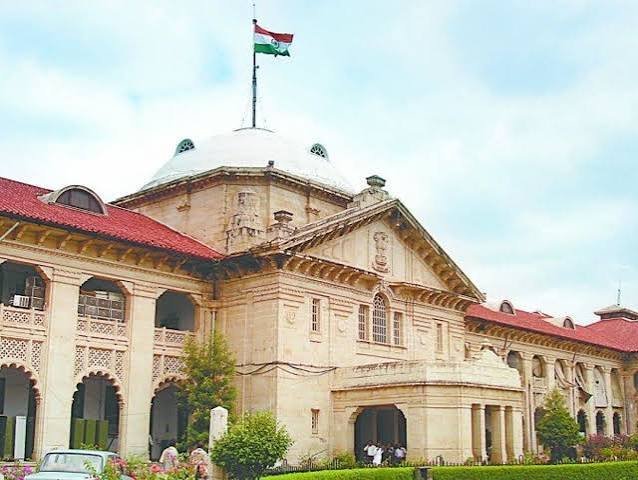
These consolidated writ petitions under Article 227 of the Constitution of India were filed by the defendant-petitioners challenging orders passed by the lower appellate and executing courts, which had allowed the correction of a typographical error regarding a property’s locality description in a specific performance decree. The underlying litigation originated from a 1968 suit for the specific performance of an agreement to sell, which was ultimately decreed in favor of the plaintiffs after prolonged litigation extending up to a second appeal in the High Court in 2006. During execution proceedings, the judgment debtors (petitioners) objected that the decree specified the property at “Mohalla-Gulab Nagar” instead of “Mohalla-Siklapur” as referred to in the body of the plaint, arguing that an executing court cannot go behind or alter a decree. Dismissing the petitions, the Allahabad High Court held that where a clerical or accidental typographical error occurs in describing a property’s boundary or location despite clear and undisputed identification in the core pleadings and initial agreement, the executing court possesses plenary powers under Section 47 and Sections 151, 152, and 153 of the C.P.C. to correct the error, ensuring a successful litigant is not deprived of the fruits of a decree due to technicalities.

  • Factual Background:
    • A suit for specific performance of an agreement to sell dated December 31, 1967, was instituted by the predecessor-in-interest of the respondents against the predecessor-in-interest of the petitioners.
    • Following extensive litigation through multiple appellate stages, the second appeal filed by the defendants was dismissed by the High Court on January 23, 2006, and an execution case was subsequently pursued.
    • During execution, a dispute arose because while paragraphs 1 and 15 of the plaint explicitly referenced the disputed house as being situated at Mohalla-Siklapur, a clerical error at the foot/boundaries section of the plaint erroneously typed Mohalla-Gulab Nagar.
    • The executing court and revisional court permitted the correction of this clerical error and approved the correct draft sale deed, leading to the current challenge under Article 227.
  • Core Legal Principles and Statutory Provisions:
    • Section 47 of the C.P.C.: Mandates that the executing court shall determine all questions arising between the parties relating to execution, discharge, or satisfaction of the decree, providing an extensive remedy to prevent needless separate litigation.
    • Inherent and Corrective Powers: Under Sections 151, 152, and 153 of the C.P.C., courts possess the duty to rectify errors arising from accidental slips or typographical omissions to ensure that justice is served and parties do not suffer from clerical flaws.
    • Identity vs. Description: As established in landmark rulings like Pratibha Singh v. Shanti Devi Prasad and Tilak Raj v. Baikunthi Devi, where the identity of the property is clearly understood and undisputed throughout the trial, a minor misdescription or clerical slip cannot be allowed to defeat a decree.
  • Final Decision:
    • The Allahabad High Court ruled that the defendant-petitioners were never misled, having admitted the core averments regarding the property location during the original trial.
    • The Court confirmed that the executing court committed no perversity or illegality in exercising its jurisdiction to correct the clerical mistake and align the decree with the true intent of the pleadings.

Both writ petitions were dismissed.

J.O. (Web) 2026 ALL 30

Santosh and 4 others v. Smt. Asha Rani and 7 others (D.O.J. 01.07.2026)

J.O. (Web) 2026 ALL 30 click here to view full text of judgment
Next Story

High Court Appoints New Sole Arbitrator for Fresh Adjudication

The present petition was filed under Section 11 of the Arbitration and Conciliation Act, 1996, seeking the re-appointment of a sole arbitrator. Although an earlier arbitral award had granted a principal amount of Rs. 15,12,253 to the Petitioner, the Section 34 court set it aside solely with respect to pre-reference and pendente lite interest, directing that the interest claim be adjudicated afresh. With the Respondent offering no objection to the reference, Justice Om Prakash Shukla allowed the petition and appointed Ms. Abha Malhotra, Advocate, as the sole arbitrator to decide the limited issue of interest and related deductions under the aegis of the Delhi International Arbitration Centre (DIAC).

  • Nature of Petition: The petition was brought under Section 11 of the Act for the appointment of a new arbitrator following a partial setting aside of a previous arbitral award.
  • Scope of Remand: The Section 34 court had upheld the principal amount awarded to the Petitioner but remanded the matter back exclusively for the fresh adjudication of pre-reference and pendente lite interest claims along with related deductions.
  • Existence of Arbitration Agreement: Noting that the scope of enquiry under Section 11 is confined to examining the prima facie existence of an arbitration agreement, the Court observed that a valid arbitration clause between the parties was undisputed.
  • Respondent’s Consent: Counsel for the Respondent raised no objection regarding the reference of the disputes back to arbitration.
  • Appointment of Arbitrator: Abha Malhotra, Advocate (Mobile No. 9810777876), was appointed as the sole arbitrator to adjudicate the remaining disputes independently.
  • Procedural Directions: The arbitration will be conducted under the aegis and rules of the Delhi International Arbitration Centre (DIAC), with fees regulated as per the DIAC Schedule of Fees, and the arbitrator is required to furnish statutory disclosures under Section 12(2) within three weeks.

2026 DHC 6497

Suri International v. Union of India (D.O.J. 07.08.2026)

2026 DHC 6497 click here to view full text of judgment

Next Story

Moratorium Halts Enforcement: High Court Disposes of Execution Petition Amid Personal Insolvency Proceedings

The present execution petition was brought before the Delhi High Court by the Decree Holder, Louis Dreyfus Company India Pvt. Ltd., against the Judgment Debtors, Mr. Krishan Dhingra and Anr. At the outset of the proceedings, counsel representing both parties jointly informed the Court that the Judgment Debtors were currently undergoing personal insolvency proceedings, under which a statutory moratorium was in active operation. In light of this development, Justice Om Prakash Shukla disposed of the execution petition while granting liberty to the Decree Holder to approach the Court by filing a fresh enforcement petition as and when the situation warrants.

  • Nature of Proceedings: The matter concerned an execution petition (OMP (ENF.) (COMM.) 15/2019) filed by the Decree Holder.
  • Insolvency and Moratorium Status: Counsel for both sides jointly reported that the Judgment Debtors are subject to personal insolvency proceedings and that a moratorium is currently in effect.
  • Disposal of Petition: Acknowledging the operation of the moratorium, the High Court disposed of the execution petition.
  • Liberty Granted: The Court granted liberty to the Decree Holder to revive or file a new enforcement petition when circumstances permit in the future.

2026 DHC 6494

Louis Dreyfus Company India Pvt. Ltd. v. Mr. Krishan Dhingra & Anr. (D.O.J. 10.08.2026)

2026 DHC 6494 click here to view full text of judgment

Next Story

Pursuit of Representation Leads to Withdrawal of Arbitration Petition

The present arbitration petition was brought before the Delhi High Court, where the learned Senior Counsel for the Petitioner submitted that a formal representation dated 07.08.2026 had been made to the Ministry of Housing and Urban Affairs, Government of India. In light of this representation, the Petitioner sought leave to withdraw the arbitration petition. With the learned Additional Solicitor General (ASG) appearing for the Respondent offering no objections, Justice Om Prakash Shukla granted the requested leave and liberty, dismissing the petition as withdrawn.

  • Filing of Representation: The Petitioner submitted a representation dated 07.08.2026 to the Ministry of Housing and Urban Affairs, Government of India.
  • Withdrawal Request: Learned Senior Counsel for the Petitioner sought permission to withdraw the present arbitration petition so that the Petitioner could actively pursue the aforesaid representation.
  • Respondent’s Stance: Chetan Sharma, learned ASG representing the Respondent, stated that he had no objections to the withdrawal.
  • Judicial Order: The High Court granted the requested leave and liberty, dismissing the arbitration petition as withdrawn.

2026 DHC 6492

Indian Polo Association v. Union of India Through Ministry of Housing Finance and Urban Land Development Office (D.O.J. 10.08.2026)

2026 DHC 6492 click here to view full text of judgment

Next Story

Ensuring Continuity in Land Compensation Arbitration: High Court Extends Arbitrator’s Mandate

The present petition was filed under Section 29A of the Arbitration and Conciliation Act, 1996, seeking an extension of the mandate of the learned Arbitrator to adjudicate land compensation disputes arising from the acquisition of the Petitioners’ land for the construction of NH-344M under the National Highways Act, 1956. Although pleadings before the erstwhile arbitrator were completed, the proceedings were transferred to a newly appointed arbitrator (the Secretary, Land and Building) on 28.07.2023, who subsequently observed that his mandate had expired. With the Respondent having no objection to the extension, Justice Om Prakash Shukla granted a joint request from the parties and extended the mandate of the sole arbitrator by a further period of six months from the date of the order, while also regularizing the intervening period.

  • Nature of Petition: The petition was brought under Section 29A of the Arbitration and Conciliation Act, 1996, to secure an extension of the arbitral mandate.
  • Origin of Dispute: The underlying dispute relates to the enhancement of land compensation awarded under Section 3G(5) of the National Highways Act, 1956, following the acquisition of the Petitioners’ land for NH-344M.
  • Transfer of Proceedings: Proceedings were transferred to a newly appointed arbitrator, the Secretary (Land and Building), vide an order dated 28.07.2023, during which it was noted that the mandate had lapsed and required formal judicial extension.
  • Respondent’s Stance: The Respondent, represented through counsel, submitted that they had no objection to the extension of the arbitral mandate.
  • Final Order and Relief: Acting on the joint request of both parties, the High Court extended the mandate of the sole arbitrator by six months and regularized the intervening period up to the date of the order, disposing of the petition accordingly.

2026 DHC 6488

Sh. Sube Singh & Anr. v. National Highway Authority of India (D.O.J. 10.08.2026)

2026 DHC 6488 click here to view full text of judgment

Hi Judgments Online