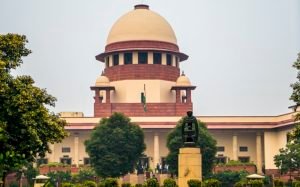
In the matter of Krishna Kumar Ojha & Ors. vs. Jitendra Chaudhary & Ors. (2026 INSC 662), the Supreme Court of India upheld the decision to set aside a compromise decree dated February 22, 1994, passed in a 1989 partition suit. The Court held that the compromise failed to meet the mandatory requirements of Order XXIII Rule 3 of the Code of Civil Procedure (CPC), as it lacked the express authorization or signature of the defendant, and emphasized that a lawyer cannot unilaterally conclude substantial legal rights of a client without clear instruction. Consequently, the Court dismissed the appeal and directed that the partition suit be adjudicated through a full trial.
Background
- Case Origin: A partition suit (Suit No. 128 of 1989) was filed seeking a share in the property of a common ancestor, Thakur Ojha.
- Compromise Decree: In 1994, a compromise petition was accepted by the court, purportedly signed by the plaintiffs and defendants, leading to a final decree in 1997.
- Challenge: In 2022, the legal heirs of Defendant No. 5 (Chaturbhuj Chaudhary) filed a miscellaneous case to set aside the decree, alleging it was fraudulent, lacked the defendant’s signature, and that the defendant never authorized his lawyer to enter into such a compromise. The trial court allowed the petition, and the High Court affirmed this decision.
Supreme Court Findings
- Legal Requirements for Compromise: The Court reiterated that under Order XXIII Rule 3 of the CPC, a compromise must be in writing and signed by the parties. It must be voluntarily accepted, and a court’s role is not merely to record it but to apply its judicial mind to ensure the terms are lawful.
- Role of Counsel: The Court clarified that while a counsel may sign a compromise on behalf of a client, it requires express authorization or evidence of exigent circumstances. In this case, there was no express authorization for the lawyer to bind the defendant to the compromise, rendering it contrary to law.
- Limitation and Delay: Despite a delay of approximately 25 years in challenging the decree, the Court refused to use the law of limitation to defeat substantive rights where fraud was alleged and the legal requirements for a valid compromise were not met.
- Necessity of Trial: The Court noted that the fundamental facts of the case—including ownership of the property and the validity of signatures—were heavily contested. Therefore, the issues in the partition suit must be resolved through a full trial rather than an invalid compromise decree.
Final Order
- Dismissal: The appeal filed by the legal heirs of the original plaintiffs was dismissed.
- Directions: The Court directed that the partition suit proceedings be taken to trial to properly weigh evidence and adjudicate the rights of the parties.
2026 INSC 662
Krishna Kumar Ojha &Ors. V. Jitendra Chaudhary & Ors. (D.O.J. 01.07.2026)