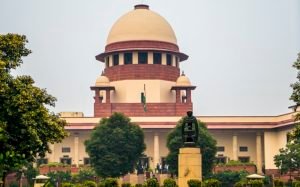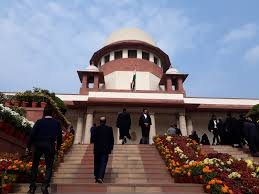
The Supreme Court has declared that the right to walk is a fundamental right under Part III of the Constitution of India, integral to the right to movement (Article 19(1)(d)) and the right to life (Article 21). This right includes the access to safe, demarcated, and well-maintained footpaths, which shall take priority over the movement of motorized vehicles. The Court emphasized that if a road exists, authorities—such as Urban Development Authorities, Municipal Corporations, and Panchayats—have an enforceable, correlative duty to provide and maintain pedestrian infrastructure.
Background of the Case
The matter originated from a tragic accident where a five-year-old child was struck and killed by a tanker while walking toward his school on a road lacking a footpath. The Motor Accident Claims Tribunal (MACT) had initially awarded compensation of Rs. 7,82,000, which the High Court subsequently reduced to Rs. 4,70,000.
Key Findings and Directives
- Recognition of Rights: The Court affirmed that the “right to move” is not limited to motorized transport. Walking is recognized as having deep cultural, social, and political significance, embodying expressional, congregational, and associational rights under Articles 19(1)(a), (b), and (c).
- Limitation of the Motor Vehicles Act: The Court clarified that the Motor Vehicles Act, 1988, is primarily focused on motorized transport and does not adequately protect or recognize the fundamental right to walk.
- Restitutionary Remedy: Citizens are entitled to enforce a restitutionary remedy against duty-bearing authorities (Municipalities, etc.) for violations of this right, which is distinct from and independent of claims made under the Motor Vehicles Act.
- Legislative Framework: The Court directed the Registry to send copies of the judgment to the Ministry of Housing and Urban Affairs, Ministry of Rural Development, Ministry of Road Transport and Highways, and the Law Commission to initiate the development of a comprehensive statutory framework and regulatory body to protect and implement the right to walk.
- Compensation: In the instant case, the Supreme Court set aside the High Court’s reduction of compensation. Applying the methodology from Karuna Parmar v. Prakash Sinha, the Court increased the total compensation to 11,44,628.
- Case Re-classification: The Court ordered the registry to re-number the case as a petition under Article 32, titled Re: Fundamental Right to Walk and Footpath, and impleaded relevant Government of India ministries as parties to further monitor this issue.
2026 INSC 647
Maniyar Iliyaz @ Shaik Riyaz & Anr. V. P. Ayyappan & Ors. (D.O.J. 19.06.2026)