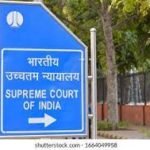
In the case of Canara Bank v. Kavita Chowdhary (2026), the Supreme Court of India upheld a finding of “manifest deficiency in service” against Canara Bank for failing to timely process high-value cheques, but modified the quantum of compensation awarded to the consumer.
Case Background
The respondent deposited two cheques totaling approximately ₹1.06 Crores into her savings account at Canara Bank on May 29, 2018. The cheques, issued by Assotech Limited, were dated March 3, 2018, and were valid for three months (until June 2, 2018).
Due to a bank strike on May 30 and 31, the cheques were not cleared immediately. Although the bank was open on June 1 and 2, it failed to re-present the cheques for clearing before their validity expired. Consequently, the cheques became stale, and the respondent was deprived of her money and the ability to initiate criminal proceedings under Section 138 of the Negotiable Instruments (NI) Act, particularly since the drawer company (Assotech Ltd) had entered liquidation.
Key Findings of the Court
The Supreme Court analyzed the bank’s conduct under the Consumer Protection Act and the Negotiable Instruments Act:
- Deficiency in Service: The Court affirmed that a bank receiving cheques for collection acts as an agent of the customer and is under a mandatory obligation to exercise due diligence. The failure to re-present the cheques on June 1 or 2, knowing they would expire on the 2nd, constituted negligence and a clear deficiency in service.
- Excuse for Delay (Section 75A NI Act): The Bank argued that the strike was a circumstance beyond its control. The Court clarified that while a strike might excuse a delay during the strike, once the “cause of delay ceases to operate” (i.e., the bank reopens), the bank must act within a reasonable time. The Bank failed to explain why it did not act on the two working days following the strike.
- Compensation and “Actual Loss”: The National Consumer Disputes Redressal Commission (NCDRC) had originally awarded 10% of the total cheque amount as compensation. The Supreme Court noted that because the drawer company was in liquidation, the “actual loss” suffered by the respondent was indeterminate and speculative.
- Legal Remedies and Section 138: The Court observed that while the bank’s negligence extinguished the respondent’s right to pursue a Section 138 NI Act complaint, it was “difficult to fathom” what the final outcome of such a proceeding would have been given the drawer’s insolvency.
Conclusion and Modification
The Supreme Court concluded that while the bank was undoubtedly negligent, the 10% compensation awarded by the NCDRC was on the higher side given the specific facts. To meet the “ends of justice,” the Court modified the award as follows:
- Reduced compensation from 10% to 6% of the total cheque amount (₹1,06,10,768).
- Reduced the interest rate from 8% to 6% per annum, calculated from the date the complaint was filed.
- Upheld the remainder of the order, including the litigation costs of ₹50,000.
2026 INSC 363
Canara Bank V. Kavita Chowdhary (D.O. J.15.04.2026)