Indian Judgements

Indian Judgements

Aarbitration Award Partialy Modified: Part of dispute which is unverified

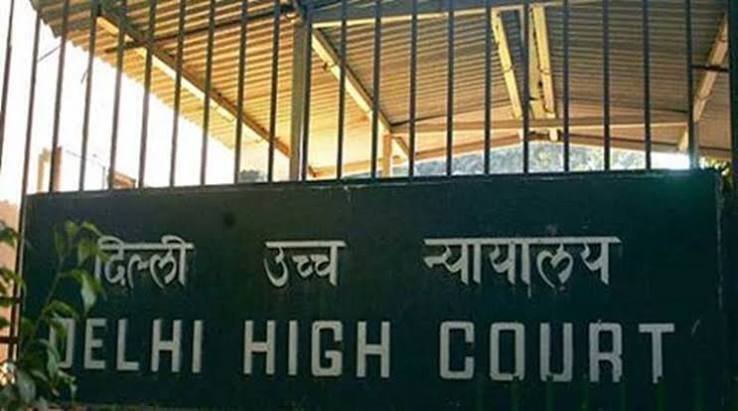
In the case of D V Anand vs. Hindustan Petroleum Corporation Ltd (HPCL), the Delhi High Court partially allowed an intra-court appeal under Section 37 of the Arbitration Act against an arbitral award that had upheld a penalty of over ₹2 crores for alleged fake LPG connections. The Court distinguished between 446 connections that had been physically verified (where the distributor admitted to employee manipulation) and 380 connections that were penalized without any investigation or disclosure of identity. The Court ruled that holding a distributor liable for unverified connections—and shifting the burden of proof to them without identifying the specific accounts—constituted “patent illegality” and perversity. Consequently, the Court modified the award, slashing the recoverable penalty amount from the respondent’s counter-claim to approximately ₹25.45 lakhs.

  1. Background and Dispute

The appellant, an LPG distributor associated with HPCL since 1981, was penalized ₹2,24,89,020/- following a 2014 complaint alleging the existence of 826 fake LPG connections in his database. HPCL’s investigation, which involved random verification letters and physical inspections, led them to believe the entire list was fraudulent. While the appellant admitted to data manipulation by former employees, he challenged the penalty as being disproportionate and based on incomplete verification.

  1. Arbitral and Initial Judicial Findings

The Sole Arbitrator upheld HPCL’s counter-claim, directing the recovery of ₹2,03,12,102/- (after adjustments) plus interest. The Arbitrator reasoned that since some connections were proven fake, the burden shifted to the distributor to prove the genuineness of all 826 connections. A Single Judge of the High Court later dismissed the distributor’s Section 34 petition, finding the arbitrator’s view to be a “plausible” one based on the record.

  1. Eligibility of the Arbitrator

A primary legal challenge in the appeal was the eligibility of the arbitrator, who was an employee of HPCL. The appellant argued that under the 2015 Amendment Act, the arbitrator became ineligible to continue. However, the Court ruled that since the arbitral proceedings had commenced in 2014 (prior to the amendment’s effective date of October 23, 2015), the unamended Act applied. Therefore, the arbitrator’s mandate remained valid.

  1. Merits of the Penalty: The Two Categories

The Court categorized the 826 alleged fake connections into two distinct sets for analysis:

  • Set I (446 Connections): This group was subject to investigation, verification letters, and physical visits. The appellant had access to these particulars and had admitted to discrepancies caused by his employees. The Court found the findings for this set were supported by evidence and refused to interfere with the penalty imposed for these established irregularities.
  • Set II (380 Connections): For this group, no investigation was conducted, and their particulars were never disclosed to the appellant. The Court found it “totally absurd and unsustainable” to expect the appellant to prove the genuineness of connections whose identities were hidden from him. Shifting the burden of proof in this manner was deemed a clear flaw in the decision-making process and an act of patent illegality.
  1. Doctrine of Severability and Final Relief

Applying the principle of severability, the Court held it could set aside the “invalid” portion of an award while sustaining the “valid” part, provided they are not intertwined.

  • The Court upheld the first penalty component (₹3,15,472/-) for critical irregularity.
  • It proportionately reduced the second component (penalty per connection) to cover only the 446 established fake connections, amounting to ₹22,30,000/-.
  • It completely set aside the third component (unaccounted sales/refills) because it was inseparably linked to all 826 connections without separate quantification.

Final Decision: The appeal was partly allowed . The counter-claim of HPCL was modified and sustained only to the extent of ₹25,45,472/-.

2026 DHC 5233

D V Anand V. Hindustan Petroleum Corporation Ltd (D.O.J. 01.07.2026)

2026 DHC 5233 click here to view full text of judgment

Next Story

Admissibility of Deceased Witness Testimony Against Absconding Accused

Supreme Court allowed the appeals filed by the State of West Bengal, ruling that the deposition of a deceased witness recorded in an earlier trial is admissible in a subsequent trial against an absconding accused, provided the requirements of Section 299 of the Code of Criminal Procedure (CrPC) are met. The Court clarified that the provision serves to preserve evidence when an accused deliberately absconds, preventing them from benefiting from the unavailability of material witnesses due to the passage of time. The Court set aside the High Court’s order, which had denied the admission of the victim’s testimony, confirming that the statutory preconditions—the accused absconding and no immediate prospect of arrest—were satisfied at the time the witness deposed.

  • Background: In a 2012 gang-rape case, the respondent and another accused were absconding while three others were tried and convicted. The victim, a key witness, testified in the first trial but passed away in 2015. After the respondent was arrested in 2016, the prosecution sought to admit the victim’s earlier deposition as evidence under Section 33 of the Indian Evidence Act read with Section 299 of the CrPC.
  • High Court Order: The High Court of Calcutta had rejected the application, observing that the prosecution had a duty to obtain a specific direction from the Trial Court to record evidence against the absconder during the first trial, and thus the earlier deposition could not be used against the respondent.
  • Interpretation of Section 299 CrPC: The Supreme Court held that Section 299 CrPC acts as an exception to the general rule requiring a witness to be examined in the presence of the accused. It does not mandate a formal, prior order from a Magistrate to record that the accused is absconding; rather, what is relevant is whether the conditions—that the accused is absconding and there is no immediate prospect of arrest—were established at the time the evidence was recorded.
  • Preventing Misuse of Process: The Court reasoned that taking a restrictive view of Section 299 would jeopardize the criminal justice system by incentivizing accused persons to wilfully abscond and await the death or unavailability of material witnesses.
  • Application to Facts: The Court noted that the respondent was a declared absconder when the victim’s testimony was recorded (2013), and he remained at large until his arrest in 2016. As the two essential conditions of Section 299(1) were met, the deceased victim’s evidence is admissible in the trial against the respondent.

Legislative Continuity: The Court noted that the legislature has maintained this principle in Section 335 of the recently enacted Bharatiya Nagarik Suraksha Sanhita, 2023, reinforcing the intent to ensure evidence is preserved against those who evade trial.

2026 INSC 718

The State of West Bengal v. Kader Khan – (D.O.J. 17.07.2026)

2026 INSC 718 click here to view full text of judgment

Next Story

Insolvency and Bankruptcy: Finality of Resolution Plans and Extinguishment of Sub-judice Claims

Supreme Court allowed the appeals filed by the Successful Resolution Applicant (Appellant-SRA), ruling that upon the approval of a Resolution Plan under the Insolvency and Bankruptcy Code, 2016 (IBC), all claims—including those pending adjudication (sub-judice)—that are not specifically provided for in the plan stand extinguished. The Court held that the “clean slate” doctrine is fundamental to the IBC, preventing unresolved or contingent claims from resurfacing and undermining the revival of the corporate debtor. Consequently, the Court set aside the High Court orders and dismissed the civil suit and arbitration proceedings initiated by operational creditors, affirming that they are bound by the terms of the approved Resolution Plan.

  • Background: The Appellant-SRA challenged Bombay High Court orders that allowed a civil recovery suit and arbitration proceedings to continue against the corporate debtor (Bhushan Steel Limited) despite the approval of its Resolution Plan. The respondents, operational creditors, sought to pursue claims that were pending at the time of the Corporate Insolvency Resolution Process (CIRP).
  • Treatment of Claims: During the CIRP, the Resolution Professional admitted the respondents’ disputed claims at a notional value of Rupee One (1) each. The approved Resolution Plan stipulated that because the liquidation value was NIL, no amounts were due to operational creditors; however, a settlement fund was provided for those with admitted claims.
  • The “Clean Slate” Doctrine: The Court emphasized that a successful resolution applicant must start on a “clean slate,” free from “hydra-headed” surprise claims. Once a Resolution Plan is approved under Section 31(1) of the IBC, it becomes binding on all stakeholders, and claims not incorporated therein are deemed extinguished, withdrawn, or abated.
  • Finality of the Plan: The Court noted that the Final List of Creditors attained finality, and the respondents could not seek to reopen or question the commercial wisdom of the Committee of Creditors after the plan’s approval. The Court found no merit in the allegations of fraud, noting that no proceedings had been initiated under Rule 11 of the NCLT Rules to challenge the plan’s integrity.
  • No Express Carve-out: Upon a harmonious reading of the Resolution Plan, the Court concluded there was no express “carve-out” protecting sub-judice claims from extinguishment. The plan explicitly mandated that all legal proceedings relating to the period prior to the effective date stand extinguished, except to the extent of the specific settlement amount provided.
  • Observation on MSMEs: In an “Afterword,” the Court observed that the current insolvency framework does not adequately account for the position of small operational creditors and MSMEs, who are often placed at the bottom of the repayment waterfall. The Court suggested that the Legislature and Law Commission examine this to ensure a more balanced repayment mechanism.
  • Outcome: The Court allowed the appeals, set aside the contrary High Court orders, and dismissed the pending civil suit and arbitration proceedings, enforcing the finality of the Resolution Plan.

2026 INSC 717

M/S Tata Steel Ltd. v. Varsha & Anr. (D.O.J. 17.07.2026)

2026 INSC 717 click here to view full text of judgment

Next Story

Excluding Nominated Members from Local Authority Elections

The Supreme Court upheld the High Court of Karnataka’s decision to exclude nominated members of Town Panchayats from participating in Legislative Council elections for Local Authorities’ Constituencies. The Court ruled that under the constitutional framework established by the 74th Amendment (Part IX-A), nominated members, who serve only in an advisory capacity, lack the democratic mandate of elected representatives. Consequently, their inclusion in the electoral roll was declared unconstitutional, and the Court affirmed the direction to conduct a recount of votes after segregating the invalid votes cast by these nominated members.

  • Background: The election to the Karnataka Legislative Council (Chikkamagaluru Local Authorities Constituency) was challenged because 12 nominated members from four Town Panchayats were included in the electoral roll and participated in the voting. The appellant, who won by a narrow margin of 6 votes, contended that the electoral roll’s finality should be respected.
  • Constitutional Interpretation: The Court held that while Article 171(3)(a) mentions “members” of local authorities, this must be interpreted through the lens of the 74th Constitutional Amendment. Article 243-R establishes that while nominated members may be appointed for their expertise, they are expressly barred from voting in municipal meetings, underscoring their advisory rather than representative role.
  • Democratic Representation: The Supreme Court emphasized that allowing nominated members to vote in Legislative Council elections would undermine the democratic nature of the electoral process, as they are not democratically elected. The Court affirmed that “members” in the context of electoral colleges refers to democratically elected representatives.
  • Finality of Electoral Rolls: While acknowledging the principle that electoral rolls typically attain finality, the Court distinguished this case by noting that the inclusion of the nominated members was void ab initio and unconstitutional. Therefore, the finality of the roll could not be used to validate an illegality that strikes at the core of the electoral college’s composition.
  • Secrecy of the Ballot: The Court rejected the argument that segregating these votes would violate the secrecy of the ballot. It maintained that the higher constitutional goal of preserving free and fair elections and ensuring the purity of the electoral process outweighs the requirement for absolute secrecy in this specific context.
  • Outcome: The Supreme Court dismissed the appeals and affirmed the High Court’s orders. The Court directed the authorities to proceed with the consequential actions based on the recount results already obtained, ensuring that the election outcome reflects only the valid votes cast by elected representatives.

2026 INSC 716

Pranesh M.K. v. Shanthegowda & Ors. – (D.O.J. 16.07.2026)

2026 INSC 716 click here to view full text of judgment

Next Story

Railway: Establishing Liability in Untoward Railway Incidents

The Supreme Court set aside the concurrent dismissal of a compensation claim by the Railway Claims Tribunal and the High Court of Madhya Pradesh. The Court held that when a passenger dies in an “untoward incident” (falling from a running train), the absence of a recovered ticket does not automatically negate the status of a bona fide passenger. Emphasizing the “no-fault liability” principle under Section 124A of the Railways Act, 1989, the Court ruled that once the claimant establishes the foundational facts through an affidavit, the burden shifts to the Railways. Technical lapses and the inability to recover personal belongings should not defeat the humanitarian and welfare objectives of the legislation.

  • Background: The appellant filed a claim for compensation following the death of her husband, who fell from a running train while traveling from Raipur to Ahmedabad. The Railway Claims Tribunal and the High Court previously rejected the claim, citing a lack of proof regarding the deceased being a bona fide passenger (specifically due to the missing ticket).
  • Legal Principle (No-Fault Liability): The Court reiterated that Section 124A of the 1989 Act is a beneficial, “no-fault” provision. It is designed to provide expeditious relief to victims of untoward incidents without requiring proof of negligence by the Railway Administration.
  • Burden of Proof: Relying on Union of India v. Rina Devi and Doli Rani Saha v. Union of India, the Court clarified that:
    • The mere absence of a ticket does not disprove that a person was a bona fide
    • The initial burden is on the claimant, which is sufficiently discharged by filing an affidavit stating the facts.
    • Once this is done, the burden shifts to the Railways to disprove the claim based on attending circumstances.
  • Operational Concerns: The Court highlighted the critical issue of chronic overcrowding in Indian Railways. It noted that while the Railway Manuals contain detailed safety and ticketing protocols, the execution often fails. The Court suggested that Railways should increase manpower to better manage safety and ticketing, which could simultaneously reduce such tragedies and provide employment.
  • Constitutional Perspective: The Court observed that using terms like “second class passenger” is outdated and potentially offensive to the spirit of the Constitution of India; it suggested that class designations should refer to the “coach” rather than the “passenger.”

Decision: The Supreme Court allowed the appeal and set aside the lower court judgments. It ordered the Railways to pay compensation of ₹8,00,000 to the appellant within four weeks, failing which the amount would attract interest at 8% from the date of the original claim filing.

2026 INSC 715

Lata v. Union of India & Anr. – (D.O.J. 17.07.2026)

2026 INSC 715 click here to view full text of judgment

Hi Judgments Online