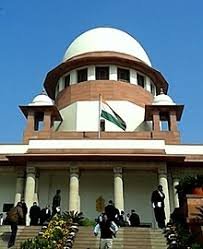
In a criminal appeal challenging a High Court order that set aside a discharge granted 26 years prior, the Supreme Court of India allowed the appeal and restored the trial court’s order discharging the appellant. The Supreme Court held that subjecting an individual to trial after such an extraordinary lapse of time—where the High Court took a quarter of a century to decide a revision petition—violates the principles of justice. The Court also pointed out the logical absurdity in the High Court’s reasoning, which faulted the trial court for not following a precedent that was decided more than a decade after the discharge order was passed.
1. Factual Background
- Incident & Role: The case originated from a police raid on March 23, 1998, in connection with an exchange of fire and recovery of arms, explosives, and cellular phones. The appellant, serving as a Sipahi (constable) at Sabarmati Central Prison, was implicated solely on the allegation that one of the co-accused had given him a mobile phone for repair while he was on duty.
- Discharge by Sessions Court (1999): On September 13, 1999, the Additional Sessions Judge, Ahmedabad, allowed the appellant’s discharge application under Section 227 CrPC while framing charges against the remaining 4 accused under the IPC, Arms Act, and Explosive Substances Act.
- High Court Revision (2025): The State of Gujarat filed a revision application against the discharge. After a delay of nearly 26 years, the Gujarat High Court allowed the revision on August 11, 2025, and quashed the discharge order.
2. Key Findings of the Supreme Court
- Anachronistic Application of Precedents:
- The High Court faulted the trial court for losing sight of principles laid down in State of Andhra Pradesh v. Golkonda Linga Swamy (2010).
- The Supreme Court highlighted that the 2010 judgment relied upon by the High Court did not even exist in 1999 when the Sessions Court passed the discharge order, making the High Court’s criticism inherently flawed.
- Interests of Justice and Inordinate Delay:
- Beyond the technical error, the Supreme Court stressed that subjecting the appellant to a criminal trial after a gap of over 26 years (1999 to 2025/2026) would be highly unjust.
- The State failed to file a counter-affidavit, leaving the court with no information regarding the fate or status of the trial against the other main accused.
3. Final Order
- The Supreme Court set aside the Gujarat High Court’s judgment dated August 11, 2025.
- The trial court’s discharge order dated September 13, 1999, in favor of the appellant was fully restored.