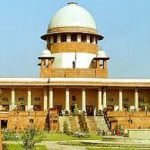
This civil appeal addresses the statutory authority of the National Council for Teacher Education (NCTE) to mandate the online submission of annual Performance Appraisal Reports (PAR) along with a processing fee from recognized Teacher Education Institutions (TEIs). The Supreme Court allowed the appeal and set aside the Delhi High Court’s Division Bench judgment, ruling that the NCTE and its Executive Committee possess full statutory and ancillary powers under the NCTE Act, 1993, to enforce accountability and regulatory oversight over educational institutions.
- Brief of Judgment: The litigation originated when TEIs challenged a 2019 Public Notice issued by the Member Secretary of the NCTE’s Executive Committee requiring them to submit online PARs and nominal processing fees. While a single judge dismissed the challenge, the Division Bench quashed the notice on the premise that the specific proforma had not been explicitly approved by the general body of the Council and that delegation to the Member Secretary was improper. The Supreme Court strongly disapproved of the High Court’s pedantic approach, holding that statutory regulators must be empowered to enforce institutional transparency, performance audits, and accountability without judicial overreach.
- Statutory Framework and Duty Bearers: The judgment emphasizes that following the enactment of Article 21A and the Right of Education (RTE) Act, 2009, elementary school teachers, TEIs, and the NCTE act as critical constitutional duty bearers responsible for upholding high standards of educational quality.
- Scope of Regulatory Powers: Section 12(k) of the NCTE Act expressly empowers the Council to evolve suitable performance appraisal systems and mechanisms to enforce accountability, which includes the incidental power to collect processing fees and utilize digital portals for management information systems.
- Role of the Executive Committee: The Executive Committee, operating as the executive arm of the Council, is fully competent to implement decisions made by the General Body, such as substituting cumbersome annual renewal regimes with streamlined PAR submissions.
- Reversal of High Court Judgment: The Supreme Court set aside the High Court’s order, reaffirming that courts must support and enable the effective functioning of statutory regulators rather than restrict them through hyper-technical interpretations.
2026 INSC 953
The National Council for Teacher Education v. Association of NCTE Approved Colleges Trust and Ors. (D.O.J. 03.09.2026)